
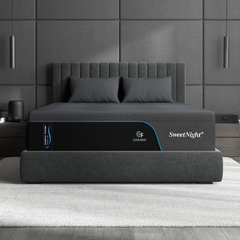

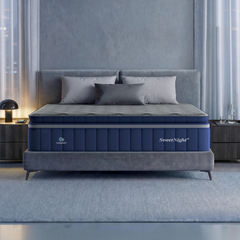
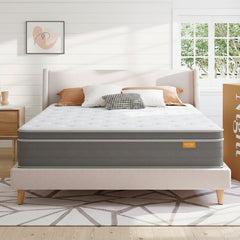

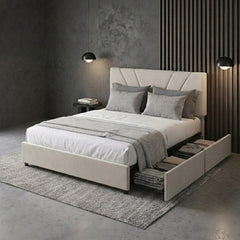
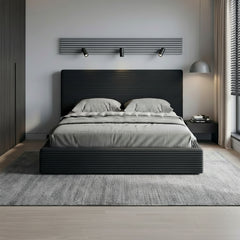
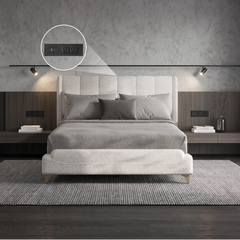
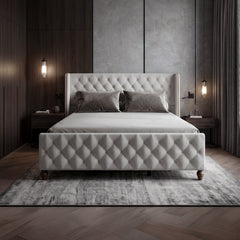

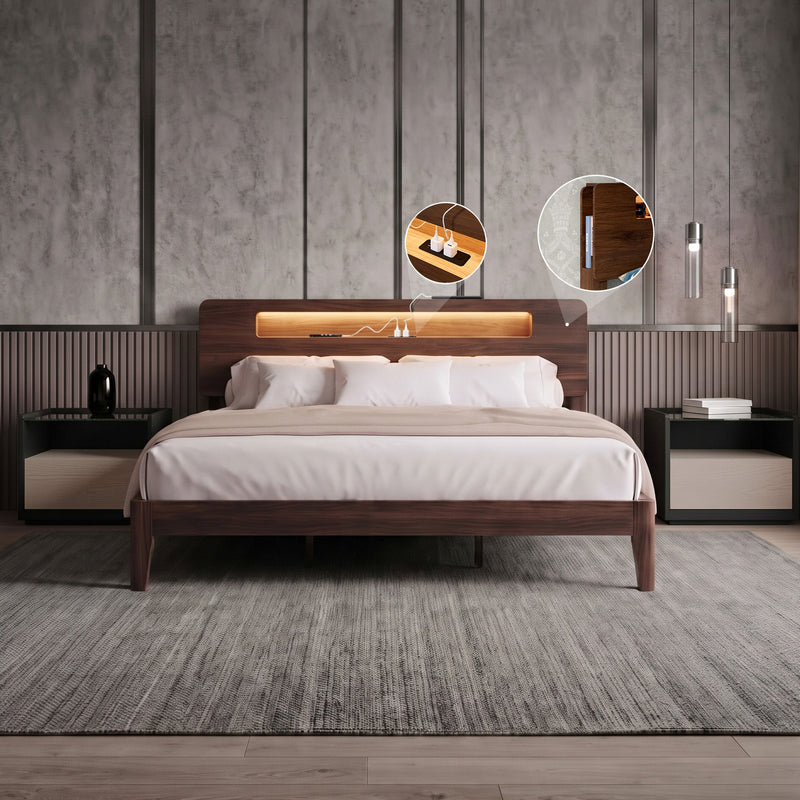
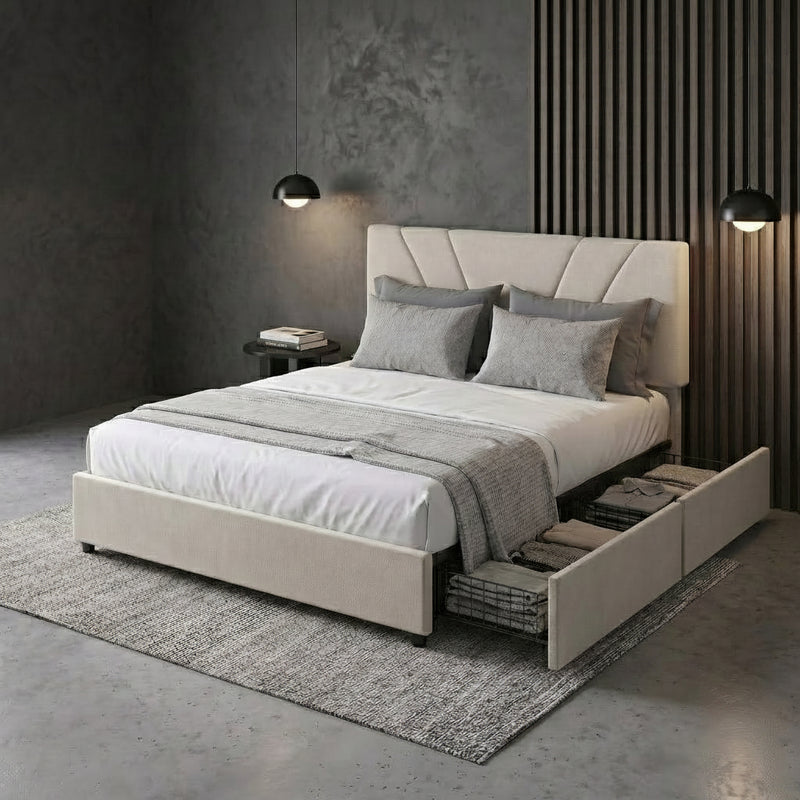
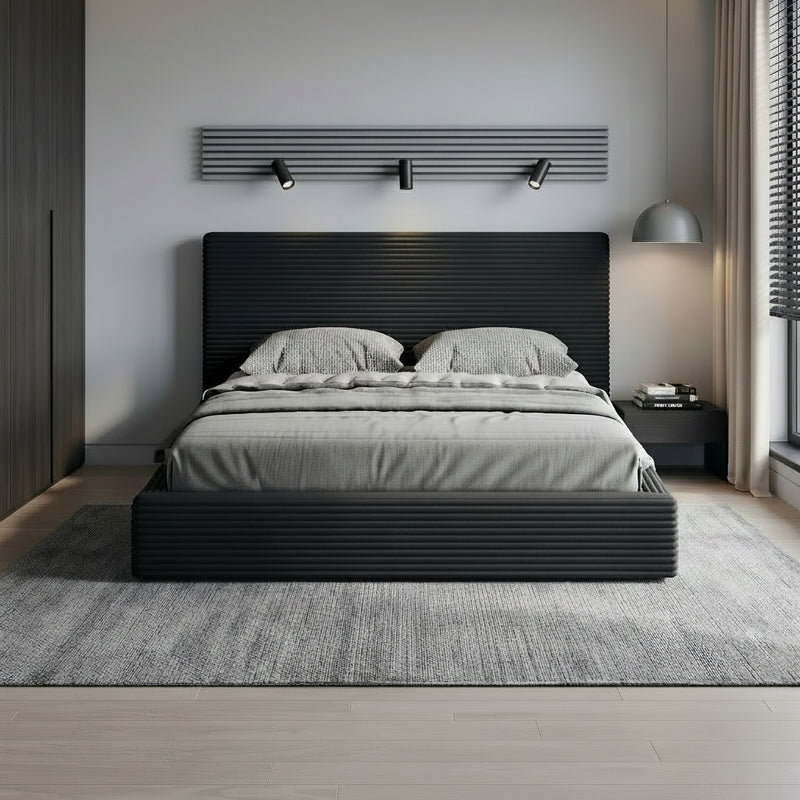
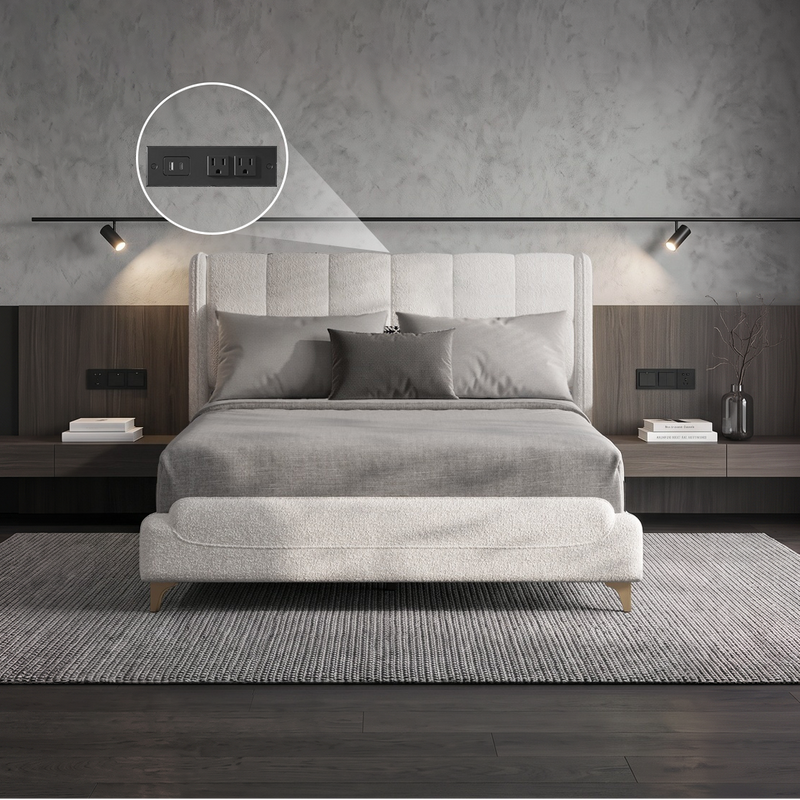

Everybody wants the king. It's the dream bed, the one in the hotel suite, the one where nobody fights over territory and the dog fits at the foot without anybody getting kicked. Then you actually try to put one in a normal bedroom and discover that the dream comes with a footprint — and that footprint doesn't always fit the room you have.
So let's settle the queen vs king mattress question properly. A queen is 60" × 80". A king is 76" × 80". Same length, 16 inches more width — and roughly two extra feet of floor space once you add a frame and walkways. Below you'll find the exact dimensions, the minimum bedroom size each one needs, and an honest read on when sizing up actually improves your sleep and when it just costs you money.
Queen vs King Mattress: Quick Size Comparison Chart
Here's the short answer before the detail. If your bedroom is smaller than about 10' × 11', choose a queen. If it's 12' × 12' or larger, a king becomes genuinely livable. Between those two, it depends on whether you need nightstands on both sides.
| Feature | Queen Mattress | King Mattress |
|---|---|---|
| Dimensions (inches) | 60" W × 80" L | 76" W × 80" L |
| Dimensions (cm) | 152 × 203 cm | 193 × 203 cm |
| Dimensions (feet) | 5' × 6'8" | 6'4" × 6'8" |
| Sleeping width per person | 30 inches | 38 inches |
| Minimum bedroom size | 10' × 10' | 12' × 12' |
| Ideal bedroom size | 10' × 12' | 13' × 13' or larger |
| Best for | Most couples, standard bedrooms, guest rooms | Large bedrooms, co-sleeping families, restless partners |
| Typical price difference | Baseline | 20–35% more, before bedding |
The reason this decision matters is that a bed isn't the only thing in a bedroom. You need nightstands, a dresser, a path to the closet, room for the door to swing, and space to stand while you get dressed. A king can technically fit in a medium room the way a sectional can technically fit in a small living room — by dominating everything around it. The real question is never "will the mattress fit between the walls." It's "will the room still function once the bed is in it."
Queen and King Mattress Dimensions (Inches, Feet, and cm)
A queen mattress is 60 inches wide and 80 inches long (152 × 203 cm). A standard king mattress — sometimes called an Eastern king — is 76 inches wide and 80 inches long (193 × 203 cm). The length is identical. Queen vs king is purely a width decision.
That identical 80-inch length is worth pausing on, because it removes a variable most people assume is in play. Eighty inches comfortably accommodates sleepers up to about 6'4". If you're taller than that, neither a queen nor a standard king solves your problem — you need a California king or a king-length adjustable base, which we'll cover below.
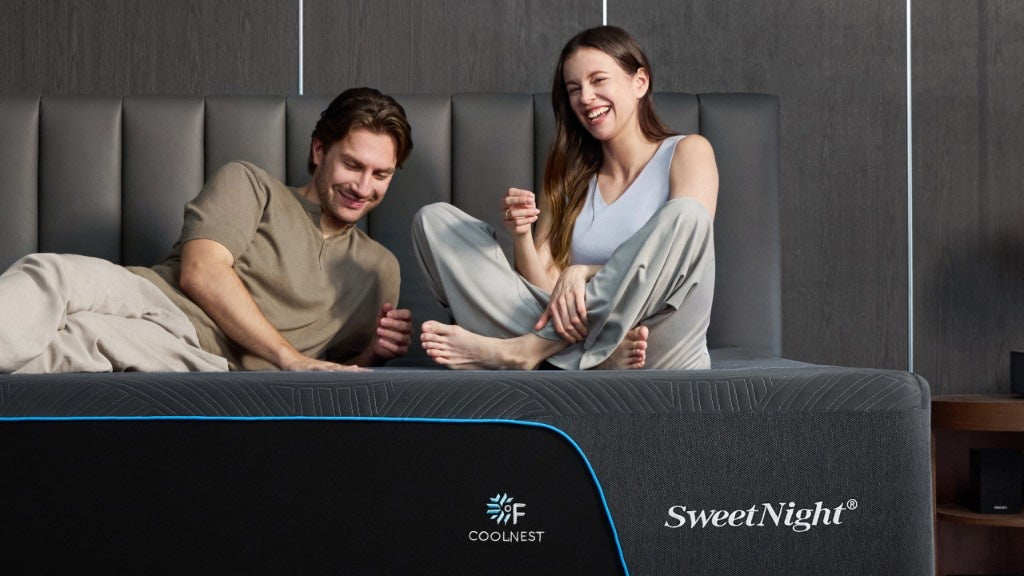
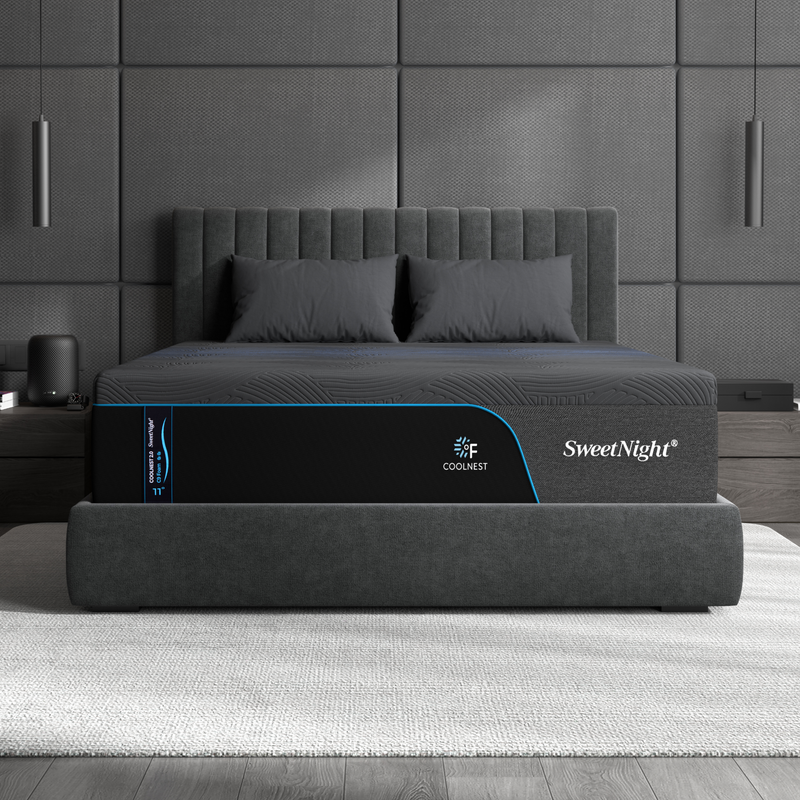
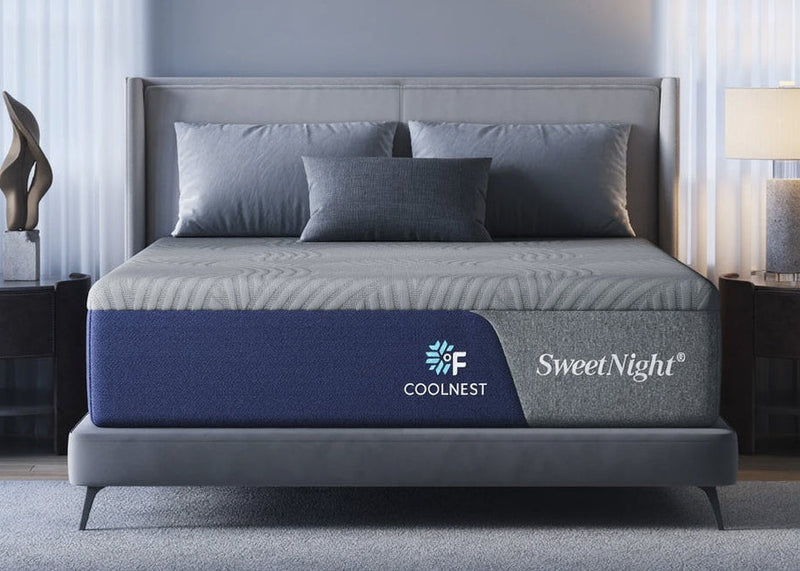
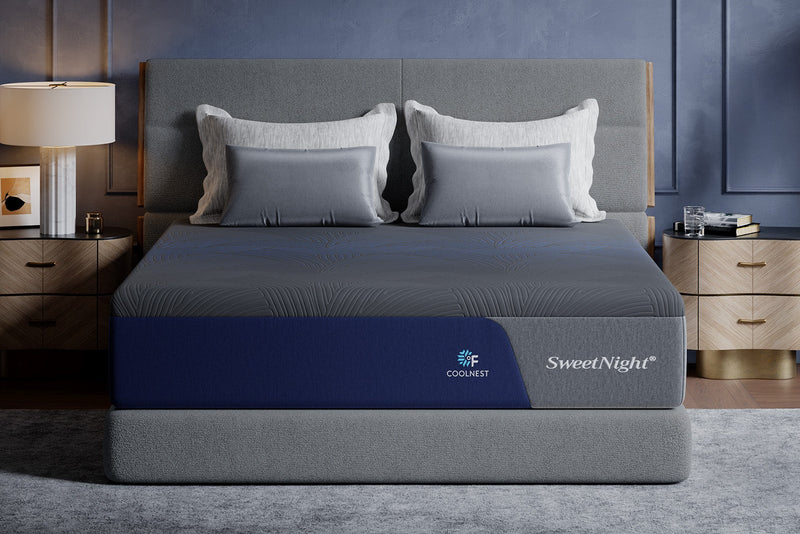
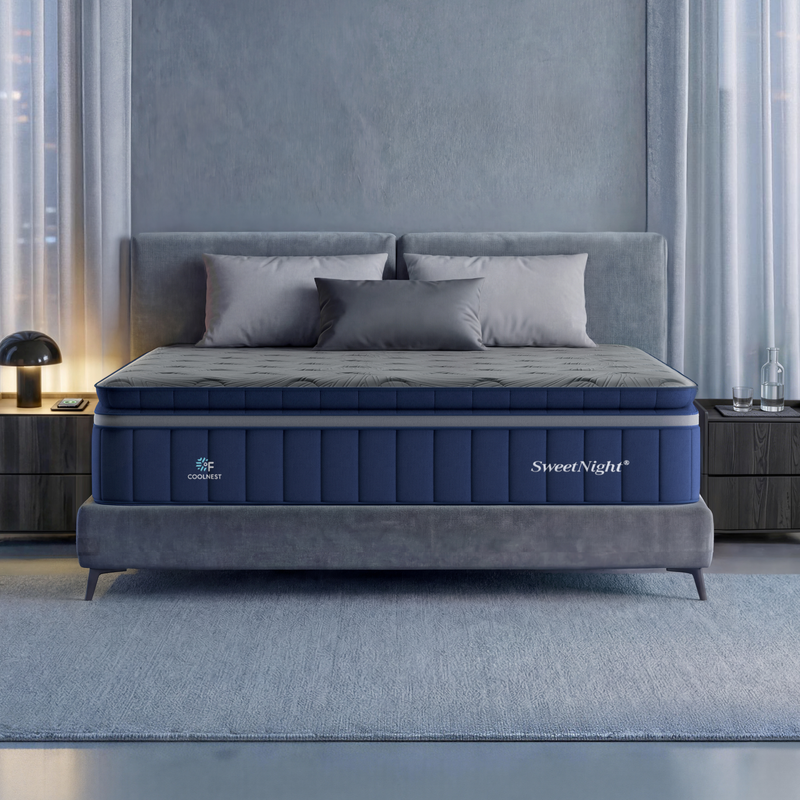
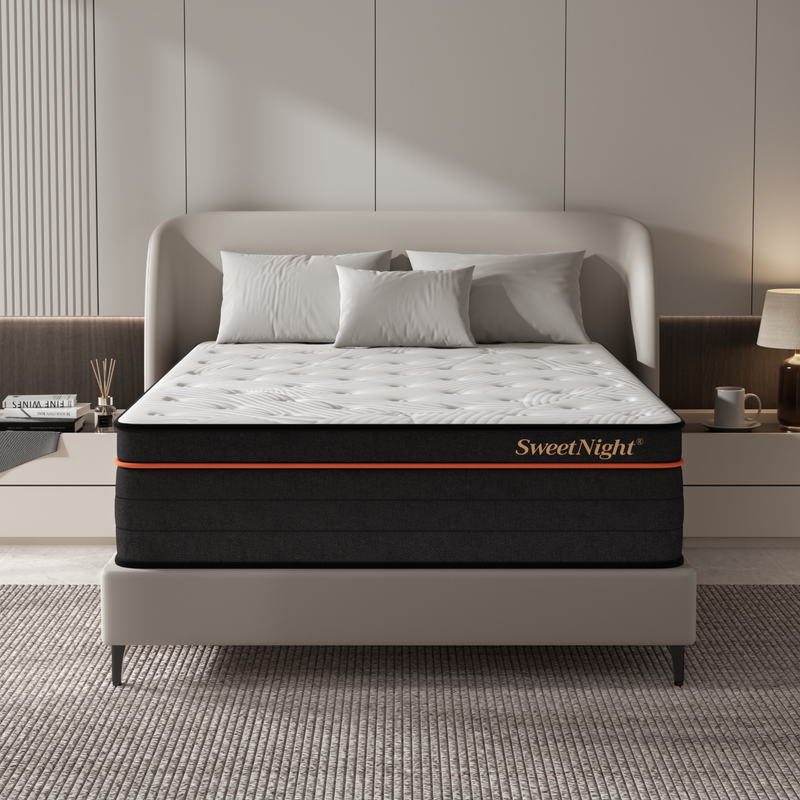
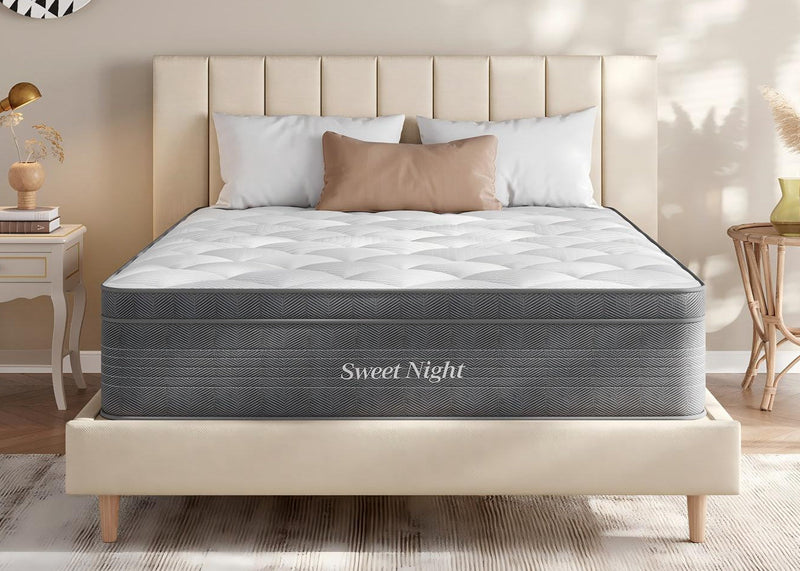
Standard mattress thickness runs 10 to 14 inches in both sizes. A 14-inch profile like the SweetNight CoolNest® Ultra sits at the taller end, which affects sheet depth (you'll want deep-pocket fitted sheets) but not floor footprint. Write the numbers down before you shop, because a bed frame adds inches on every side — and that's exactly where room plans quietly go wrong.
How Much Bigger Is a King Bed Than a Queen?
A king is 16 inches wider than a queen — 76 inches versus 60. In sleeping terms, that's 8 extra inches of personal width per person: 30 inches each on a queen, 38 inches each on a king.
In total surface area, a queen gives you 4,800 square inches and a king gives you 6,080 — about 27% more mattress. That's a real difference, and 30 inches per person is worth putting in perspective: it's roughly the width of a twin bed each. Fine for two average-sized adults who sleep relatively still. Tight for two larger adults, a restless sprawler, or any household where kids and pets migrate into the bed at 3 a.m.
Here's the useful mental image: two twin XL mattresses side by side equal exactly one king — 76 by 80 inches. A king isn't "a bit bigger than a queen." It's literally two full-length single beds pushed together. If that sounds like more bed than your room or your relationship needs, that instinct is worth listening to. Plenty of couples buy the king, love the idea, and then admit they still sleep in the same three feet of it.
What Size Bedroom Do You Need for a King Size Bed?
This is where the frame ambushes people. The mattress dimensions are not the footprint — the bed is. Add a platform frame and a headboard and a standard king often occupies closer to 80" × 86" on the floor: nearly seven feet by just over seven feet.
For that to work without the room feeling packed, you want a bedroom of at least 12' × 12', and 12' × 14' is where a king really breathes with nightstands on both sides.
| Bedroom size | Queen (60" × 80") | King (76" × 80") |
|---|---|---|
| 9' × 10' (small) | Tight — one nightstand only | Not recommended |
| 10' × 11' (standard) | Comfortable, two nightstands | Fits, but no nightstands / minimal walkways |
| 11' × 12' | Roomy, full furniture layout | Workable, walkways at bare minimum |
| 12' × 12' | Generous | Comfortable minimum for a king |
| 12' × 14' or larger | Excess space | Ideal — king with nightstands and a dresser |
The clearance rule is 24 to 30 inches of walking space on every side you actually use. Two feet is the minimum to move comfortably, make the bed, and not bark your shins in the dark. Do the arithmetic: a 76-inch king plus two 24-inch walkways is 124 inches — about 10.3 feet — just for the bed and its side paths, before a single nightstand.
Nightstands are the detail that quietly decides this. A functional bedroom needs 18 to 24 inches on each side for a nightstand and a path. Add those to the king's 76 inches and you need over 9 feet of wall width before anything else enters the room. If you can't fit nightstands, the room is telling you the bed is too big for it — and that's a message worth heeding before the delivery truck shows up.
One more thing showrooms don't tell you: retail floors are built to make beds look small. High ceilings, open floor, nothing around the mattress to give it scale. Then it arrives in a room with a door, a closet, a dresser, and eight-foot ceilings, and suddenly it's enormous. The mattress didn't change size — the context did.
Minimum Room Size for a Queen Size Bed in a Small Bedroom
A queen needs a minimum of 10' × 10' to work comfortably, with 10' × 12' being the sweet spot. With a frame, a queen's real footprint is roughly 64" × 84". Add two 24-inch walkways to the 60-inch width and you need 108 inches — exactly 9 feet — of wall, which fits inside almost every standard bedroom built in the last fifty years.
That's precisely why the queen is the best-selling mattress size in the United States. It hits the intersection of enough sleeping room for two adults and enough leftover floor for the room to still be a room.
Under about 10' × 10', a queen still works but needs planning: center it on one wall, accept a single nightstand, and consider wall-mounted lamps or floating shelves instead of bedside tables. Under 9' × 9', you're into full-size (54" × 75") territory. And in a small bedroom, a king is essentially off the table regardless of how much you want one — a right-sized bed in a functional room beats an oversized bed in a cramped one every night of the week.
Is a Queen Size Bed Big Enough for Two Adults?
For most couples, yes. At 60 inches wide, a queen gives each partner 30 inches of personal width and leaves the rest of the bedroom intact — nightstands on both sides, a dresser against the wall, room to walk.
A queen starts to feel tight in a specific set of cases:
- Two larger adults, or one partner over 6' with broad shoulders
- Couples who want real physical separation to sleep well
- Households where kids or pets regularly join the bed
- Sleepers who sprawl, starfish, or change position frequently
The diagnostic is simple: if either of you regularly wakes up clinging to the edge, a queen is undersized for your situation. If you wake up somewhere in the middle, size isn't your problem.
Because here's the pattern that shows up in every couples' mattress discussion: people who upgrade from queen to king rarely regret the sleeping space, but a good number wish they'd understood the room and bedding costs first. And plenty of couples who stayed on a queen report zero complaints once they fixed the actual problem — usually a sagging surface or poor motion isolation, not width. "Queen or king" is the question people ask; "is my current bed too small, or just worn out?" is the question that solves more sleep problems. Choosing from a range built for two — the best mattress for couples options — often does more for shared comfort than jumping a size.
King vs Queen Mattress for Couples Who Move at Night
Space isn't only about the room — it's about the two people in the bed. If one of you is a restless sleeper, a cover-stealer, or works a different shift and climbs in at odd hours, those 16 extra inches of king width put real distance between you. This is the strongest case for sizing up: not luxury, conflict avoidance.
But width alone doesn't solve movement, and this is where people overspend chasing the wrong fix. If you can feel your partner shift on a king, the problem isn't size — it's motion transfer. A mattress with strong motion isolation on a queen will beat a bouncy king for a restless couple every time, because memory foam absorbs movement locally instead of propagating it across the surface.
Heat is the other shared-bed problem a bigger mattress doesn't fix. Two bodies generate the same warmth regardless of width; a king just spreads the same two furnaces slightly further apart. If you're waking up hot, the fix is construction, not dimensions — which is where a cooling memory foam mattress with active temperature regulation does what extra inches can't. Browse the full cooling mattress collection if heat is your main complaint.
California King vs King vs Queen: Best Bed Size for Tall Sleepers
A California king is 72" × 84" (183 × 213 cm) — four inches narrower than a standard king, but four inches longer. It's a length solution, not a width solution, and people mix this up constantly.
| Size | Width × Length | Width per person | Best for |
|---|---|---|---|
| Queen | 60" × 80" | 30" | Most couples, standard rooms |
| King (Eastern) | 76" × 80" | 38" | Maximum shared width, large rooms |
| California King | 72" × 84" | 36" | Sleepers over 6'4", long narrow rooms |
Choose a California king only if someone in the bed is taller than about 6'4", or if your bedroom is long and narrow — the smaller width buys you eight inches of walkway back. For everyone else, the standard king is the better king, and bedding for it is far easier to find. Note that Cal king needs a bedroom of at least 12' × 14' because of the added length at the foot.
Split King vs King Bed: How Two Twin XL Mattresses Work
A split king is two twin XL mattresses (38" × 80" each) side by side, occupying the exact 76" × 80" footprint of a standard king. Same room requirement, completely different flexibility.
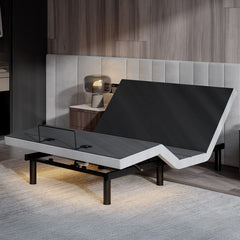
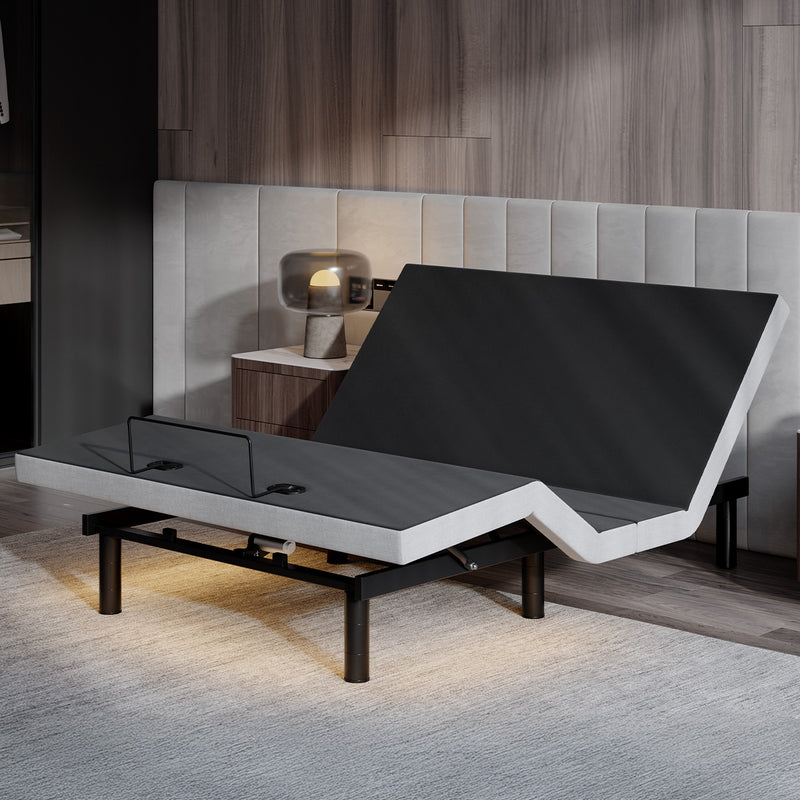
Split kings make sense when partners want different firmness levels, when you're pairing the bed with an adjustable base so each side can incline independently, or when getting a single king mattress up a tight staircase is genuinely impossible. The trade-off is the seam down the middle — most couples solve it with a foam gap filler and a king-size mattress protector, but it's worth knowing it's there before you commit.
Worth noting: a split king is not an option in a queen size. If independent adjustability matters to you, king is the entry point, and that alone can decide the queen vs king question regardless of room size.
How to Measure Your Bedroom Before Buying a Queen or King Mattress
Don't guess this part. Tape is cheap and returning a bed frame is not.
- Measure wall to wall — full room length and width, not just the wall the bed will sit against.
- Tape the footprint on the floor. 76" × 80" for a king, 60" × 80" for a queen. Add 4–6 inches on each side if your frame has an overhanging rail or headboard.
- Walk the walkways. Mark 24–30 inches on every side you'll actually use, including the foot if the room's layout means you pass it.
- Add the nightstands. 18–24 inches each side. If they don't fit, the bed is too big.
- Check the obstructions — door swing, closet door clearance, radiators and floor vents you can't block, windows you don't want buried behind a headboard.
- Measure the delivery path. Doorways, stair turns, and landings. Boxed mattresses solve most of this; traditional king mattresses do not.
This ten-minute exercise is the single best defense against the most common bedroom regret there is: the bed that fit the wall but ruined the room.
Queen vs King Mattress Price, Bedding, and Hidden Costs
The mattress price is only the first bill when you go king. A king typically runs 20–35% more than the same model in queen, but so does everything that touches it:
- Frame and foundation — king platforms need center support legs; some setups require two twin XL foundations
- Bedding — king sheets, comforters, duvet covers, and protectors all cost more and come in fewer patterns, so sales pass you by more often
- Pillows — a king bed looks sparse with two standard pillows; you'll want king pillows or four standards
- Moving — a king is a genuine problem on a tight staircase or a landing with a turn
- Floor space — the least visible cost, and the one people feel every day
None of this means don't buy a king. It means budget the whole system, not just the mattress. For some couples the king earns every extra dollar. For others, that same money buys a materially better queen — one with the cooling and support they'll actually feel every night.
Best Cooling Memory Foam Mattress in Queen and King Size
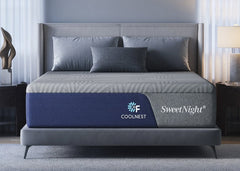
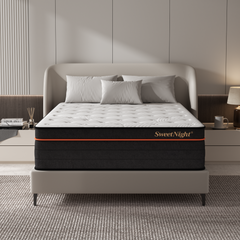
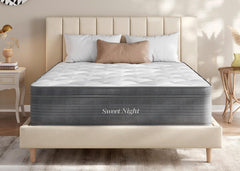
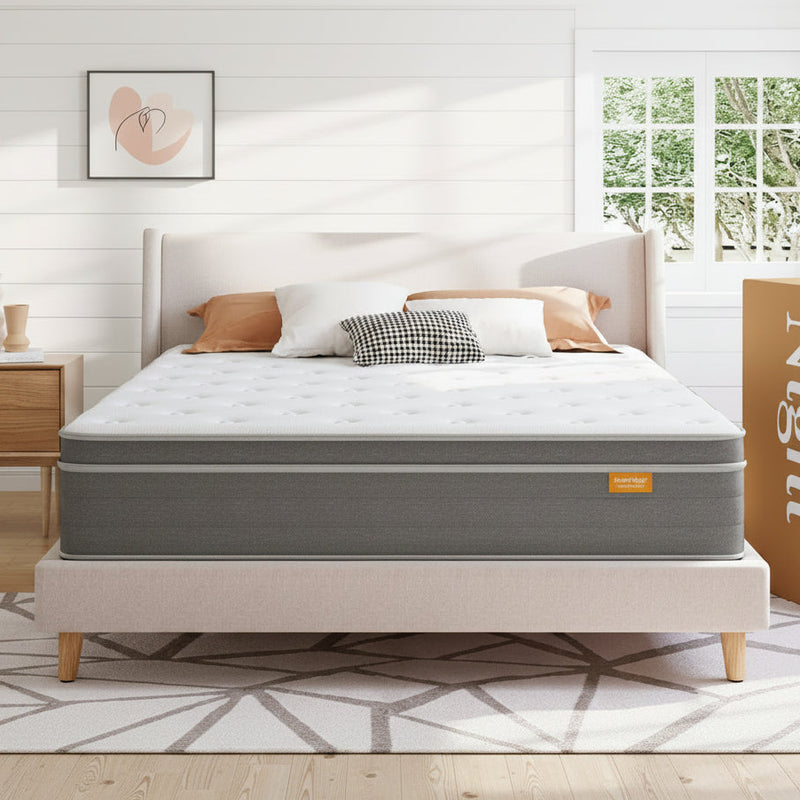
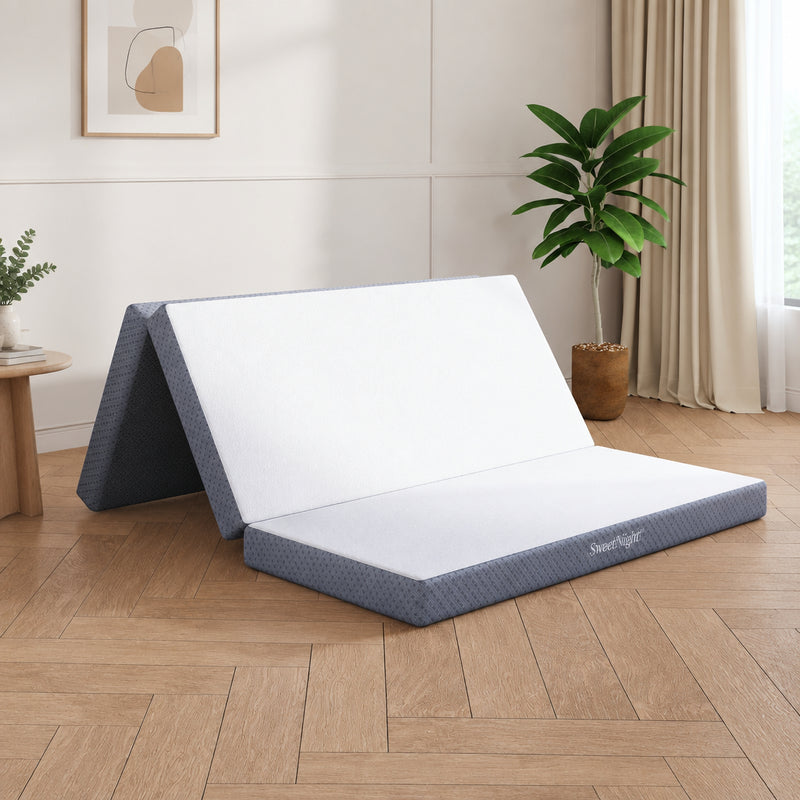
Whichever size wins, construction is what determines whether you sleep well in it. Here's what to look for, using the SweetNight CoolNest® Ultra as a worked example — it's available in both queen and king, so you can size to your room without trading away the features that matter.
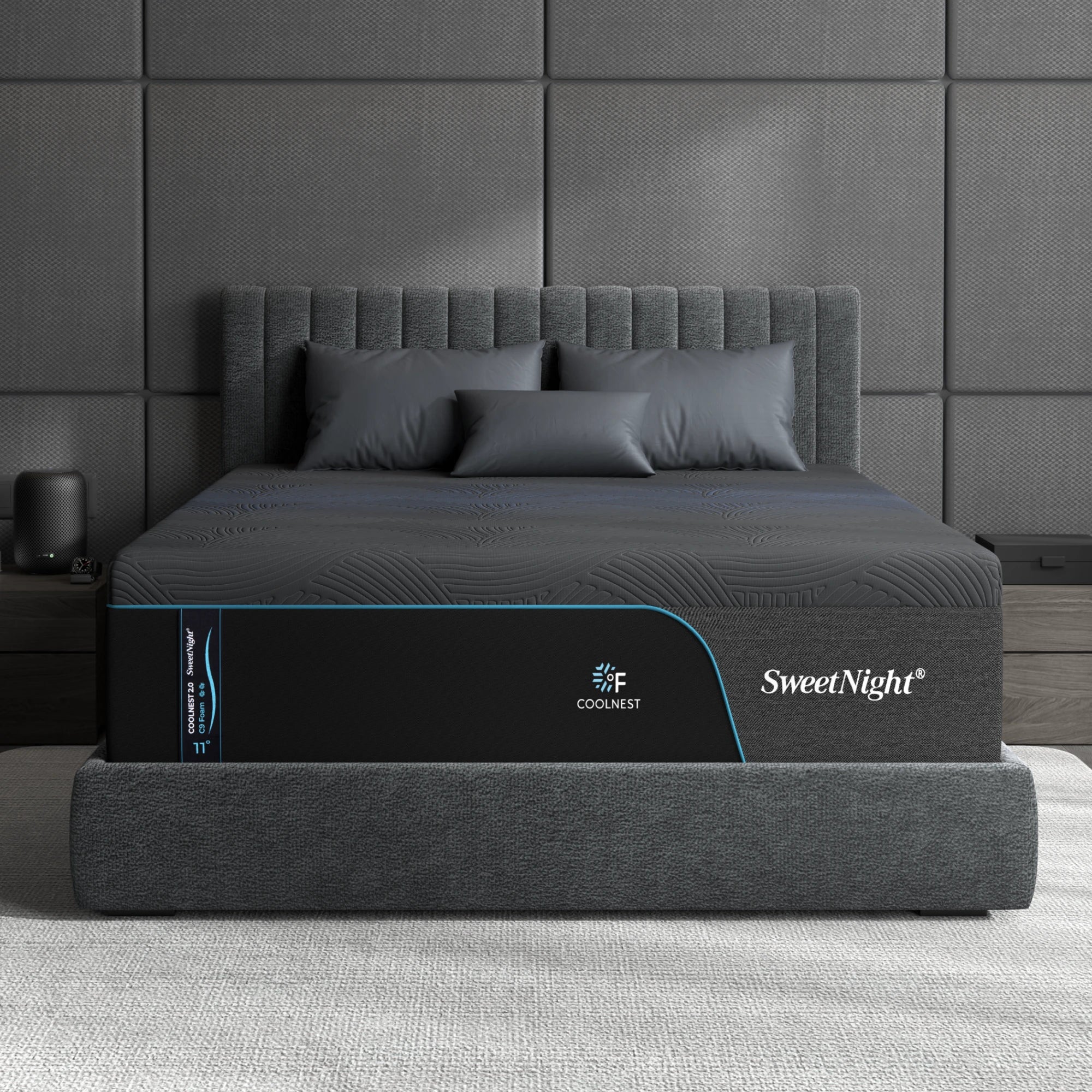
Cooling that works in layers, not just at the surface. The Advanced CoolNest® Ultra System is engineered to feel up to 11° cooler. The gradient Ice Silk cover delivers instant contact cooling with a Qmax of 0.25 J/(cm²·s) — that's the measured heat-absorption rate when your skin touches the fabric, and it's the difference between a cover that feels cool for a minute and one that stays cool. Underneath, PCMflux® high-resilience foam actively balances temperature through the night by absorbing and releasing heat as your body temperature cycles, rather than trapping it the way conventional memory foam does.
Breathability instead of heat retention. AirMesh™ breathable memory foam with a 3D open-channel structure delivers 6× the airflow of standard foam, so heat dissipates continuously rather than pooling under two bodies. A ventilated gel memory foam layer adds a second heat-sink beneath that — this is the layer that matters most for couples, because it addresses the shared-bed heat problem that a bigger mattress simply cannot solve.
Support that keeps a shared bed comfortable. The refined 7-zone precision support foam uses a wavy-cut design to firm up under the lumbar and soften at the shoulders and hips, promoting ergonomic spinal alignment for side, back, and combination sleepers. An enhanced stability support core and a durable anti-slip dotted fabric base keep the whole structure from shifting — which matters more on a king, where a wider surface has more room to sag or migrate on a platform frame.
Specifications at a glance:
- Price range: $729.99 – $1,029.99
- Profile: 14 inches
- Firmness: Medium / Medium Plush — the range that suits the widest span of body types, which matters when two people share one surface
- Sizes: Queen and King both available
- Certifications: All foam CertiPUR-US certified; fabric passes STANDARD 100 by OEKO-TEX
The practical point for this article: if your room says queen and your instincts say king, the honest fix is usually a better-built queen rather than a bigger one. Cooling, motion isolation, and zoned support solve the complaints that most couples mistakenly attribute to width.
Queen or King Mattress: Final Recommendation by Bedroom Size
Choose a queen if: your bedroom is 10' × 11' or smaller; you want nightstands on both sides; you're furnishing a guest room; you're two average-sized adults without co-sleeping kids or pets; or your budget is better spent on mattress construction than mattress dimensions.
Choose a king if: your bedroom is 12' × 12' or larger; one partner is restless or works a different shift; kids or pets regularly join the bed; either sleeper is broad-shouldered or over 6'; or you want a split king with independent adjustability.
Choose a California king if: someone is taller than 6'4", or your bedroom is long and narrow rather than square.
Start with the room, because the room votes first and it doesn't compromise. Then let sleep habits break the tie. And remember that construction beats dimensions for actual sleep quality — a well-chosen queen that fits your body and your room will out-sleep a poorly chosen king every time.
The two questions that cut through all the marketing: does my room have the space, and does my sleep actually need it? If both answers are yes, the king is a genuine upgrade and you should enjoy every inch. If either answer is no, a well-built queen with the right support and cooling will serve you better, cost you less, and leave your bedroom feeling like a room instead of a mattress warehouse.
Queen vs King Mattress FAQ
How much bigger is a king than a queen?
A king is 16 inches wider than a queen — 76" versus 60" — with identical 80-inch length. That's 8 extra inches of sleeping width per person and about 27% more total surface area.
Can a king bed fit in an 11' × 12' room?
Physically yes, comfortably no. A king plus two 24-inch walkways needs 10.3 feet of width, leaving under 9 inches for nightstands. It fits, but the room stops functioning well. An 11' × 12' room is a better queen room.
Is a queen big enough for two adults?
For most couples, yes. Each person gets 30 inches — about a twin bed's width. It gets tight for two larger adults, restless sleepers, or households where kids and pets share the bed.
What's the minimum bedroom size for a king bed?
12' × 12' is the practical minimum, with 12' × 14' recommended if you want nightstands on both sides plus a dresser.
Is a king bed two twin XL mattresses?
In footprint, yes. Two twin XL mattresses (38" × 80" each) equal exactly 76" × 80" — a standard king. That's how split kings work and why adjustable bases are common in king size.
Does a bigger mattress mean better sleep?
Only if your problem is space. If you wake up pressed against the edge or getting elbowed, sizing up helps. If you wake up hot, sore, or feeling every movement, the issue is firmness, cooling, or motion isolation — and a king will just be a larger version of the same problem.
Do king sheets fit a California king?
No. A California king is narrower and longer (72" × 84"), so standard king bedding won't fit correctly. Buy Cal king–specific sheets.
Should I get a king mattress if my ceiling is low or my stairs are tight?
Measure the delivery path first. A boxed memory foam mattress compresses for delivery and solves most access problems; a traditional innerspring king often does not.