
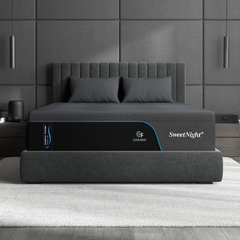
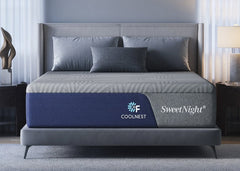
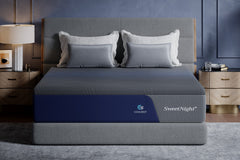
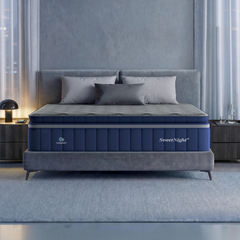



If you sleep hot, you have probably already gone down the rabbit hole: you type "memory foam or hybrid, which sleeps cooler" into a search bar at 2 a.m., kick the blanket off one leg, and try to make sense of a hundred conflicting opinions. One person swears their memory foam bed is a heat trap. The next says their hybrid runs just as warm. Somebody else claims the whole thing is marketing and the cover is all that matters.
The short answer: on average, a hybrid mattress sleeps cooler than an all-foam one, because its coil layer creates open air channels that let body heat escape. But that advantage is small, roughly two to three degrees in most side-by-side testing, and a purpose-built cooling memory foam mattress with gel, open-cell structure, and phase-change materials routinely beats an average hybrid. How the bed is engineered for heat matters more than whether it has coils in it.
Below is the honest version of why that is, where the two materials genuinely differ, and how to pick the one that fits how you sleep.
Memory Foam vs Hybrid Mattress: Which Sleeps Cooler? (Quick Comparison)
Here is the head-to-head before we get into the why. This compares a typical mid-range version of each type, not the best or worst example of either.
| Cooling factor | Memory foam mattress | Hybrid mattress |
|---|---|---|
| Airflow through the core | Limited unless engineered (open-cell, air channels) | Strong — open space between pocketed coils |
| How deep you sink | Deeper hug, less skin exposed to air | Shallower, you sleep more "on top" |
| Surface temperature | Depends almost entirely on cover and infusions | Depends on how thick the comfort layer is |
| Moisture and humidity release | Slower in dense foam, fast in AirMesh-style foam | Faster through the coil layer |
| Typical verdict for hot sleepers | Excellent if built for cooling, warm if basic | Reliably cool unless buried under thick foam |
| Motion isolation for couples | Best in class | Good, but coils transfer some movement |
| Bounce and edge support | Softer edges, slower response | Springier, firmer perimeter |
Read that table one more time and notice something: only the first row is strictly about coils versus foam. Everything else is a design decision a manufacturer can get right or wrong in either category. That is the thesis of this entire guide.
Why Does a Mattress Sleep Hot? 4 Factors Behind Heat Retention
Before we pit foam against hybrid, it helps to know what you are fighting. Your body dumps heat all night. To fall and stay asleep, your core temperature needs to drop a degree or two, and your skin has to shed that warmth into the air around you. A mattress that traps heat against your body keeps your skin warm, your core stays elevated, and you wake up at 3 a.m. flipping to the cool side of the pillow.
1. Airflow. Can heat actually escape, or does it pool where your body presses down? Open structures — coils, perforations, open-cell foam, air channels — give warmth somewhere to go.
2. Sinkage. The more you are hugged by the surface, the less skin is exposed to open air, and the warmer you feel. This is why firmness and support quietly control temperature.
3. Surface materials. Some fabrics and foams conduct heat away from your skin on contact; others just sit there and hold it. This is what a "cool to the touch" cover is measuring.
4. Moisture. This is the one people forget. You sweat at night even when you do not feel damp, and that moisture has to evaporate to cool you off. A mattress that traps humidity keeps sweat sitting against your skin, which feels clammy and blocks the evaporative cooling your body is trying to do. When we talk about breathability, we are really talking about heat and moisture together — a surface that releases both feels dry and cool, one that seals them in feels swampy by 3 a.m.
Only one of those four is strictly about "foam versus coils." The other three apply to any mattress ever made. That is why two memory foam beds can feel wildly different, and why a cheap hybrid can sleep hotter than a well-designed foam bed.
Do Memory Foam Mattresses Sleep Hot? Old Foam vs Modern Cooling Foam
Old-school memory foam earned its reputation fairly. The original visco-elastic foam from decades ago was dense and closed-celled. It softened with your body heat, wrapped around you, and then held that warmth like a thermos. You sank in, less skin touched open air, and the foam trapped the heat you generated. People who bought those early beds are the ones telling you online that foam "sleeps like a furnace."
But a modern cooling foam bed is a different animal, and manufacturers spent years attacking exactly this problem:
- Open-cell foam structures let air pass through instead of sealing it in.
- Gel beads and gel-infused layers absorb and redistribute heat away from pressure points.
- Graphite and copper infusions conduct warmth away from your body, the way metal does.
- Cool-touch and ice-silk covers pull heat on contact and wick moisture off the surface.
- Phase-change layers absorb heat when you get too warm and release it back when you cool down.
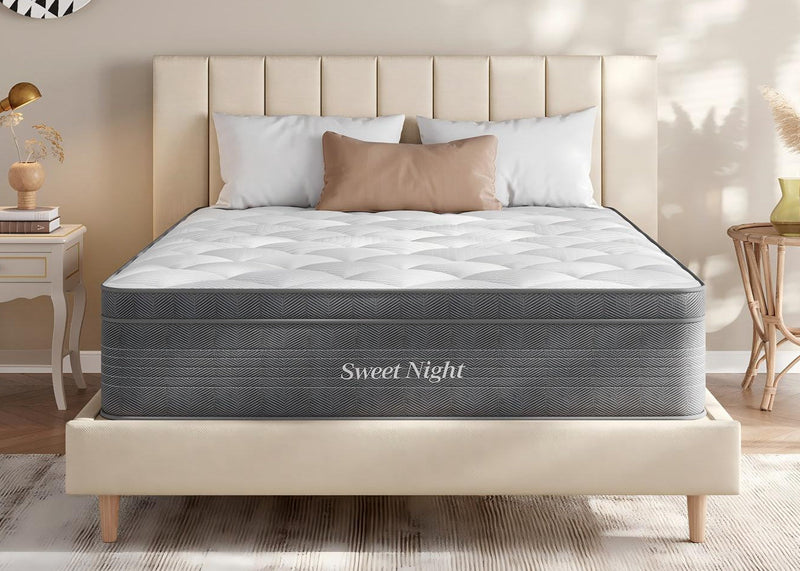
So the fair answer to "do memory foam mattresses sleep hot?" is: basic, bargain-bin memory foam still tends to, and a purpose-built cooling model does not. If you have been avoiding foam entirely because of a bad experience with a hand-me-down bed from 2011, the category has moved on without you. It is worth seeing how far a modern memory foam mattress lineup has come before you write the whole material off.
Do Hybrid Mattresses Sleep Cooler? How Coils and Airflow Work
Hybrids get their cooling reputation from one simple thing: the coil layer. A hybrid mattress puts a comfort layer of foam or latex on top of a base of individually wrapped springs. Those coils are mostly open space, so air can move sideways through that layer and heat and humidity have somewhere to go instead of building up under your back. That is genuine, physics-based airflow, not a marketing slogan.
There is a second, subtler reason hybrids often run cool. Because the coils do a lot of the support work, the comfort foam on top can be thinner. You do not sink as deep, more of your body stays near the surface where the air is, and less of you is buried inside a thick foam layer. Less sinkage plus a breathable core is a solid recipe for a cooler night.
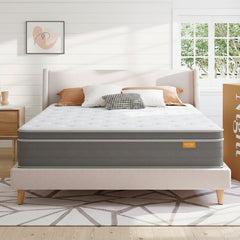
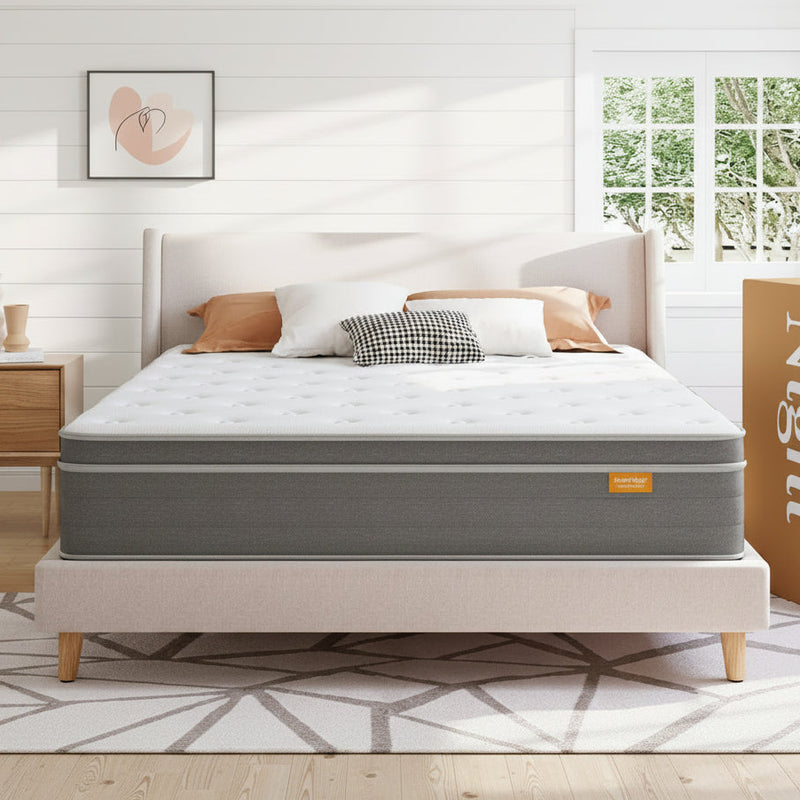
That said, do not assume every hybrid is automatically cool. If a hybrid piles four inches of dense, non-breathable foam or a heavy quilted pillow-top over its coils, you are back to sinking into a heat trap, and the airflow underneath does not help the layer touching your skin. The coils give a hybrid a head start on temperature, but the comfort layer can throw that advantage right back away. If a springy, bouncy feel appeals to you, compare a few options in a good hybrid mattress collection and look closely at what sits on top of the coils, not just the coil count.
Cooling Mattress Technology Explained: Gel, Copper, and Phase-Change Materials
Once you understand the add-ons, the foam-versus-hybrid debate loosens up, because these technologies show up in both categories.
Gel infusion is the most common. Gel beads or swirls sit inside the foam and give heat somewhere to go besides your skin. On its own, gel mostly helps you fall asleep cool rather than staying cool all night, but paired with real airflow it does serious work — which is why ventilated gel layers, not solid gel sheets, are the ones worth paying for.
Copper and graphite are conductors. Mixed into foam, they physically pull heat away from wherever your body is warmest and spread it through the layer. It is not a gimmick; metal conducts heat far better than plain foam does.
Phase-change material (PCM) is the most interesting one, and it is the same technology used in performance athletic wear and spacesuits. It absorbs heat when you cross a temperature threshold and stores it, then releases it back once you cool down, keeping the surface hovering in a comfortable window instead of climbing all night.
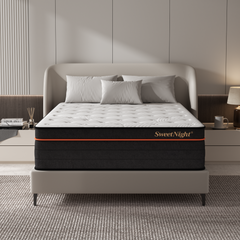
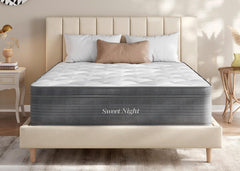
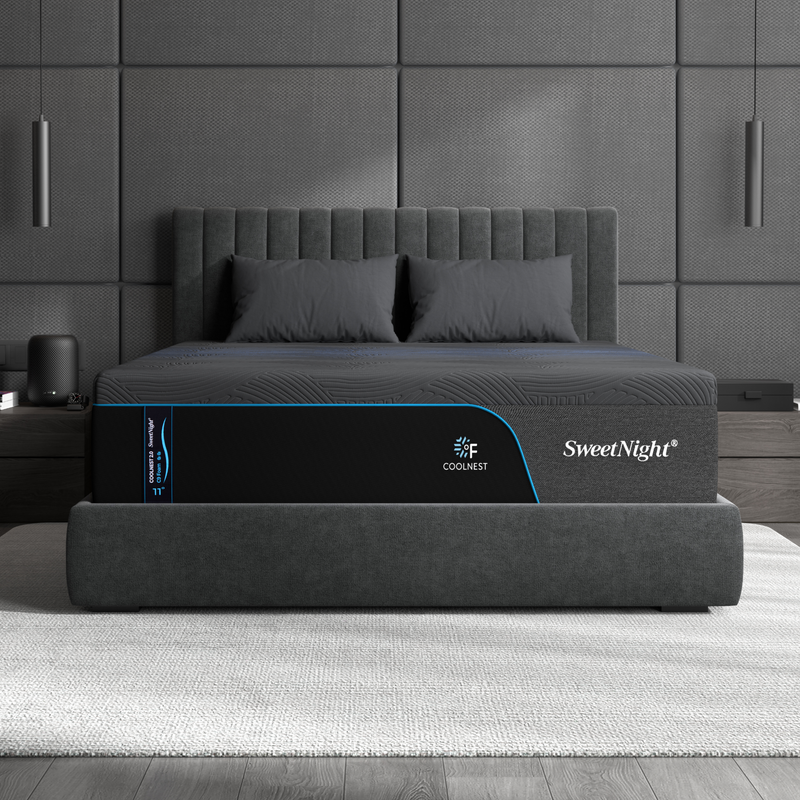
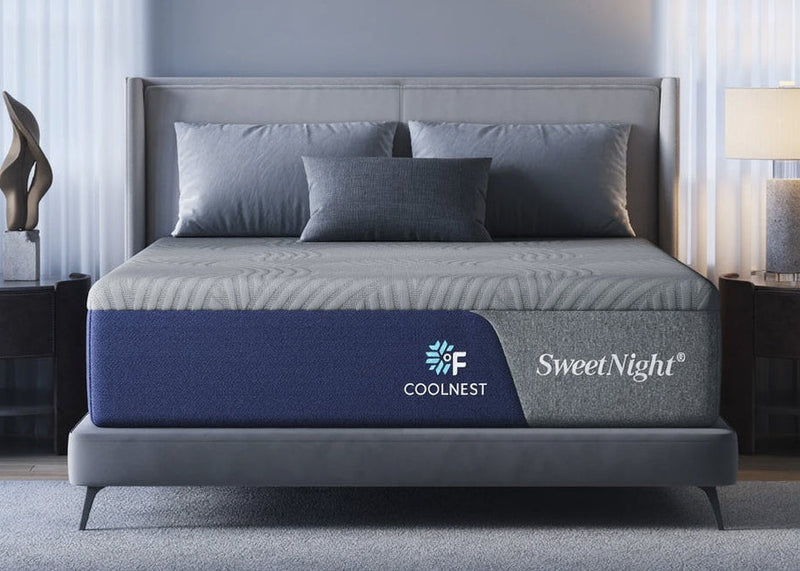
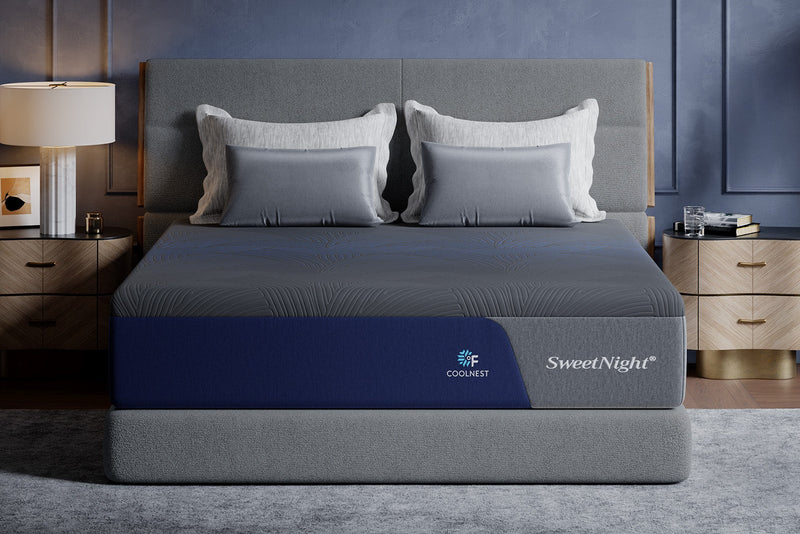
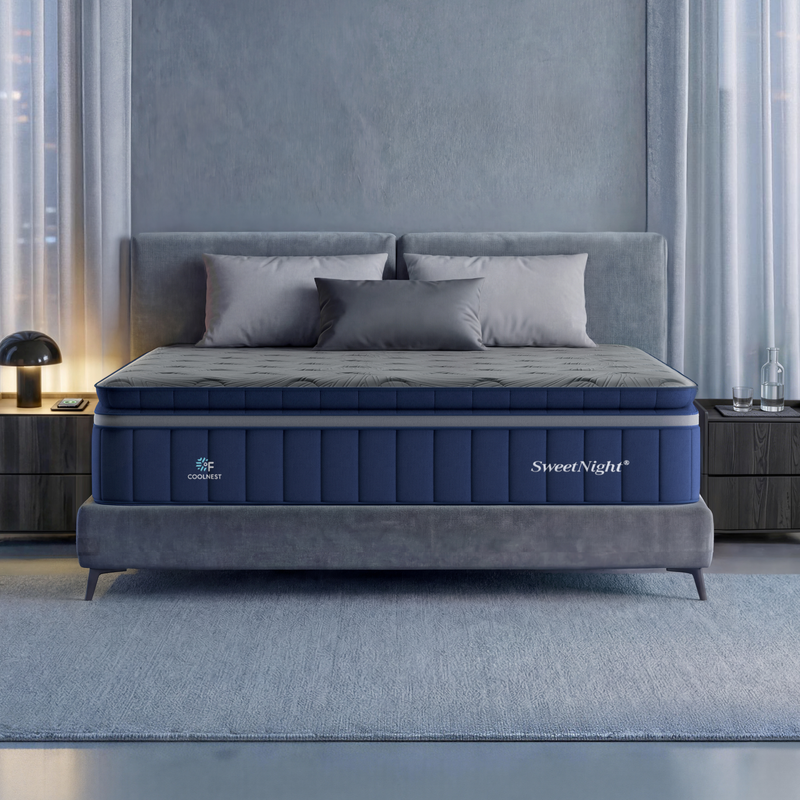
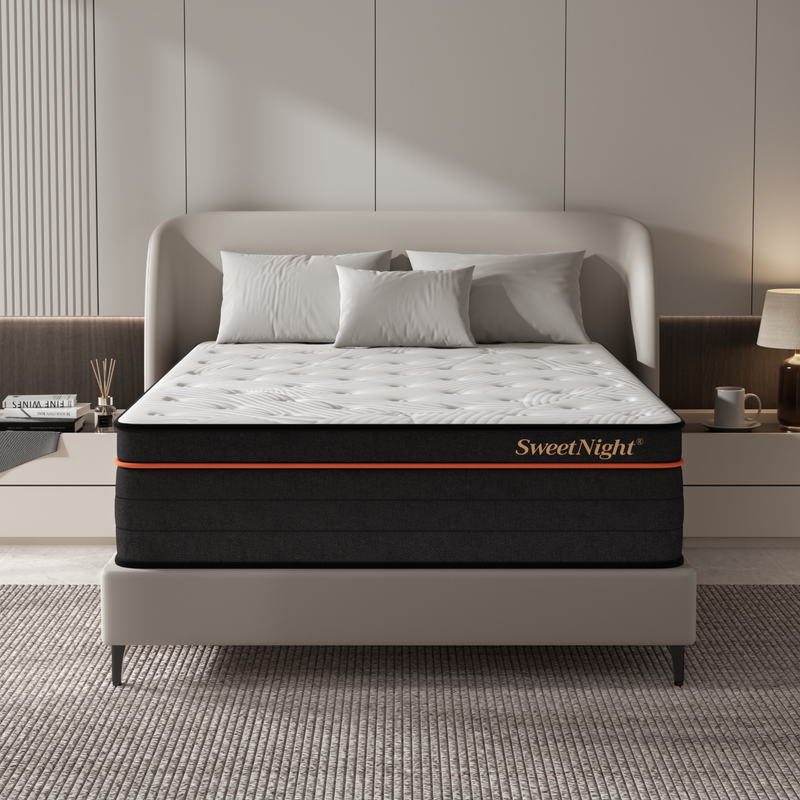
The difference between a bed that feels cool for ten minutes and one that still feels cool at 4 a.m. is stacking these stages rather than relying on any single one. The SweetNight CoolNest® Ultra is a good illustration of the stacked approach — its Advanced CoolNest® Ultra System feels up to 11° cooler through five distinct cooling stages:
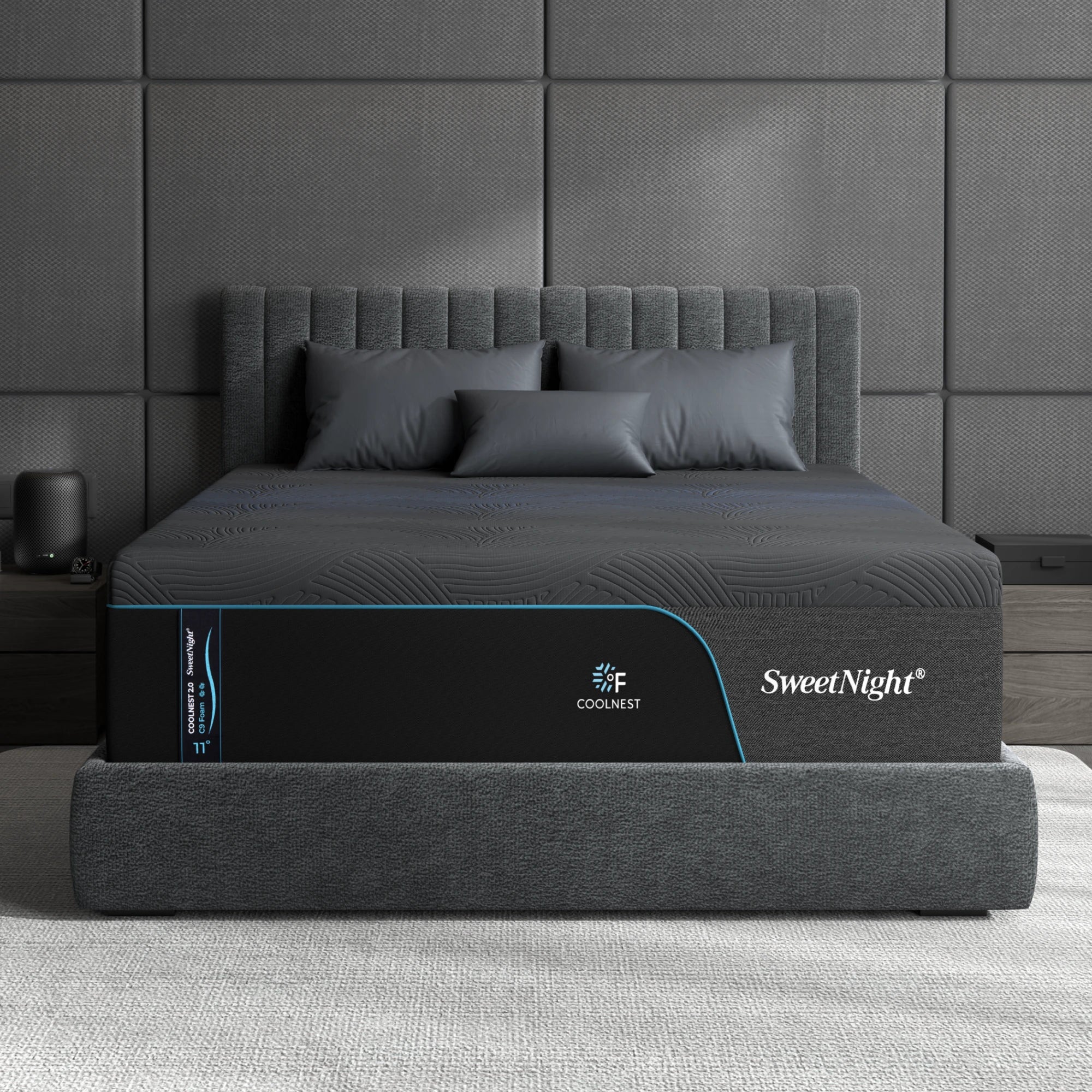
- Gradient Ice Silk Cover delivers instant contact cooling (Qmax = 0.25 J/(cm²·s)), so the surface feels cold the second you lie down.
- PCMflux® High Resilience Foam actively balances temperature through the night instead of only at bedtime.
- AirMesh™ Breathable Memory Foam with a 3D open-channel structure delivers 6× the breathability of standard foam for continuous heat dissipation.
- Ventilated gel memory foam pulls heat out of the pressure points where you run hottest.
- Refined 7-Zone ergonomic support foam in a wavy-cut design keeps hips and shoulders aligned — and, just as importantly for temperature, keeps you nearer the surface instead of sinking into the warm zone.
That combination is why a well-engineered cooling memory foam mattress can now sleep as cool as, and often cooler than, a lot of hybrids. For anyone who cares about what is actually inside the bed, all of the foam is CertiPUR-US certified and the fabric passes STANDARD 100 by OEKO-TEX.
| SweetNight CoolNest® Ultra Memory Foam Mattress at a glance | |
|---|---|
| Price range | $729.99 – $1,029.99 |
| Technology | Advanced CoolNest® Ultra System (feels up to 11° cooler) |
| Cover fabric | Gradient Cooling Ice Silk Cover (Qmax = 0.25 J/(cm²·s)) |
| Cooling | Five-stage cooling |
| Breathability | AirMesh™ breathable memory foam, 3D open-channel structure |
| Support | Refined 7-zone precision support, ergonomic spinal alignment |
| Firmness | Medium / medium plush |
| Certifications | CertiPUR-US foam, STANDARD 100 by OEKO-TEX fabric |
Memory Foam vs Hybrid on Reddit: What Hot Sleepers Actually Report
Spend an hour in the mattress and sleep threads and a few patterns jump out that the glossy buying guides never mention.
The loudest one: people who "hate foam" almost always describe an old, cheap, or thick all-foam bed with no cooling features. When someone posts about a modern gel-and-phase-change foam bed, the complaints mostly vanish. The material was never really the villain; the era and the price point were.
The second pattern is that a lot of self-described hot sleepers end up saying the same thing: the mattress got them 70 percent of the way there, and the sheets and mattress protector closed the gap. Over and over, people report buying a genuinely cooling bed and then sabotaging it with a thick, waterproof, plastic-backed protector that seals the surface like a sandwich bag. The bed can only breathe if you let it. It is the single most common self-inflicted mistake in those threads.
Third, and this surprises people, plenty of hybrid owners still post about sleeping hot. Their beds had beautiful coils and a heavy pillow-top that undid the airflow. "I bought a hybrid" is not the same as "I solved cooling." What you sink into matters as much as what holds you up.
One more thread worth pulling: expectations. A cooling mattress is not an air conditioner, and no bed will make you feel cold in a hot, humid room with no airflow. What a good one does is stop actively working against you — it does not trap and amplify your body heat, and it pulls warmth away instead of holding it. People who expect refrigeration end up disappointed; people who expect "neutral instead of an oven" end up thrilled. The winning formula that keeps showing up is layered: a cooling mattress, breathable bedding, a fan or lower thermostat, and lighter sleepwear.
Best Mattress for Hot Side Sleepers and Heavier Sleepers: Why Body Type Changes the Answer
Two people can buy the identical mattress and disagree completely about how warm it runs, and usually it comes down to their bodies and how they sleep.
Sleep position. Side sleepers press a smaller area — hips and shoulders — deep into the surface, so they sink more and expose less skin, which can feel warmer on a soft foam bed. Back and stomach sleepers spread their weight out and stay closer to the surface, so they generally run a touch cooler on the same mattress.
Body weight. Heavier sleepers compress foam more and sink deeper, which means more of the body gets surrounded and less air reaches the skin. That is one reason a heavier hot sleeper often does better on a hybrid or a firmer, zoned cooling foam: the coils or the firmer core keep them nearer the surface where the air is. Lighter sleepers do not compress the foam as much, so they stay cool even on softer surfaces that would swallow a heavier person.
Your own metabolism. Some people simply run hot — they generate more body heat, sweat more, or shed warmth less easily — and menopause, certain medications, and even a big late dinner can crank that up temporarily. Two people can share the same cooling mattress and one feels perfect while the other is still too warm. That is not a defect in the bed; it is biology. If you are the hotter half of a couple, stack more of the cooling system in your favor: cooler sheets on your side, a fan aimed your way, lighter pajamas.
None of this means one material is right and the other is wrong for your body. It means you should read cooling claims through the lens of how you actually sleep. If you are a heavier side sleeper who runs hot, you want a bed that keeps you supported and near the surface — whether that is a coil-based hybrid or a firm, zoned cooling foam. It is worth looking at what a mattress built for side sleepers offers here, since the right balance of support and contouring keeps you from sinking into the warm zone in the first place.
How to Choose the Best Cooling Mattress for Hot Sleepers: A 5-Point Checklist
"It depends" is not helpful when you are ready to buy, so here is an actual shopping filter.
- Ignore the category label first and count the cooling features. Look for an open-cell or channelled foam structure, a gel, graphite, or copper infusion, a genuine phase-change or cool-touch cover, and a dedicated airflow layer. A bed with three or four of those, in either category, will beat a bed with none.
- Check for a real cooling number, not an adjective. A Qmax rating on the cover, a stated degree difference, or a breathability multiple tells you something. "Sleeps cool" on its own does not.
- Match firmness to your body and position. Heavier or hotter sleepers lean firmer and more supportive so they stay near the surface. Lighter side sleepers can go softer without cooking. Medium to medium-firm is the safest zone for most hot sleepers.
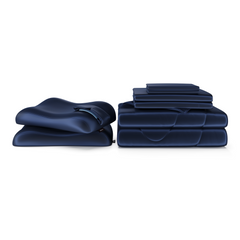
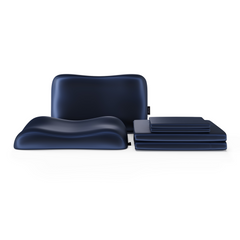
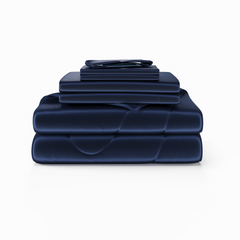
- Buy your sheets and protector as part of the mattress. Breathable cotton or a moisture-wicking blend, and a protector described as breathable rather than fully waterproof-plastic, protects the cooling you paid for.
- Use the trial period like it is your job. Temperature is deeply personal and no spec sheet can promise how a bed feels against your skin in your bedroom in July. A generous sleep trial exists precisely so you can find out risk-free.
If you would rather start from a shortlist that has already been filtered for temperature performance, browsing a dedicated best cooling mattress collection is a faster on-ramp than sorting the entire catalog yourself.
When a Cooling Memory Foam Mattress Beats a Hybrid, and Vice Versa
Choose cooling memory foam if you love the sensation of being cradled, you want top-tier pressure relief for your hips and shoulders, motion isolation matters because you share the bed, or you are a lighter to average-weight side sleeper. The one condition: buy a version that was actually engineered to sleep cool. A stacked build like a gel memory foam mattress with ventilated gel, an ice-silk cover, and phase-change foam gives you the hug without the heat, which was the whole dream.
Choose a hybrid if you like a springier, more responsive, "on top of the bed" feel, you want the most foolproof airflow with the least homework, you are a heavier sleeper who needs the extra lift of coils, or you tend to feel stuck as well as too hot in softer foam. The coils give you bounce, stronger edge support, and a built-in cooling head start.
And if you are still torn, remember the theme of this whole guide: the cooling design of the specific bed matters more than the category. A great foam bed beats a mediocre hybrid, and a great hybrid beats a mediocre foam bed. Pick the feel you love, then insist on real cooling technology inside it.
Memory Foam vs Hybrid Mattress: Frequently Asked Questions
Which mattress material sleeps cooler, foam or hybrid?
On average a hybrid does, because its coil layer creates open airflow channels that an all-foam bed has to engineer around. In practice the gap is only about two to three degrees, and a cooling foam mattress with gel, open-cell airflow, and phase-change materials can close it entirely or reverse it.
Do all memory foam mattresses sleep hot?
No. Dense, closed-cell, older or budget foam does. Foam built with open-cell structure, ventilated gel, conductive infusions, and a cool-touch cover does not.
Is gel memory foam actually cooler than regular memory foam?
Yes, but mostly at the start of the night unless it is paired with airflow. Gel gives heat somewhere to go; ventilation gives it a way out. You want both.
What firmness is best for hot sleepers?
Medium to medium-firm for most people. The firmer the surface, the less you sink, and the more skin stays in contact with open air rather than being wrapped in foam.
Can a mattress protector ruin a cooling mattress?
Easily. A thick, plastic-backed waterproof protector seals the surface and blocks both airflow and moisture release. Choose one explicitly described as breathable.
Do hybrid mattresses last longer than memory foam?
Often slightly, because the coil core resists body impressions. But foam density and quality matter more than the presence of coils, and a high-density CertiPUR-US foam bed will outlast a cheap hybrid.
The Bottom Line: Foam or Hybrid for Cooler Sleep?
So, which mattress material sleeps cooler, memory foam or hybrid? On average, a hybrid's coil layer gives it a slight, reliable edge in raw airflow, which is why it is the safer default if you want to shop quickly and you like a bit of bounce. But that edge disappears the moment you compare a well-built cooling foam bed against an average hybrid. The single biggest predictor of a cool night is not the material category — it is whether the mattress was genuinely designed to manage heat, and whether you set it up with breathable sheets and a breathable protector.
If you sleep hot, stop asking "foam or hybrid" as if the answer lives in that word alone. Ask instead: does this specific bed have real airflow, real cooling materials, and the right firmness for my body and sleep position? Get those three right and you can sleep cool on either one. Choose the feel you love, demand the cooling tech inside it, and use your trial period to prove it works for you.