
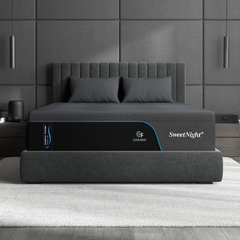
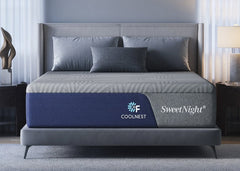
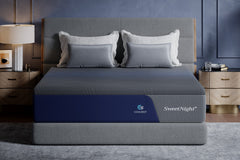
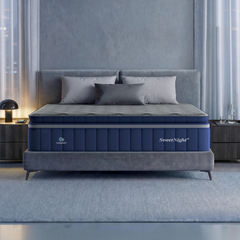


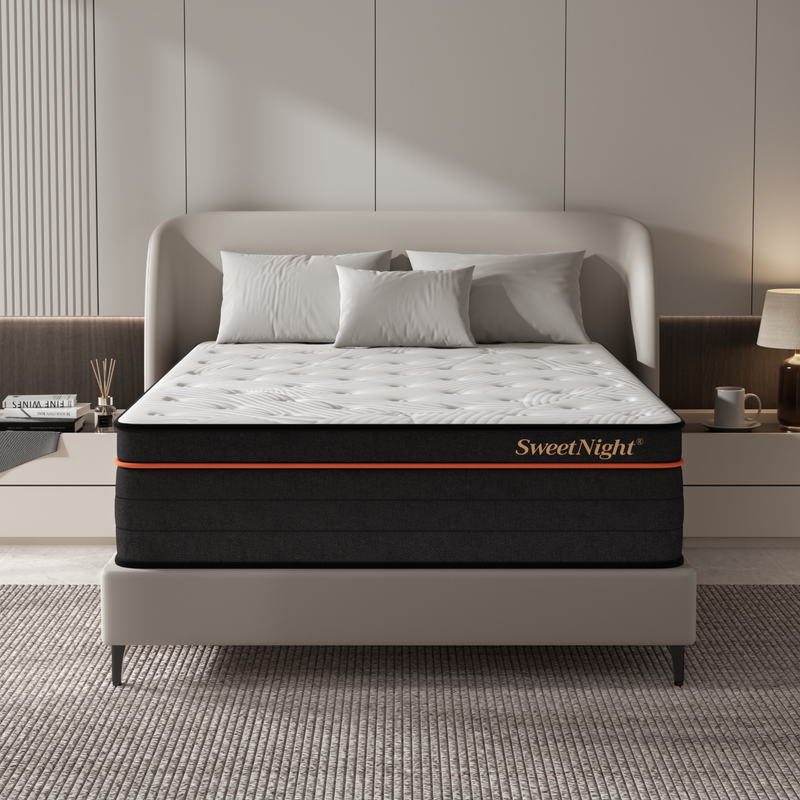
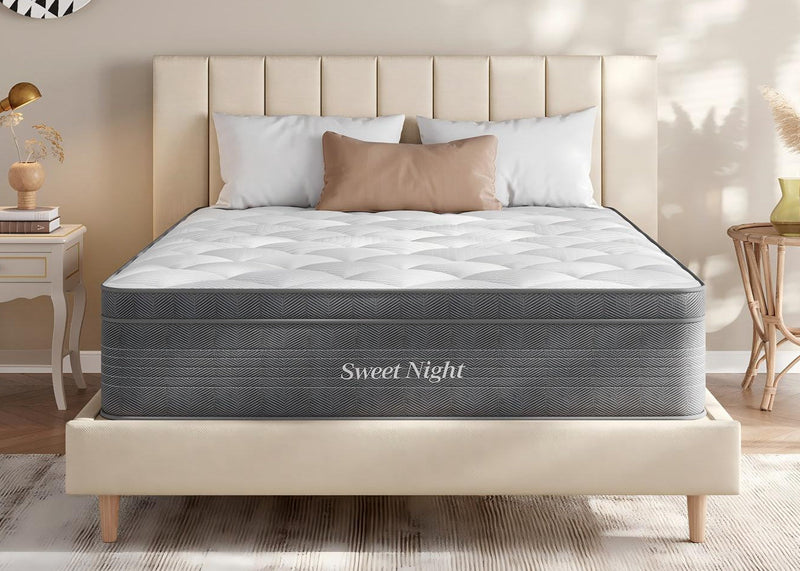
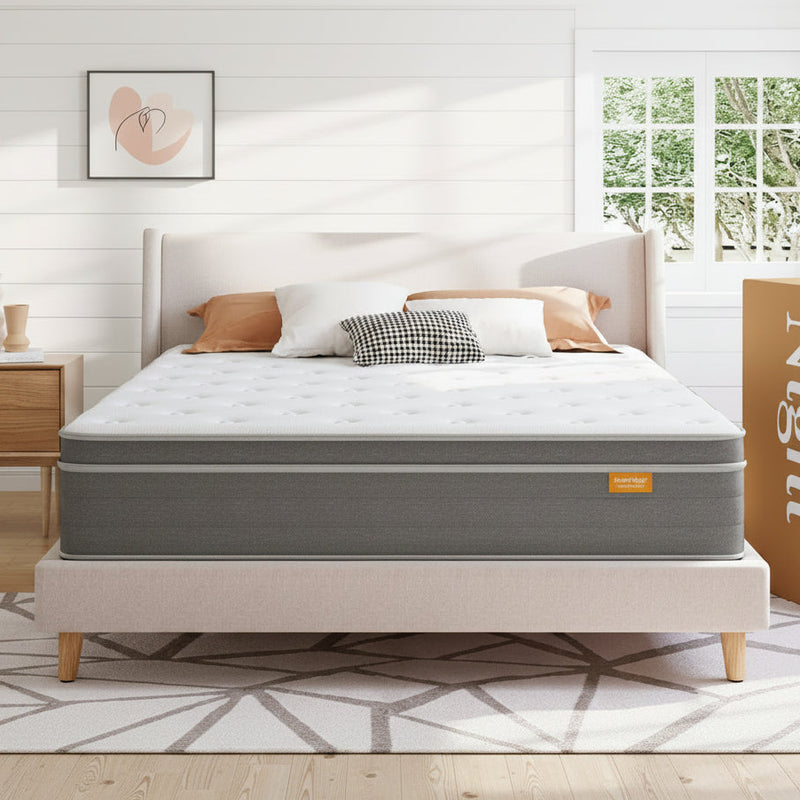



Every cooling mattress ad throws a number at you. Sleeps up to 8° cooler. Feels up to 11° cooler. Up to 15 degrees cooler than standard foam. The numbers sound precise, but almost nobody explains what they measure, whether they are in Celsius or Fahrenheit, or what that difference actually does to your body at 2 a.m. when you are kicking the sheet off for the third time. This guide answers the practical question most shoppers are really asking: how much cooler cooling mattress degrees make your night, and what those degrees feel like on skin instead of on a spec sheet.
We will convert the common claims between °C and °F, explain where the reading is taken, and translate the math into the thing you care about, which is whether you stop waking up sweaty. If you want the engineering behind the numbers, we cover that separately in how a mattress sleeps up to 11° cooler. Here the focus is the felt experience.
What do cooling mattress degrees actually measure?
When a brand says a mattress sleeps a certain number of degrees cooler, it is almost always describing surface temperature against a traditional memory foam baseline, not the temperature of your bedroom or your core body. A sensor sits on the sleeping surface, records the baseline against a standard foam control, and reports the gap once a warm body has been resting on it for a set period. The headline degree figure is that gap.
This matters because a surface reading and an air reading are different animals. Your room might sit at 24°C all night while the surface you actually touch swings by several degrees depending on the material under you. Standard memory foam can climb well above skin temperature because it stores the heat you give off and hands it right back. A cooling build is engineered to keep that surface number low and steady, which is the entire point of the exercise.
So when you read a cooling degrees claim, mentally add the phrase "at the surface, compared to traditional memory foam." That framing keeps expectations honest. Nobody is promising to chill the air in your room like an air conditioner. They are promising the patch of mattress pressed against your shoulder, hip, and back stays meaningfully cooler than it otherwise would, which is exactly where overheating starts for most hot sleepers.
How much cooler does a cooling mattress really get in degrees?
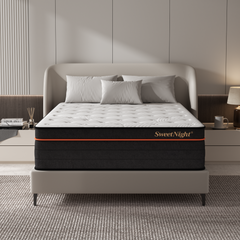
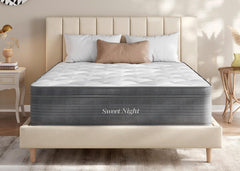
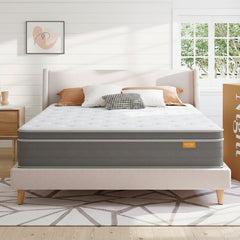
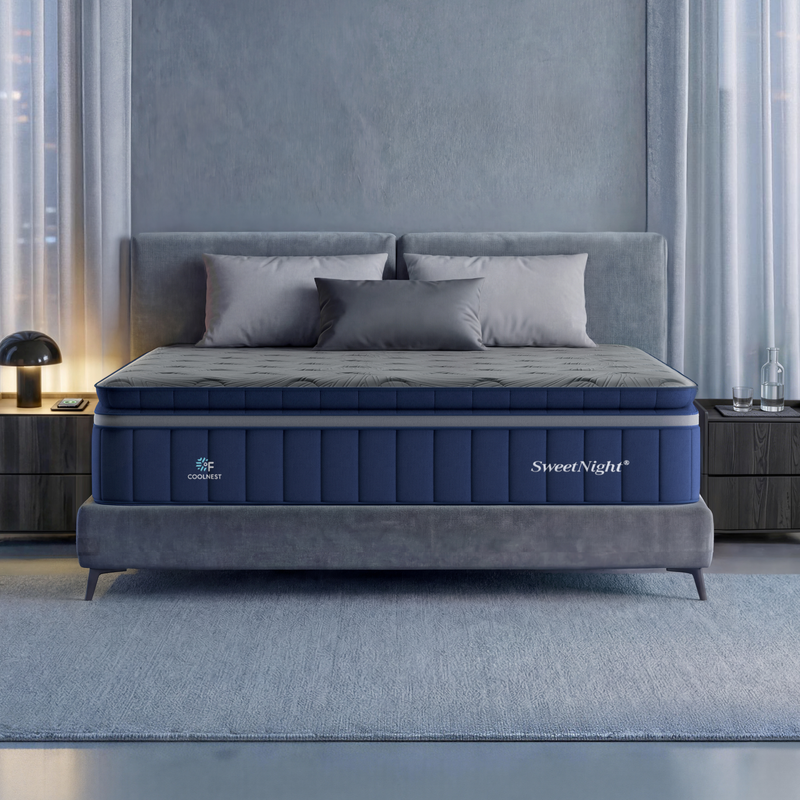
Across SweetNight's own CoolNest® line, the rated surface gap runs from up to 8° cooler on the CoolNest® Memory Foam Mattress and the CoolNest® Hybrid to up to 11° cooler on the flagship CoolNest® Ultra. That spread is a useful real-world reference band for what a genuinely engineered cooling mattress can deliver at the surface versus a plain foam baseline.

The reason there is a range at all is that cooling is a system, not a single trick. Gel infusion on its own typically buys you somewhere around 2°F to 5°F over plain foam, and only for a while. Stack more stages on top and the gaps compound. You can see this laid out across the CoolNest® range itself: the entry CoolNest® runs a triple-stage system, the CoolNest® Pro steps up to four-stage, and the CoolNest® Ultra runs an upgraded five-stage Advanced CoolNest® Ultra System, which is where the up to 11° figure comes from.
If you are comparing options, treat the degree figure as a tier indicator backed by construction, not as a guarantee for your bedroom. A mattress claiming a large, multi-stage gap is telling you it was designed around heat management from the cover down. One with a vague "cool-to-the-touch" phrase and no number is usually leaning on a single surface treatment that fades. When you shop the best cooling mattress options, the models that hold their cooling degrees deepest into the night are the ones worth paying for.
Converting cooling degrees: what 8° and 11° cooler mean in °F
Because SweetNight and many technical brands quote cooling in Celsius, a lot of shoppers in the United States need the Fahrenheit translation before the number means anything. The conversion for a temperature difference is simpler than converting an absolute temperature: you multiply the Celsius gap by 1.8. There is no need to add 32, because you are converting a change, not a fixed point.
Run the common claims through that math. A 5°C cooler surface equals 9°F cooler. An 8°C gap, the rated figure for the CoolNest® Memory Foam Mattress and the CoolNest® Hybrid, works out to about 14.4°F cooler. An 11°C gap, the number behind the five-stage CoolNest® Ultra, converts to almost 20°F cooler at the surface. Seeing 20°F on paper makes the claim feel a lot more concrete than the smaller-sounding metric figure.
Keep the multiply-by-1.8 rule handy whenever you compare a European or technical spec against a US one. A brand quoting "3 degrees cooler" without a unit is ambiguous, and the difference between 3°C (5.4°F) and 3°F is large. If a listing will not tell you the unit, that vagueness is itself a signal about how carefully the cooling was measured.
What does a cooling mattress rated up to 11° cooler actually feel like?
Numbers are abstract, so here is the sensory version. A few degrees cooler at the surface is the difference between lying down on foam that feels neutral and lying down on foam that has already warmed to your body before you fall asleep. You may not consciously register a small gap, but your sleep does, because surface heat is one of the quiet triggers that nudges you out of deep sleep.
A larger gap, the kind a memory foam mattress engineered to feel up to 11° cooler delivers, feels like the surface never quite catches your heat. It starts at first contact: the Gradient Ice Silk Cover is rated at a Qmax of 0.25 J/(cm²·s), which is the instant cool-to-the-touch hit you notice before you have even pulled the sheet up. Then PCMflux® high-resilience foam takes over, absorbing heat as your body warms and releasing it as you cool. You press in, the material contours, and instead of a warm pocket forming around your hips and lower back, that zone stays close to skin-neutral. Hot sleepers describe it as the mattress "not fighting back" when they get warm, and light sleepers notice they stop doing the reflexive cool-spot shuffle to the other side of the bed.
The feel is most obvious in the transition to sleep and after you shift position. On a heat-trapping bed, rolling over means leaving a cool patch for a warm one you carved out an hour ago. With a strong cooling gap, both patches read close to the same comfortable temperature, so movement does not wake you the way it used to. That steadiness, more than any single dramatic chill, is what the degree figure is really buying you.
Where are cooling mattress degrees measured, and why it changes the number
The same mattress can honestly post different cooling degrees depending on the measurement setup, which is why comparing raw numbers across brands is tricky. Surface-only tests, done by pressing a heated plate onto the top layer, tend to produce the biggest gaps because the top layer is where cooling tech is concentrated. Whole-body tests using a heated mannequin under bedding produce smaller, more conservative numbers.
Room conditions matter too. A cooling mattress has more room to show its advantage in a warm, humid environment than in an already-cold bedroom, because there is more heat to move. That is why the strongest results show up exactly where you need them, in stuffy summer rooms and homes without central air, and why a lab number captured in a climate-controlled chamber can understate the relief you feel on a July night.
None of this means the numbers are dishonest. It means you should read them as a controlled comparison against a baseline, not as a fixed promise for your specific bedroom. The practical takeaway is to weigh cooling degrees alongside how they were measured, and to trust real testing over marketing. Our own six-week trial in a hot room, written up in our hands-on CoolNest Ultra review, is the kind of context a single number cannot give you.
Why the same cooling degrees feel different from person to person
Two people can sleep on identical mattresses with the same rated cooling degrees and disagree about how cool it feels, and neither is wrong. Body size, metabolism, and how much heat you naturally throw off all change the equation. A larger or warmer sleeper hands the surface more heat to manage, so they lean harder on the mattress's cooling and notice the difference more sharply. It is the reason plus-size sleepers are one of the groups the CoolNest® Ultra is specifically built for.
Bedding is the other big variable people forget. Pile a thick memory foam topper, flannel sheets, and a heavy comforter on top of a mattress rated for a large cooling gap and you have insulated the surface away from your skin. The mattress can only cool what it can touch. Breathable sheets and a lighter cover let the rated cooling degrees actually reach you, while heavy layers quietly cancel a chunk of what you paid for.
Sleeping position plays a role as well. Side sleepers concentrate weight and heat into the shoulder and hip, creating warm pressure points, so they feel cooling improvements in those exact zones, which is also where a refined 7-zone support design does its work. Back and stomach sleepers spread contact more evenly and get a broader but gentler sense of the same cooling. When you read a degrees claim, picture it filtered through your own body, bedding, and position rather than as a universal constant.
Do cooling mattress degrees fade during the night?
This is the question that separates real cooling from a gimmick. Some cooling surfaces feel great for the first twenty minutes and then saturate, meaning they absorb all the heat they can hold and stop pulling more. Once that happens the cooling degrees on the label are technically true at contact but irrelevant an hour into sleep, because the surface has already warmed to your body.
Durable cooling works differently. Instead of relying on a one-time cool-to-the-touch sensation, it keeps moving heat away and resetting across the night. That is the logic behind a multi-stage system: a phase-change layer such as PCMflux® absorbs heat as you warm up and releases it as you cool down, flattening the temperature swings that wake people up sweating, while AirMesh™ breathable memory foam, a ventilated gel foam layer and a 3D open-channel structure vent that heat out of the mattress instead of letting it pool. AirMesh™ is rated at up to 6× the breathability of traditional memory foam, and that continuous airflow is what turns a first-contact chill into an all-night gap.
When you evaluate a mattress, the smarter question is not just how many degrees cooler it claims, but how long it sustains them. A moderate gap that lasts all night beats a huge gap that collapses after forty minutes. Look for language about continuous airflow and phase-change regulation rather than a single cool-touch cover, and if a review mentions the bed staying cool even after hours, that endurance is worth more than a big headline number.
How to actually feel the full cooling degrees your mattress is rated for
You can own a mattress with an excellent cooling rating and still sleep hot if the setup around it fights the design. Start with the foundation. Cooling mattresses like the CoolNest® Ultra work with platform beds, slatted bases, box springs and adjustable frames, and the requirement is simple: flat, sturdy, and able to breathe. A base that lets some air move underneath helps heat escape downward, while sealing the underside off completely leaves that heat with nowhere to go.
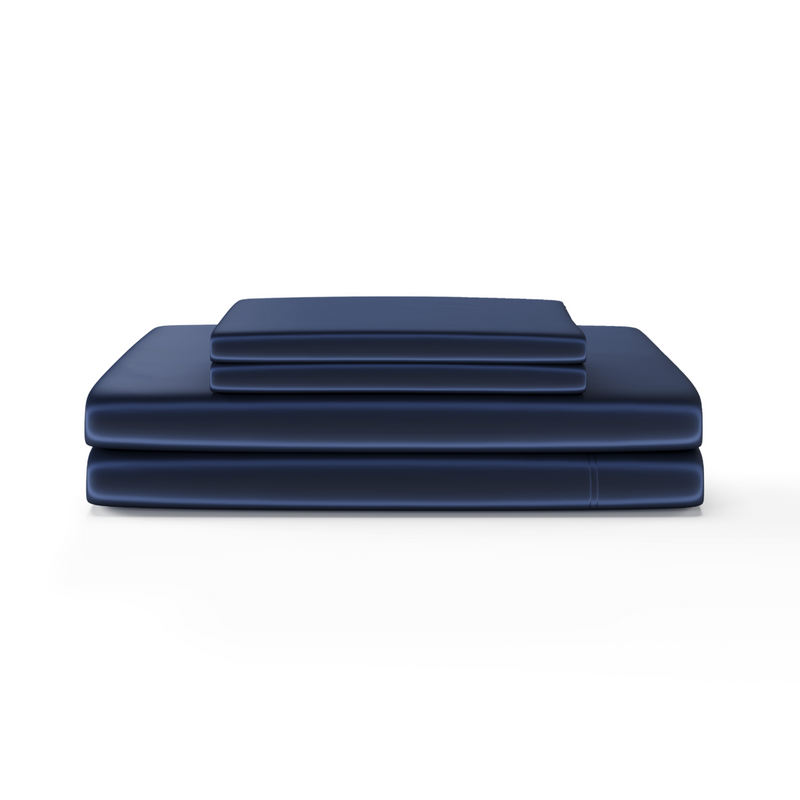
Sheets and mattress protectors are the next lever. A cheap waterproof protector made of plastic-backed fabric can seal off the breathable surface completely, turning a cooling mattress into an ordinary one. Choose a breathable, cooling-friendly protector and natural-fiber or moisture-wicking sheets so air and heat can still move through to the layers doing the work. This one swap alone recovers cooling degrees people assume their mattress lost.
Finally, manage the room. Cooling degrees are a comparison against baseline, not a substitute for a sane sleep environment, so a bedroom around 18°C to 20°C lets the mattress do its job with room to spare. Keep a fan moving air, block afternoon sun that bakes the bed, and let the mattress breathe for a few minutes when you wake before you seal it under a comforter. Small habits let the full rated gap reach your skin.
Cooling degrees versus cool-touch ratings: reading the numbers honestly
Cooling degrees are not the only number you will see. Some listings quote a cool-touch rating, usually expressed as Qmax in J/(cm²·s), which measures how quickly a surface pulls heat from your skin in the first instant of contact. A high Qmax explains that immediate "ahh" when you lie down, but on its own it says nothing about whether the surface stays cool once your body heat keeps arriving.
Degrees-cooler figures and Qmax answer different questions, and the best cooling mattresses score well on both. Across the CoolNest® line the cover ratings step up alongside the cooling stages: 0.22 J/(cm²·s) on the 3D knitted cooling nylon cover of the CoolNest®, 0.23 on the Gradient Cooling Ice Silk Cover of the CoolNest® Pro, and 0.25 on the Gradient Ice Silk Cover of the CoolNest® Ultra. A strong Qmax gives you the pleasant first-contact chill, while a large, sustained degrees-cooler gap gives you the all-night steadiness. A mattress that leads with only one of the two is telling you where it invested, and a lone cool-touch claim deserves mild caution, because initial chill is the easiest sensation to engineer and the fastest to fade.
The practical rule when comparing spec sheets is to line up like with like. Convert everything to the same unit, note whether a figure describes surface degrees or instant touch, and favor mattresses that publish both a real cooling gap and honest testing conditions. Numbers with context beat bigger numbers without it every single time, and a brand willing to explain how it measured is usually a brand confident in the result.
FAQ: cooling mattress degrees, answered quickly
How much cooler does a cooling mattress get? At the surface, a well-built cooling mattress typically runs somewhere between 8°C and 11°C cooler than traditional memory foam, which is roughly 14°F to 20°F. Across the CoolNest® line that maps to up to 8° cooler on the CoolNest® and CoolNest® Hybrid and up to 11° cooler on the five-stage CoolNest® Ultra. The gap is largest in warmer rooms, where there is more heat for the mattress to move.
Are cooling degrees in Celsius or Fahrenheit? It depends on the brand. To convert a Celsius cooling gap to Fahrenheit, multiply by 1.8, since you are converting a difference and do not add 32. So 8°C cooler is about 14°F cooler and 11°C cooler is close to 20°F cooler.
Does a cooling mattress work without air conditioning? Yes, because the rated degrees describe cooling relative to traditional memory foam, not room air. In a warm room with no AC there is more heat for the mattress to move, so hot sleepers often notice the benefit most in exactly those conditions.
Do cooling degrees last all night? Only if the mattress uses continuous airflow and phase-change materials rather than a single cool-touch cover. A five-stage system that pairs a Qmax 0.25 ice silk cover with PCMflux® phase-change foam, AirMesh™ breathable memory foam, ventilated gel foam and a 3D open-channel structure is built to absorb, release and reset heat through the full sleep cycle, while cheap surface treatments saturate and fade within an hour.
Why does my cooling mattress feel less cool than the number promised? Usually the setup is fighting it. A plastic-backed protector, thick topper, heavy comforter, or airtight base can seal off the cooling surface. Swap to breathable bedding, use a flat, sturdy base that lets air move, and the rated cooling degrees reach your skin again.
The number on a cooling mattress label is a starting point, not the whole story. Once you know it measures surface temperature against a traditional foam baseline, know how to convert °C to °F, and know that a lasting moderate gap beats a huge one that fades, you can read any cooling claim with a clear eye. Match the degrees to how they were measured, protect them with the right bedding and base, and test it where it actually matters — in your own bedroom, which is exactly what a 100-night trial is for.