





Updated: August 11, 2026 · Reviewed by the SweetNight Sleep Comfort Team · 10 min read
Most quizzes on this question ask how you feel about mornings and then tell you what you already knew. That is a personality survey wearing a lab coat.
Chronotype is not a preference. It is the timing of a biological oscillator in your hypothalamus, it is substantially inherited, and it can be measured with arithmetic rather than opinion. Knowing your number is useful because it tells you two things a quiz cannot: how far your body's timing sits from the schedule you are actually living, and how much of that gap is worth trying to close.
What Chronotype Actually Is (And Why It's Not a Personality Trait)
Deep in the hypothalamus sits the suprachiasmatic nucleus, a cluster of about 20,000 neurons that keeps a roughly 24-hour rhythm and synchronises to daylight through a direct pathway from your eyes. It governs when melatonin is released, when core temperature falls, when cortisol rises, and therefore when you feel sleepy and when you feel sharp. The Sleep Foundation's overview of circadian rhythm covers the machinery in more detail.
Individual clocks run at slightly different intrinsic periods — some a little under 24 hours, some a little over. That difference is where chronotype comes from, and it is largely genetic: variants in clock genes including PER3 and CLOCK are associated with morningness and eveningness, and twin studies put the heritability of chronotype somewhere around half.
Which means the moralising around this topic is misplaced. "Early to bed, early to rise" describes a genotype more than a virtue. Telling a strong evening type to simply become a morning person is roughly as useful as telling a tall person to be shorter — you can affect posture at the margins, but not the underlying parameter.
How to Calculate Your Sleep Midpoint
This is the measure sleep researchers use, and you can do it with a calculator.
Use free days only — days with no alarm, no early obligation, and no unusual sleep debt. Workday sleep is set by your alarm clock, which tells you about your employer rather than your biology.
- Note when you actually fall asleep on a free night. Not when you get into bed — when you drop off. Say 1:00 a.m.
- Note when you wake naturally. Say 9:00 a.m. That is 8 hours of sleep.
- Add half the sleep duration to the sleep-onset time. 1:00 a.m. plus 4 hours = 5:00 a.m. That is your sleep midpoint.
Read it against the scale:
| Free-day sleep midpoint | Chronotype | Roughly how common |
|---|---|---|
| Before 2:30 a.m. | Strong morning type | Uncommon |
| 2:30–3:30 a.m. | Moderate morning type | Common |
| 3:30–4:30 a.m. | Intermediate | The largest group |
| 4:30–5:30 a.m. | Moderate evening type | Common |
| After 5:30 a.m. | Strong evening type | Uncommon |
One correction matters. If you sleep substantially longer on free days than on workdays, you are partly repaying sleep debt, and that pushes your measured midpoint later than your true chronotype. Researchers adjust for this; informally, if you sleep two or more extra hours at weekends, treat your result as up to half an hour later than reality — and take the debt itself as the more urgent finding.
The Four Chronotypes, and What Each One Gets Wrong
Every type has a characteristic mistake, and it is usually the opposite of the advice they are given.
Strong morning types
Sharp early, fading by mid-afternoon, asleep by 10 p.m. without trying. Their mistake: scheduling demanding work in the evening because that is when the office is quiet, and pushing through an afternoon dip that would be better handled by finishing at 3 p.m. They also tend to assume everyone else could get up at 5 a.m. if they simply chose to.
Intermediate types
The largest group, with a comfortable window from around 11 p.m. to 7 a.m. Their mistake: assuming they are infinitely flexible. They are the most vulnerable to schedule drift, because nothing feels sharply wrong until several weeks of creeping bedtimes have moved them somewhere they did not intend to be.
Moderate evening types
Slow to start, best from mid-afternoon into the evening, naturally asleep around midnight or later. Their mistake: trying to fix the mornings with caffeine rather than with light. A 6:30 a.m. coffee masks the grogginess without moving the clock, so the underlying misalignment persists indefinitely.
Strong evening types
Genuinely unable to fall asleep before 2 a.m. or later, and functional late into the night. Their mistake: accumulating enormous sleep debt on weekdays and attempting to repay it at weekends, which delays their clock further and makes Monday worse each week. This is the group for whom the gap between biology and schedule causes real harm, and the group most often told the problem is their character.
Social Jetlag: The Cost of Living Against Your Clock
Social jetlag is the measurable gap between when your body wants to sleep and when your schedule allows it.
Calculate it: free-day sleep midpoint minus workday sleep midpoint. If your free-day midpoint is 5:00 a.m. and your workday midpoint is 3:00 a.m., you carry two hours of social jetlag — you are effectively flying two time zones east every Monday and back again every Friday, permanently.
| Social jetlag | What it feels like |
|---|---|
| Under 1 hour | Well aligned. Monday is ordinary. |
| 1–2 hours | Common. Sunday nights are hard and Monday mornings are rough. |
| Over 2 hours | Substantial misalignment, with a persistent weekday sleep deficit underneath it. |
This is the number worth acting on, more than the chronotype label itself. An evening type who works evenings has almost no social jetlag and generally does fine. An evening type on a 7 a.m. start is running a chronic deficit that no amount of weekend recovery resolves — the recovery sleep is itself what pushes the clock later and reproduces the problem.
The two levers that actually reduce it: move your schedule where you can negotiate it, and move your clock where you cannot. The protocol for the second is in how to go to bed early.
Can You Change Your Chronotype?
Partly. Here is the honest accounting.
What you can move: one to two hours, reliably, using morning light exposure, a fixed wake time held seven days a week, and dimming the evening. That is enough to convert an unworkable schedule into a workable one, which is usually all anyone needs.
What you cannot move: your underlying genetic setpoint. A strong evening type who trains into a 6:30 a.m. wake time is not becoming a morning person; they are a night owl maintaining a shifted schedule through daily effort. Stop the light exposure and hold no fixed wake time for a week, and it drifts back.
What changes on its own: age. Chronotype runs early in childhood, shifts sharply later during adolescence, peaks in lateness around 20, and then moves steadily earlier for the rest of adult life. The teenager who cannot sleep before 1 a.m. is not being difficult — that is a documented developmental shift, and it is the reason early school start times are so widely criticised. Equally, plenty of self-identified night owls quietly become 6 a.m. risers in their fifties.
The practical stance: treat chronotype as a constraint to design around rather than a flaw to correct. Shift what you must, and stop paying a discipline tax on the rest.
How to Schedule Your Day Around Your Chronotype
Most productivity advice is written by and for morning types. Convert it instead of following it: nearly every recommendation is really "do this N hours after you wake," not "do this at 6 a.m."
| Task | Best timing | Why |
|---|---|---|
| Hardest cognitive work | 2–4 hours after natural wake | Alertness has risen and sleep inertia has cleared |
| Meetings and collaboration | Mid-morning by your clock | The overlap window where most types are functional |
| Admin and low-stakes tasks | Your post-lunch dip, 6–8 hours after waking | The dip is circadian, not caused by lunch — give it undemanding work |
| Exercise | 6–8 hours after waking | Core temperature and physical performance peak together |
| Creative or associative work | Slightly outside your peak | Looser focus favours novel connections — late evening for larks, early morning for owls |
| Caffeine cut-off | 8–10 hours before natural sleep onset | A 2 p.m. cut-off is wrong for a 2 a.m. sleeper — scale it to your own clock |
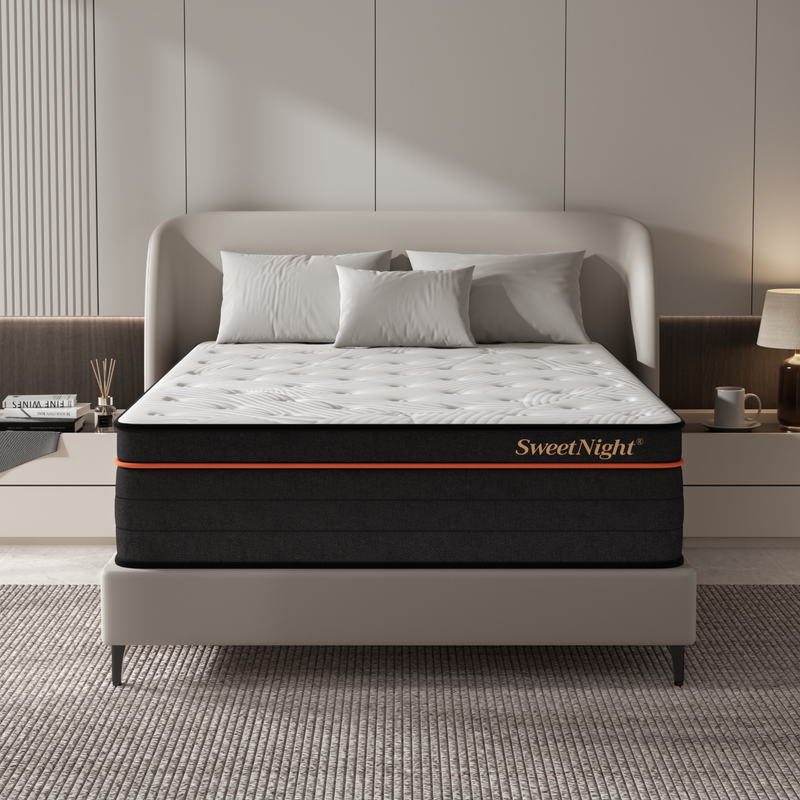
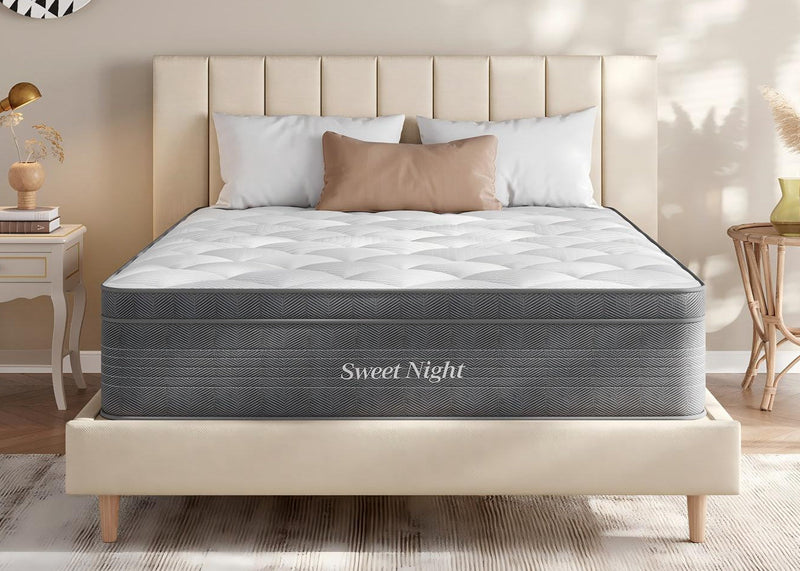
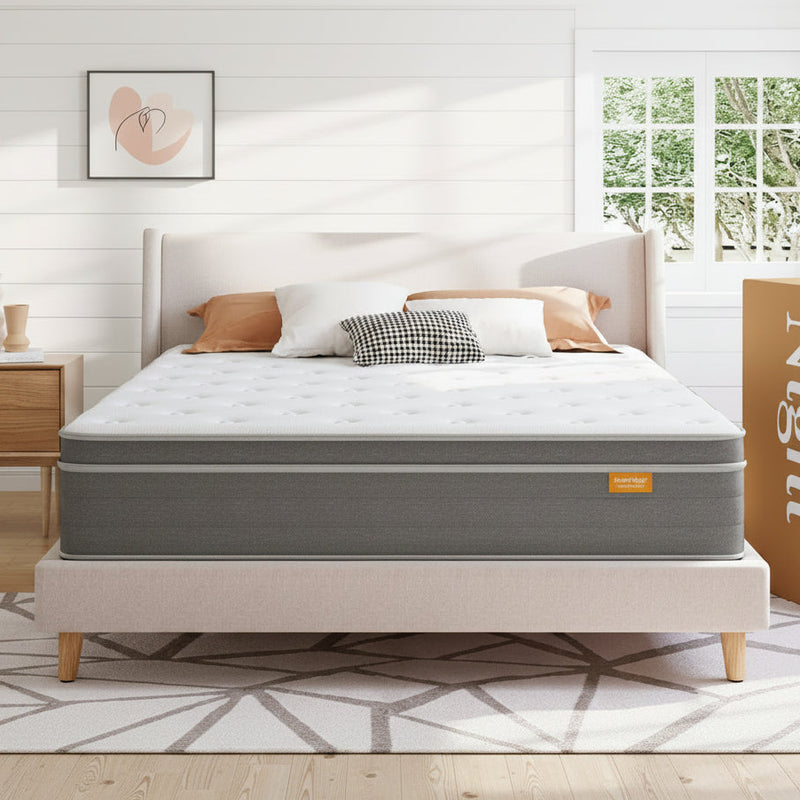
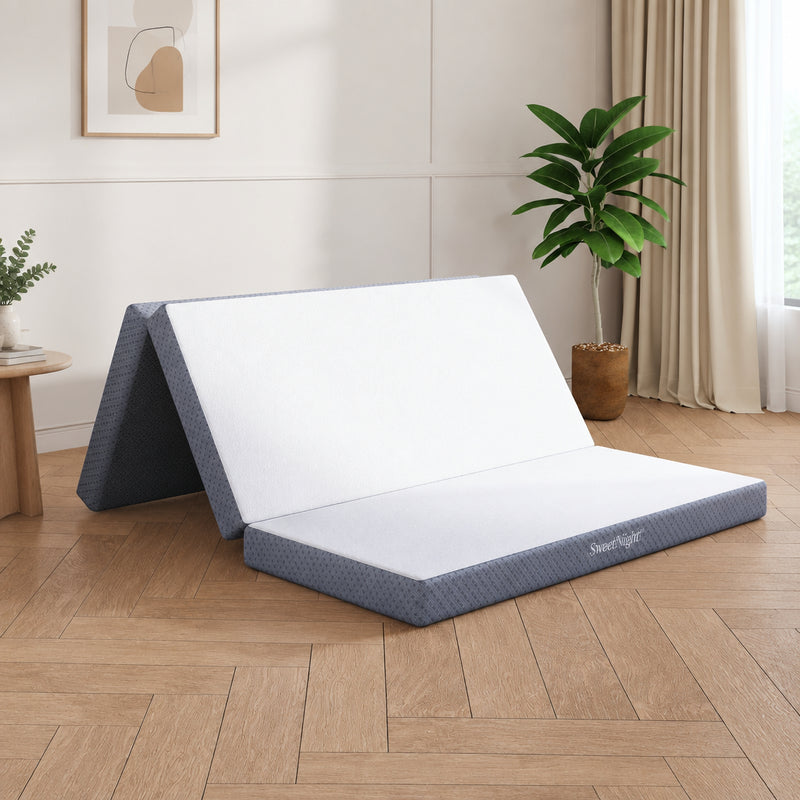
Two things everyone should do regardless of type: get outdoor light within an hour of waking, whenever your waking happens, and keep the bedroom cool enough for the core-temperature drop that sleep onset needs — the numbers are in the best AC temperature for sleeping. If you are also easily disturbed once asleep, why light sleepers are more sensitive to their sleep environment covers the environmental side, and a surface that vents heat rather than trapping it — such as the CoolNest® Ultra cooling memory foam mattress — removes one of the more common causes of fragmented sleep in the second half of the night. Current offers are on the SweetNight deals page.
When a Night Owl Schedule Becomes a Sleep Disorder
There is a line between a late chronotype and Delayed Sleep-Wake Phase Disorder, and it is worth knowing where it sits.
A late chronotype sleeps well, wakes refreshed on their own schedule, and merely finds conventional hours inconvenient. DSWPD is a persistent, months-long inability to fall asleep before roughly 2–6 a.m. that does not respond to ordinary schedule changes and causes genuine impairment at work or school. The distinguishing feature is that sleep itself is normal when the person is allowed to keep their own hours — the timing is the disorder, not the sleep.
Worth a clinician's opinion if you have run a structured schedule-shifting protocol for six weeks with no movement, if your sleep onset has been after 2 a.m. for years, or if you snore heavily and wake unrefreshed regardless of duration — that last one points at something else entirely.
Frequently Asked Questions
Are night owls less productive than early birds?
No — they are less productive at 8 a.m., which is not the same thing. Studies finding a morning-type advantage are typically measuring performance on schedules built for morning types. Match the measurement to each group's own peak and the difference largely disappears.
Do I have to pick one? I feel like neither.
Then you are almost certainly intermediate, which is the largest group. The four-way split is a convenience; chronotype is a continuum, and most people sit near the middle of it.
Why do I feel most awake right at bedtime?
That is the wake maintenance zone — a circadian alerting signal that fires in the two to three hours before your usual sleep onset. It is normal, and it is why trying to fall asleep early by lying down early rarely works.
Does my chronotype affect how much sleep I need?
No. Sleep duration and sleep timing are independent. Evening types often sleep less on average, but that is because schedules cut their nights short, not because they need less.
Should couples with different chronotypes sleep separately?
Only if the mismatch is actually costing sleep. A two-hour gap in bedtimes is manageable with a dark, quiet room and a mattress with good motion isolation. Separate rooms are a reasonable choice when one person's timing repeatedly wakes the other — there is nothing wrong with the arrangement that works.
Can I use light therapy to become a morning person?
You can use it to shift one to two hours earlier, which is often enough. Timing is everything: light shortly after waking pulls you earlier, while light late in the evening pushes you later. Getting the timing backwards is a common and self-defeating error.
The Bottom Line
Do the arithmetic rather than the quiz. Take your free-day sleep onset, add half your sleep duration, and read the midpoint. Then subtract your workday midpoint to find how much social jetlag you are carrying — that second number is the one that actually affects how you feel.
You can move your clock an hour or two with light and consistency. You cannot rewrite it, and the effort spent trying is better spent arranging your hardest work for a few hours after you naturally wake, whenever that happens to be.