






Sleep masks sit in an odd place. They are cheap enough that nobody researches them carefully, and simple enough that people assume there is nothing to get wrong. Then they buy a flat one, it presses on their eyes, it ends up on the floor by 2 a.m., and they decide masks are not for them.
The honest position is narrower than the marketing and more useful. A mask does one job extremely well and several other jobs not at all. Here is where the line falls, and how to pick one that stays on.
Short Answer: What an Eye Mask Can and Cannot Do
What it does: it removes light from the equation. All of it, if the mask fits — including the light that reaches you through closed eyelids, which is more than most people realise. Eyelids are translucent, and a bright room reaches your visual system whether your eyes are shut or not.
What it does not do: anything about noise, temperature, a bad mattress, caffeine, stress, or an inconsistent schedule. A mask is a single-variable tool.
That matters because of how people diagnose their own sleep. Waking at 4 a.m. feeling hot is often read as a temperature problem, when what happened is that something pulled you out of deep sleep and only then did you notice the warmth you had been sleeping through. Light is one of the most common of those somethings, and it is the cheapest to eliminate.
Buy a mask if light is plausibly part of your problem. If you sleep in genuine darkness already and still sleep badly, spend the money elsewhere.
Why Light Matters: Melatonin and the Sleep Signal
Your body decides when to be sleepy largely by tracking light and dark. Specialised cells in the retina, separate from the ones you see with, report ambient light levels to the brain's internal clock. Light means day; darkness allows the release of melatonin, the hormone that signals biological night.
Two consequences follow. Light in the hours before bed delays that signal, which is the whole basis of the advice to dim screens in the evening. And light during sleep can reach the eyes through closed lids, which is why a room that seems dark enough may still be shortening your deep sleep — a streetlight through a gap, a hallway light, a charging indicator, or plain sunrise arriving at 5:20 in June.
Daytime sleepers face the sharpest version of this. Someone finishing a night shift is asking their body to sleep at the exact moment its clock is signalling hardest for wakefulness, in a room that is bright even with the curtains drawn. Removing light is not a nice extra in that situation; it is the main intervention available.
Worth stating plainly: this is about the timing signal, not a treatment for a sleep disorder. If you have persistent insomnia or a shift-work sleep problem that is affecting your health, that is a conversation for a clinician rather than a purchase.
Who Benefits Most From a Sleep Mask
Some groups get a great deal from a mask and some get very little. The people who consistently do:
- Night shift workers, who need darkness during daylight hours and cannot get it from the room alone.
- Day sleepers generally — new parents catching an afternoon hour, anyone on a rotating schedule.
- Frequent flyers, where a mask plus earplugs is the only environmental control you have on a plane.
- Light sleepers, who surface at small disturbances and lose the most from a brief flash of light.
- Sensitive sleepers who wake at dawn regardless of season.
- Screen users who read or scroll in bed and want a hard stop between the screen and sleep.
- People prone to migraines, who often report wanting complete darkness during an episode — as comfort, not treatment.
- Lash wearers, provided the mask is shaped to avoid contact.
- Nappers and meditators, where the point is to signal to yourself that the next twenty minutes are off.
Who gets less: anyone already sleeping in a genuinely dark room, anyone who finds objects on their face intolerable, and anyone whose main problem is something else on the list of things a mask cannot fix.
Blackout vs Dim: How Much Light Blocking Do You Need
Not every mask blocks everything, and the gap between "dims the room" and "blackout" is mostly about the fit at the edges rather than the fabric across the middle.
The failure point on almost every mask is the bridge of the nose. There is a natural gap there, and light coming from below — a lamp, a phone, daylight off a floor — travels straight up through it. A mask can be made of the most opaque fabric available and still leak badly if the nose area is not shaped or padded.
Three levels, in practice:
- Dimming. Thin, flat, usually a promotional freebie. Cuts brightness, does not remove it. Adequate on a plane at night.
- Near-blackout. Better fabric, some shaping. Handles a normally dark bedroom with a stray streetlight.
- True blackout. Contoured to seal at the nose and around the orbital bone. This is what a day sleeper actually needs.
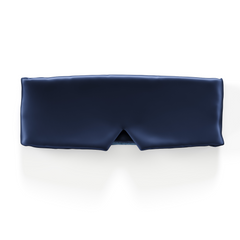
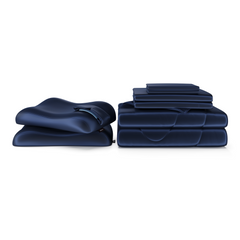
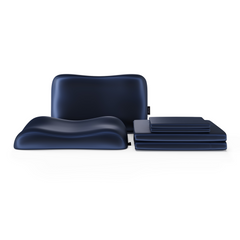
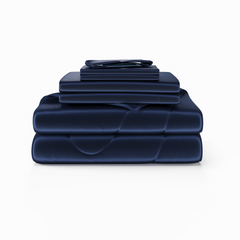
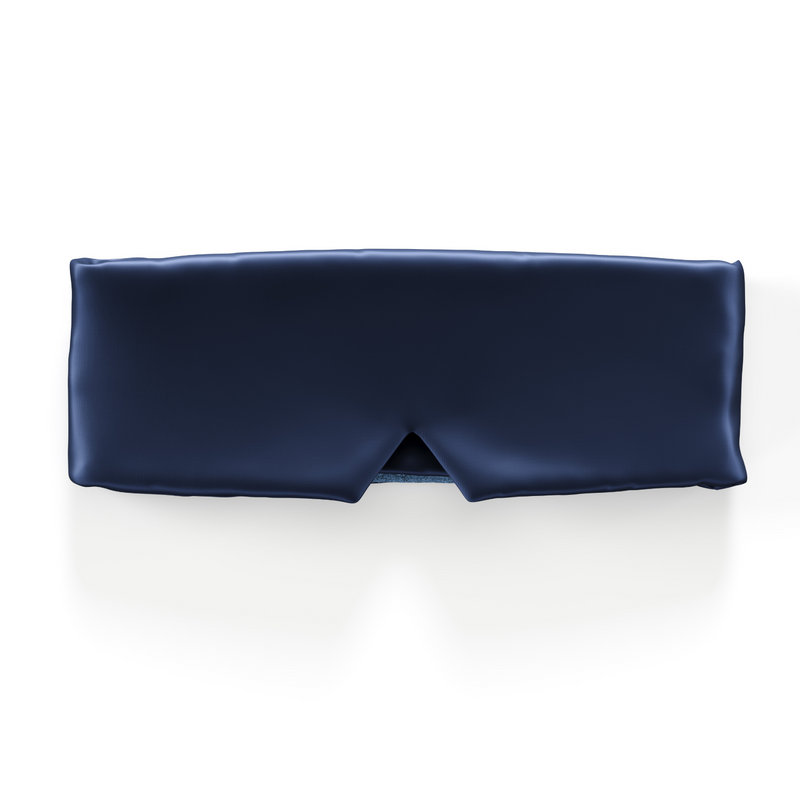
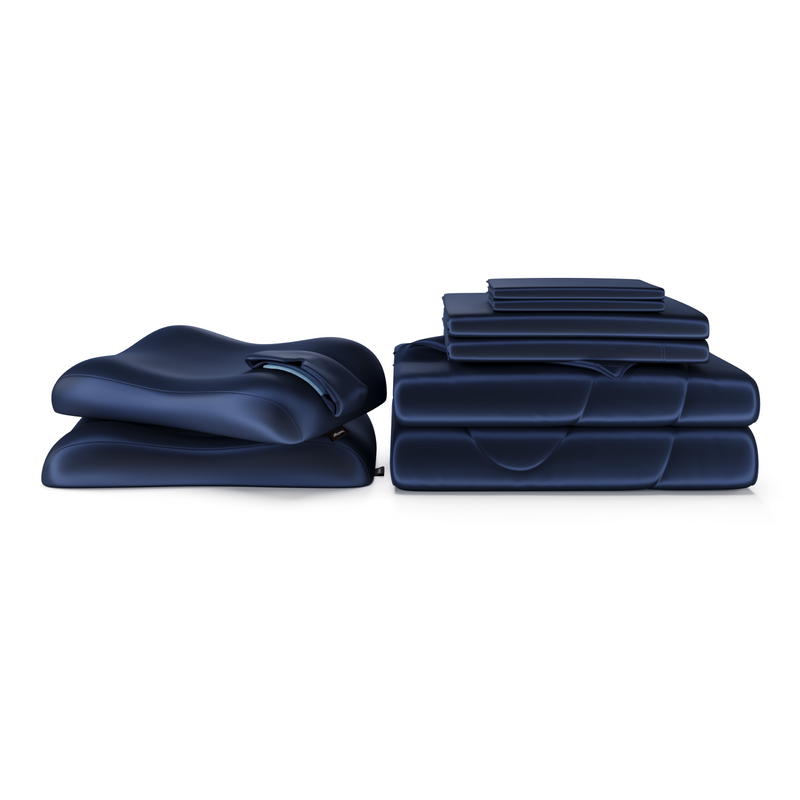
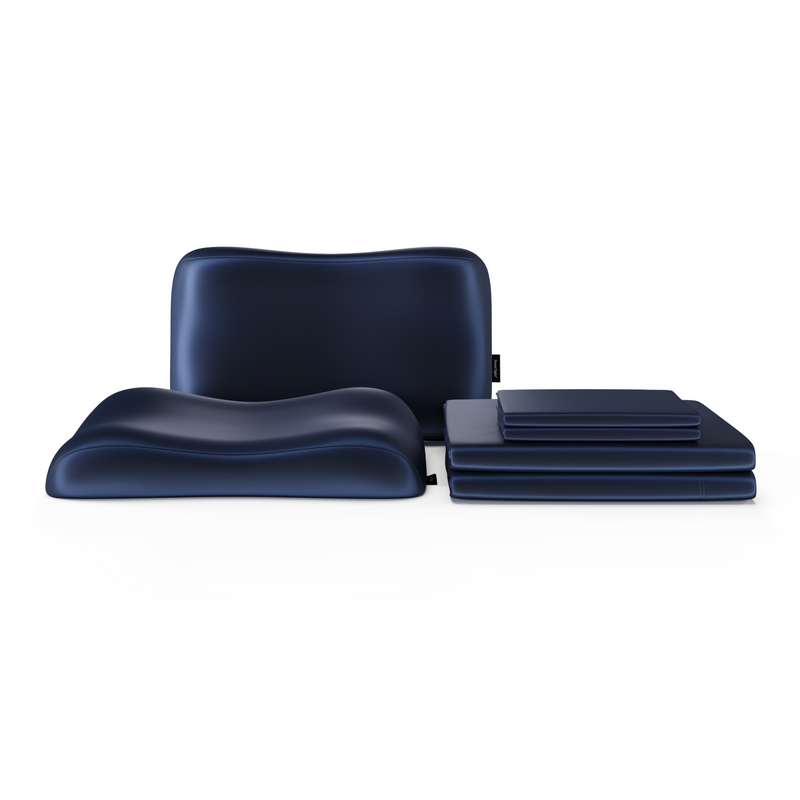
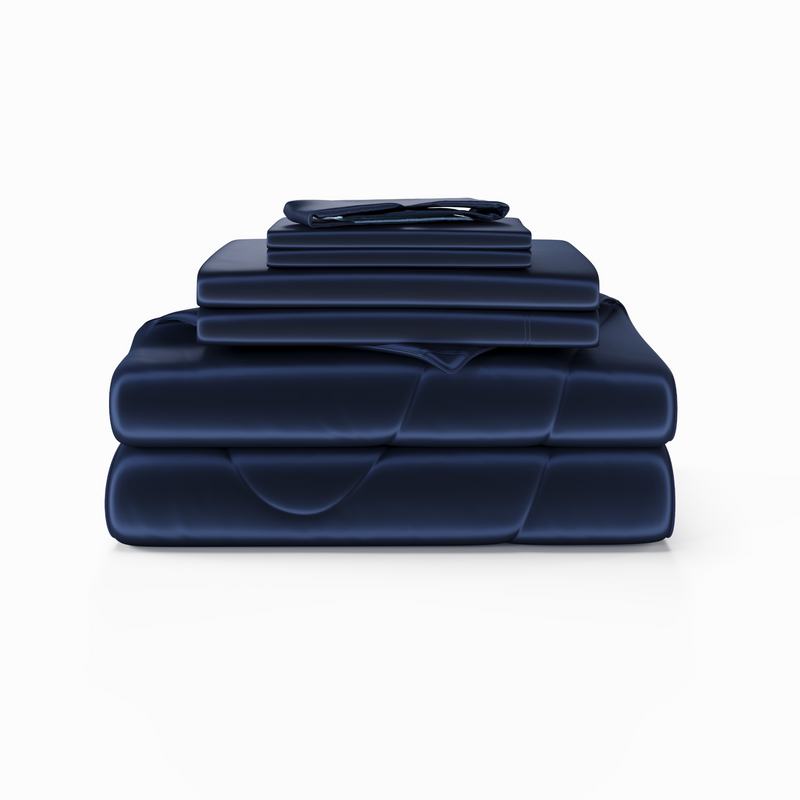
The test is easy: put it on in a brightly lit room and look toward a lamp. If you see any glow at the nose, it will not do the job at noon. The CoolNest® Cooling Eye Mask is built around that seal — the 3D contoured shape is designed to block light completely rather than merely dim it. At $4 to $9 it is also the cheapest thing in our range by a wide margin, and it is included as a free gift in the complete cooling bedding set for anyone replacing the whole bed at once.

Flat vs Contoured (3D) Masks
This is the single decision that determines whether you will still be wearing the mask in six months.
A flat mask is a panel of fabric held against your face. It rests directly on your closed eyelids and lashes. Over eight hours that pressure becomes noticeable, and for anyone whose eyes move a lot during REM sleep it can be actively uncomfortable. It also creases and slides.
A contoured, or 3D, mask is moulded with a dome over each eye and a raised rim that sits on the bone around the socket — brow, temple, cheekbone — rather than on the eye itself. You can open your eyes underneath it. Nothing touches your lashes. The load is carried by bone instead of soft tissue.
Three things follow from that shape. Zero pressure on the eyeball, which is the comfort difference people notice immediately. Space for lashes and lash extensions. And a better light seal, because the rim follows the contours of the face instead of bridging across them.
The trade-off is bulk. A contoured mask packs less flat than a strip of silk and costs marginally more to make. For a mask you actually sleep in every night, that is a small price.
Side Sleepers: The Pressure and Slippage Problem
Side sleepers have the hardest time with masks, for two mechanical reasons.
Pressure. One side of your face is against a pillow, and any hardware on the mask — a thick seam, a buckle, a Velcro tab — ends up sandwiched between your cheekbone and the pillow. That is what wakes people up at 3 a.m. Look for a flat, smooth back with no fastener sitting where your face meets the pillow.
Slippage. Every time you roll, friction between the pillowcase and the mask drags it out of position. A smooth pillowcase actually helps here, because the mask slides against the case rather than the case gripping the mask and pulling it off your face.
A contoured mask handles both better than a flat one. The rim distributes pressure across the bone, and the raised profile means the pillow contacts the mask's outer shell rather than pressing the fabric onto your eye.
The other half of the fix is the strap position, covered further down. Side sleepers should set it slightly snugger than back sleepers do — enough to survive a roll, not enough to leave a mark.
Materials and Skin: Friction, Lashes and Sensitive Eyes
A mask spends seven or eight hours pressed against some of the thinnest skin on your body, so the surface finish matters more than it does anywhere else in the bed.
Friction is the main variable. A rough or grippy lining drags against skin every time you move, which is what produces creases in the morning and, over time, irritation around the eye. A smooth low-friction surface slides instead of pulling. The CoolNest mask uses a friction-free silky face for exactly this reason — it is the same principle behind smooth pillowcases, applied to a much more delicate area.
Temperature is the second. Anything sitting against your face traps heat, and the area around the eyes is sensitive to it. A cool-touch surface takes the edge off the moment you put it on, which is why some people find a cooling mask easier to fall asleep in than a plain fabric one.
What is in the fabric is the third, and it is easy to verify. Certifications are the shortcut: this mask carries OEKO-TEX® Standard 100 for tested textile safety, along with ISPA, Sorona®, ISO 9001 and BSCI. For a product that sits on your eyelids all night, that is worth checking rather than assuming.
One habit worth adopting regardless of what you buy: wash it. A sleep mask collects skin oils, sweat and whatever you put on your face before bed, and it is the item people most often never clean.
Sleep Masks for Shift Workers and Travel
These are the two situations where a mask stops being an accessory and becomes the primary tool.
Shift work means asking your body to sleep against its own clock, in a house that is bright and awake. Blackout curtains help and almost always leak at the edges. A mask travels with your head, so it works whether you are in bed, on the sofa, or asleep in a chair for forty minutes before the school run. It pairs naturally with the other controls available to a day sleeper: earplugs or white noise for the household, a cooler room, and a consistent wind-down even when the clock says two in the afternoon. If disturbance rather than light is what keeps waking you, our piece on why night shift workers need motion isolation covers the other half of that problem.
Travel is the easier case. On a plane you control almost nothing — not the temperature, not the noise, not the cabin lights, not the person next to you with a screen on. A mask and earplugs are the two things you can bring. A contoured design is worth the extra bulk here because you are usually upright, and a flat mask slides on an angled headrest.
For hotel rooms, the mask handles the specific and predictable failure of unfamiliar rooms: the gap in the curtains you did not notice at midnight, and the smoke detector LED that turns out to be surprisingly bright at 3 a.m.
How to Wear One Without Waking Up With It on the Floor
Most masks are lost for one of four reasons, and all four are fixable.
The strap is too loose. It survives lying still and comes off on the first roll. Tighten until you feel light, even contact all the way around.
The strap is too tight. This is the more common failure. A tight strap causes pressure, and you remove the mask in your sleep without any memory of doing it. The benchmark is one finger sliding under the strap with mild resistance, and no marks on your face in the morning.
It sits too low. A strap resting on the nape of the neck rides up as you move. It belongs above the ears, around the widest part of the back of the head, where the skull itself keeps it in place.
You are fighting the pillow. A textured or grippy pillowcase catches the mask on every turn. Smoother bedding lets the mask stay put while the pillow moves under it — one of several reasons low-friction surfaces are used throughout the cooling bedding range.
Give any mask a week before you judge it. The first two or three nights with something on your face are unrepresentative, and most people stop noticing it entirely by night four. If you are assembling the rest of the bed at the same time, our guide on how to build a cooling bed puts light in context with the layers that actually control temperature.
FAQ
Is it bad to sleep with an eye mask every night?
For most people it is fine, provided it is not tight. The problems that do occur are mechanical: a cinched strap presses on the eye area, and a flat mask on closed eyes gets uncomfortable over hours. A contoured design avoids both. If you have an eye condition or recent eye surgery, ask your clinician first.
Does a sleep mask actually help you sleep better?
It helps with one variable: light. Darkness is a primary signal for the timing of sleep, and light reaching the eyes suppresses it. If light is waking you at 5 a.m. or stopping you sleeping during the day, a mask addresses the cause. If your problem is noise, temperature or stress, it will not.
Can you wear one with lash extensions?
With the right shape, yes. A flat mask presses on the lashes, which is why many lash wearers abandon masks. A 3D contoured design leaves a dome over each eye so nothing touches them, and a smooth lining does not tug where it does contact skin.
How do you stop it coming off at night?
Usually the strap. Too loose and it slides off when you roll; too tight and you remove it in your sleep. Aim for one finger under the strap with mild resistance, positioned above the ears around the widest part of the head rather than on the neck.
Sleep mask or blackout curtains?
Curtains handle the room, a mask handles your eyes. Curtains suit shared rooms and people who dislike anything on the face. A mask suits travel, day sleeping, light coming from inside the room, and curtains that leak at the edges — which most do. Day sleepers often use both.
How do you clean a sleep mask?
Hand wash in cool water with a mild detergent, press out the water rather than wringing, and air dry flat away from heat. Hot water and tumble drying distort a contoured shape and damage smooth technical fabrics.