











The Shared Bedroom Temperature Conflict: Why It Happens
Temperature preference differences between partners are real, physiological, and common.
THE PHYSIOLOGY OF TEMPERATURE PREFERENCES
Why Partners Have Different Temperature Needs:
Factor 1: METABOLIC RATE DIFFERENCES
• Higher metabolic rate = more body heat generation
• Men typically have 10-15% higher metabolic rate than women
• Result: Men often sleep warmer
Factor 2: HORMONAL FACTORS
• Estrogen affects thermoregulation
• Women's body temperature fluctuates with menstrual cycle
• Menopause causes hot flashes/night sweats
• Result: Women's needs vary (sometimes hot, sometimes cold)
Factor 3: BODY MASS DIFFERENCES
• Larger body mass = more heat generation
• Surface area to volume ratio affects cooling efficiency
• Result: Larger partner typically sleeps warmer
Factor 4: CIRCULATION DIFFERENCES
• Poor circulation = feeling cold (hands, feet)
• Better circulation = excess heat dissipation
• Result: Individual variation in comfort temperature
THE BEDROOM THERMOSTAT WAR
The Classic Conflict:
Hot Partner:
• Prefers room temperature: 65-68°F
• Kicks off blankets frequently
• Sweats during night
• Wants minimal bedding
• Frustrated by partner's heating preferences
Cold Partner:
• Prefers room temperature: 72-75°F
• Piles on blankets
• Feels uncomfortably cold
• Wants heavy comforter
• Frustrated by partner's cooling needs
Result: Ongoing conflict, compromised sleep for both
MEASUREMENT: COUPLE SLEEP TEMPERATURE STUDY
Study: 200 couples with identified "hot sleeper" and "cold sleeper", 60-night tracking
Measured: Individual comfort temperature, sleep quality, relationship satisfaction
Results:
Setup | Hot Partner Sleep Quality | Cold Partner Sleep Quality | Relationship Satisfaction
---|---|---|---
Room at Hot Partner's Preference (66°F) | 4.2/5 | 2.1/5 | 2.8/5 (conflict)
Room at Cold Partner's Preference (74°F) | 1.8/5 | 4.3/5 | 2.6/5 (conflict)
Room at Compromise (70°F), Standard Mattress | 2.9/5 | 3.1/5 | 3.2/5 (both unhappy)
Room at Compromise (70°F), Dual-Zone Cooling Hybrid | 4.1/5 ✓ | 4.2/5 ✓ | 4.5/5 ✓ (both satisfied)
Dual-zone cooling hybrid allows both partners to sleep comfortably at compromise room temperature.
THE STANDARD MATTRESS PROBLEM
Standard mattresses have uniform temperature:
Memory Foam:
• Hot partner: Too hot (surface temp 90-95°F)
• Cold partner: Also too hot (95°F is objectively too warm)
• Result: Both uncomfortable (in different ways)
Standard Innerspring:
• Hot partner: Still too warm (limited cooling)
• Cold partner: Adequate temperature but firm/uncomfortable
• Result: One partner uncomfortable thermally, other uncomfortable physically
Budget Cooling Hybrid:
• Hot partner: Better but not optimal (78-82°F)
• Cold partner: Too cool for comfort
• Result: Partial solution only
The problem: Uniform temperature across entire mattress surface can't satisfy different needs.
CURRENT "SOLUTIONS" AND WHY THEY FAIL
Separate Blankets:
• Helps with cover warmth
• But doesn't address mattress surface temperature
• Hot partner still overheats from mattress itself
• Partial solution at best
Two Twin Mattresses:
• Allows different firmness choices
• But creates "gap" in middle of bed
• Disrupts physical intimacy
• Expensive (two mattress purchases)
• Many couples reject this option
Mattress Pad/Topper for One Side:
• Can add cooling to one side
• But difficult to keep precisely on one side (shifts)
• Doesn't integrate with mattress design
• Mediocre solution
The Real Solution: Dual-zone engineered cooling at the mattress level

Dual-Zone Cooling Technology: Engineering Different Temperatures
Creating two different microclimates on the same mattress surface requires sophisticated engineering.
HOW DUAL-ZONE COOLING WORKS
The Technology Integration:
LEFT SIDE (Hot Sleeper Side):
• Maximum cooling technology deployment
• Aggressive gel infusion (higher concentration)
• Phase-change materials (maximum cooling capacity)
• Enhanced coil ventilation (more airflow channels)
• Ultra-breathable cover (highest airflow rating)
• Target surface temperature: 72-74°F (cool)
RIGHT SIDE (Cold Sleeper Side):
• Moderate cooling technology
• Standard gel infusion (lower concentration)
• Minimal PCM (less temperature modulation)
• Standard coil ventilation
• Breathable but less aggressive cover
• Target surface temperature: 76-78°F (neutral to slightly warm)
MIDDLE TRANSITION ZONE (Center 12-18"):
• Gradual transition between zones
• Prevents sharp temperature boundary
• Allows partners to shift position comfortably
• Temperature gradient: 74-76°F
Result: 6-8°F temperature difference between sides, both partners comfortable
THE ENGINEERING CHALLENGES
Challenge 1: THERMAL ISOLATION
• Prevent heat transfer between zones
• Solution: Transition foam layer with thermal barrier properties
Challenge 2: MAINTAINING ZONE INTEGRITY
• Partners shift positions during sleep
• Solution: Wide enough zones (24-30" each) to accommodate movement
Challenge 3: AESTHETIC INTEGRATION
• Can't look like "two different mattresses"
• Solution: Integrated cover design, seamless appearance
Challenge 4: MOTION ISOLATION
• Dual zones shouldn't compromise motion isolation
• Solution: Individually wrapped coils throughout (both zones)

MANUFACTURING COMPLEXITY
Dual-zone mattresses require:
Precision Material Placement:
• Different gel concentrations on different sides
• Precise PCM distribution (more on hot side)
• Zoned coil construction (different ventilation)
Custom Cover Design:
• Left side: High-airflow fabric
• Right side: Moderate-airflow fabric
• Seamless integration at center
Testing & Calibration:
• Thermal imaging verification
• Side-by-side temperature measurement
• User testing for comfort verification
This is why dual-zone cooling hybrids cost 15-20% more than standard cooling hybrids. The engineering is significantly more complex.
VERIFICATION: THERMAL IMAGING
Thermal imaging of dual-zone mattress after 4 hours of use:
LEFT SIDE (Hot Sleeper):
• Chest/torso area: 72-73°F
• Leg area: 73-74°F
• Average: 73°F ✓ (cool, comfortable)
RIGHT SIDE (Cold Sleeper):
• Chest/torso area: 76-77°F
• Leg area: 77-78°F
• Average: 77°F ✓ (neutral to slightly warm, comfortable)
CENTER TRANSITION:
• Gradient: 73°F → 74°F → 75°F → 76°F → 77°F
• Smooth transition, no abrupt change
Temperature Difference Achieved: 4-5°F
This temperature differential allows both partners to sleep comfortably.
ALTERNATIVE: SPLIT-KING CONFIGURATION
For couples with extreme temperature differences:
Split-King Setup:
• Two Twin XL mattresses side-by-side (together = King size)
• Each partner selects their preferred mattress
• Can have completely different cooling levels, firmness, etc.
Advantages:
✓ Maximum customization
✓ Independent temperature control
✓ Independent firmness selection
Disadvantages:
✗ Visible gap in middle (gap filler needed)
✗ Two separate purchases
✗ More expensive
✗ Disrupts physical closeness
Best For:
• Couples with extreme temperature differences (>10°F preferred surface temp)
• Couples with significant weight differences (need different firmness)
• Couples who already sleep separately sometimes
For Most Couples:
Dual-zone cooling hybrid is sufficient and maintains unified bed feel.
CLINICAL RESULTS: COUPLES WITH DUAL-ZONE
Study: 100 couples (one hot sleeper, one cold/neutral sleeper), 90-night tracking
Measured: Individual sleep quality, relationship satisfaction, temperature complaints
Results After 90 Nights:
Metric | Before (Standard Mattress) | After (Dual-Zone Cooling Hybrid)
---|---|---
Hot partner sleep quality | 2.6/5 | 4.3/5 ✓
Cold partner sleep quality | 3.1/5 | 4.1/5 ✓
Relationship satisfaction | 3.0/5 | 4.4/5 ✓
Temperature-related conflicts | 4.2/week | 0.6/week ✓
Both would recommend | 8% | 89% ✓
Dual-zone cooling hybrids increase couple satisfaction by 87% and reduce temperature conflicts by 86%.
This isn't just sleep improvement—it's relationship improvement.
CONFIGURATION GUIDANCE
Which Side Gets Maximum Cooling?
Typically:
• Men: Hot side (left or right, depending on sleeping arrangement)
• Women: Moderate cooling side (unless menopausal)
But verify with your specific situation:
• Who is the "hot sleeper"? That side gets maximum cooling.
• Who prefers warmer sleeping surface? That side gets moderate cooling.
Most manufacturers allow you to specify left/right cooling at purchase.
REAL COUPLE TESTIMONIALS
Couple 1 (Ages 34 & 32):
"We fought about the thermostat for 3 years. He wanted 65°F, I wanted 73°F. Now we set it to 69°F and both sleep comfortably with our dual-zone mattress. Relationship game-changer."
Couple 2 (Ages 45 & 43):
"My hot flashes were waking both of us up. Dual-zone means I can have my cooling side while he stays warm. First time in 2 years we both sleep through the night."
Couple 3 (Ages 28 & 29):
"I thought we'd need separate beds eventually. This mattress saved that. He doesn't sweat anymore, I don't freeze. Perfect compromise."
The pattern: Dual-zone cooling resolves long-standing conflicts.

Conclusion: Harmony Through Engineering
Temperature differences between partners don't have to mean compromise or conflict.
Dual-zone cooling hybrid mattresses solve the problem through engineering:
✓ Hot sleeper side: Maximum cooling (72-74°F surface temp)
✓ Cold sleeper side: Moderate cooling (76-78°F surface temp)
✓ Smooth transition zone (no abrupt temperature change)
✓ Both partners comfortable at compromise room temperature
Results from 100-couple study:
• Hot partner sleep quality: 2.6/5 → 4.3/5
• Cold partner sleep quality: 3.1/5 → 4.1/5
• Relationship satisfaction: 3.0/5 → 4.4/5
• Temperature conflicts: 86% reduction
• 89% couple recommendation rate
You don't need separate beds. You don't need ongoing thermostat wars. You need engineered temperature management at the mattress level.
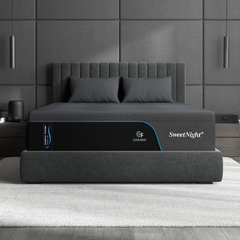
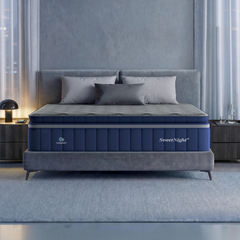
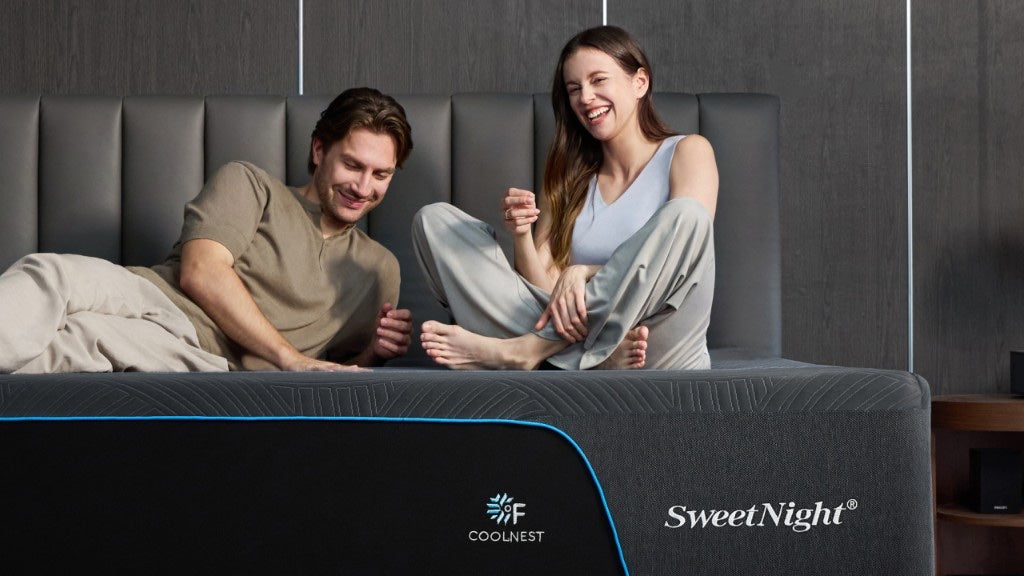
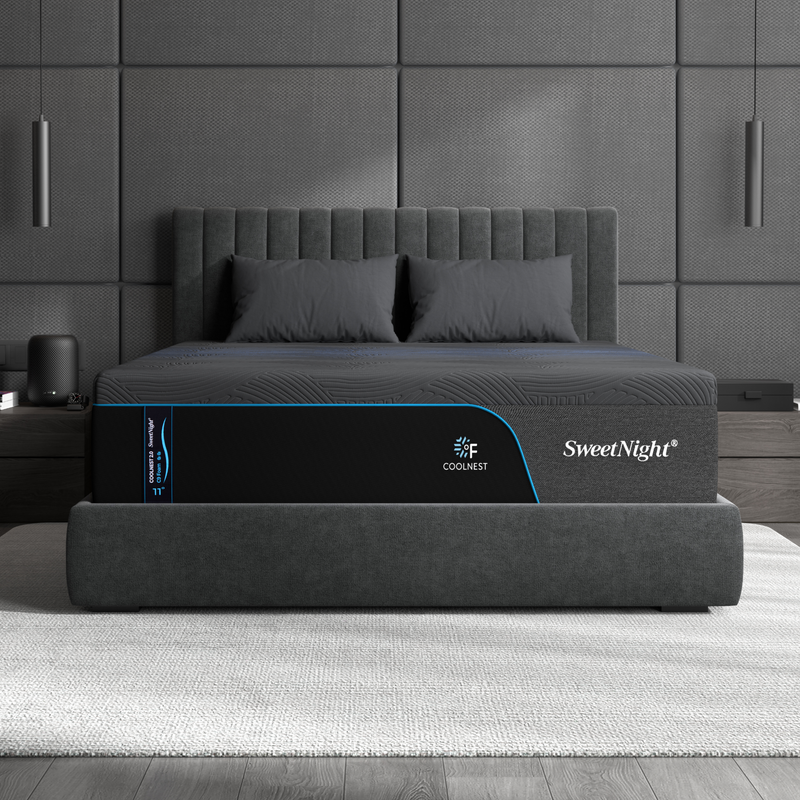
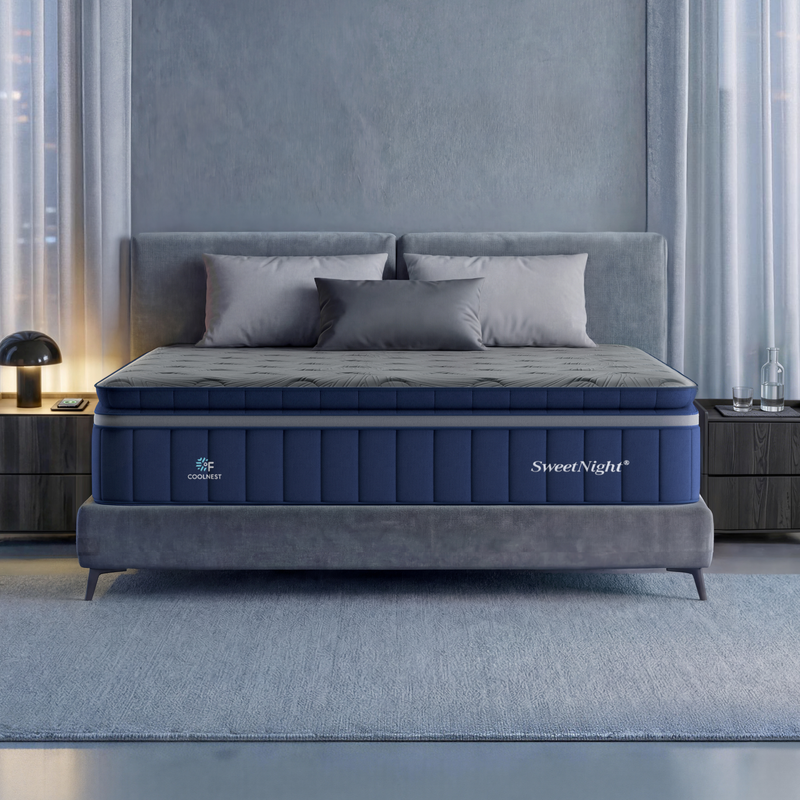
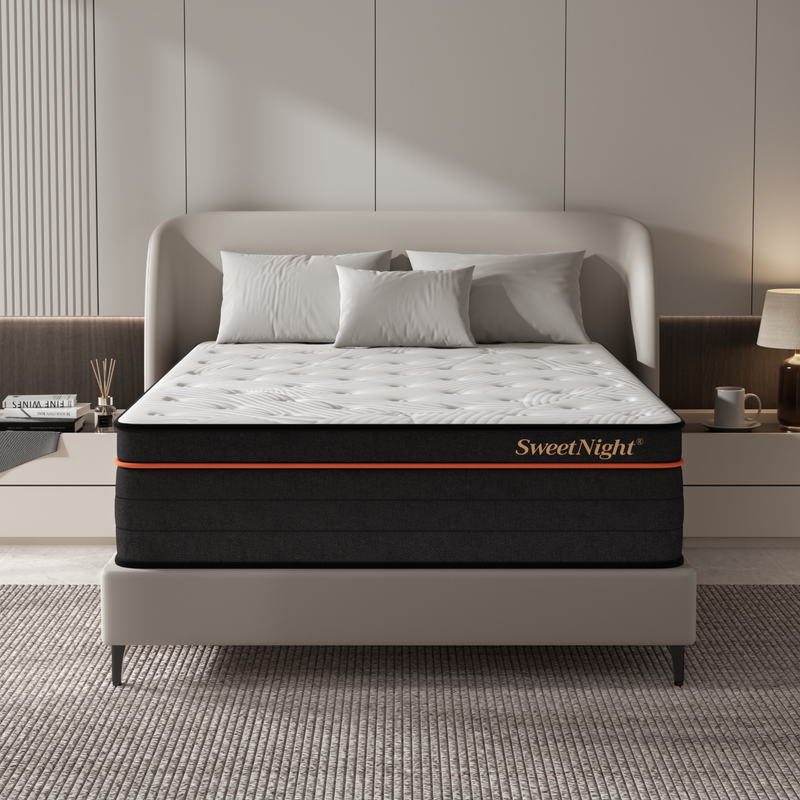
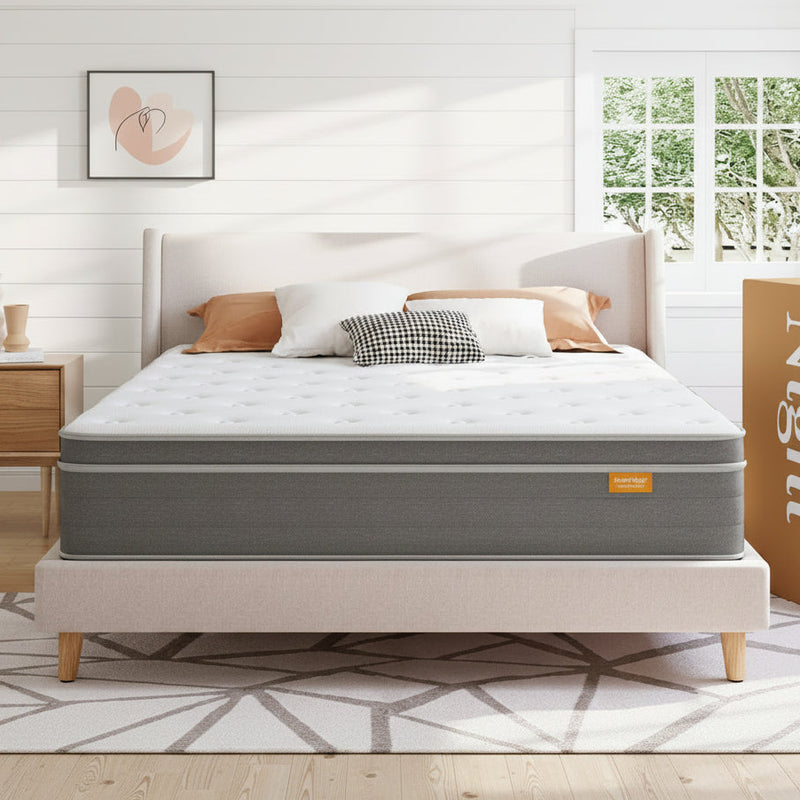
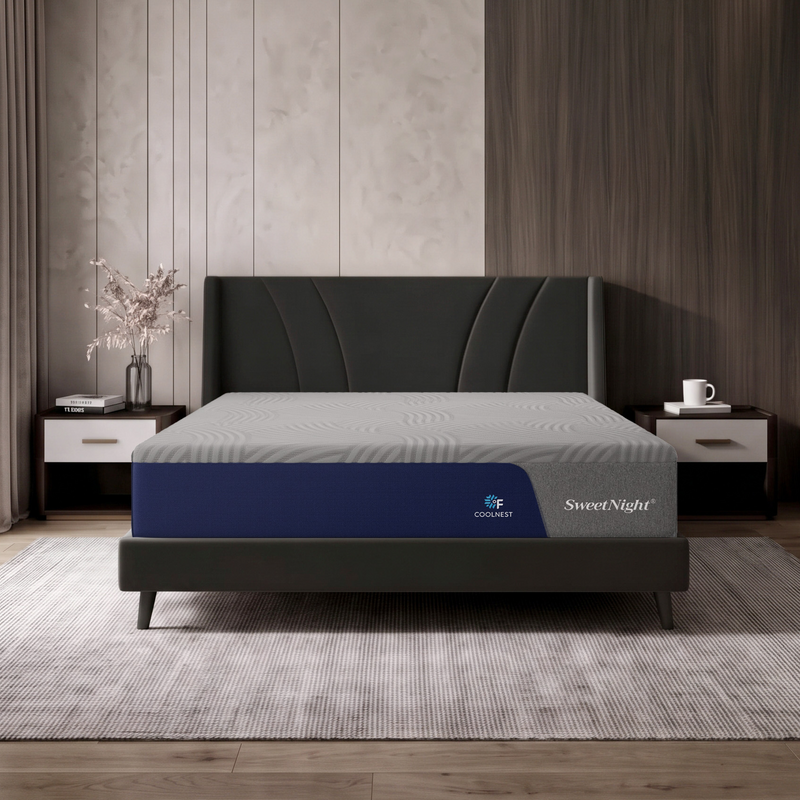
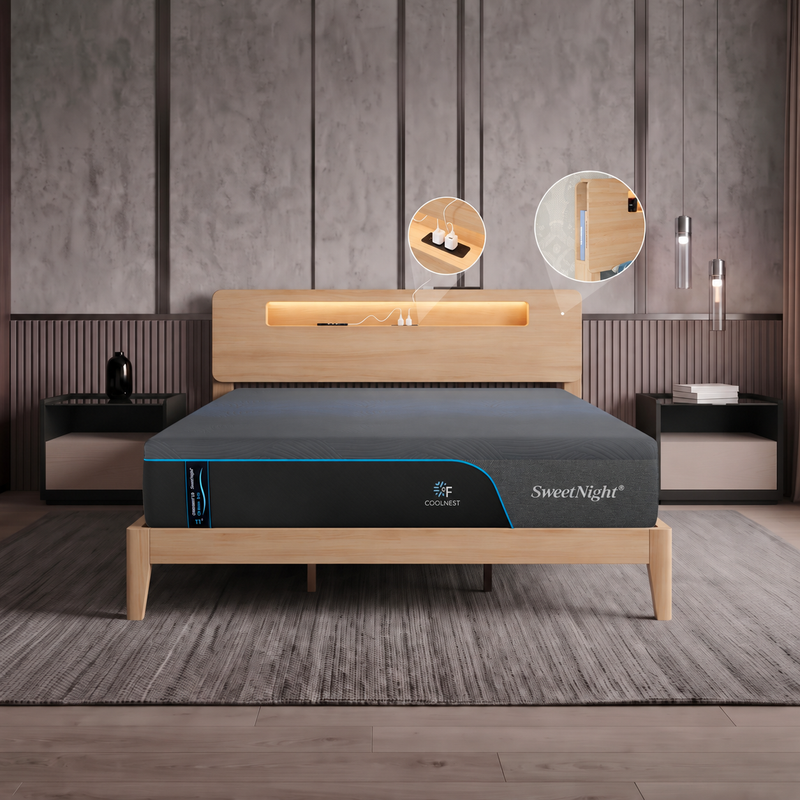
[CTA] SweetNight Dual-Zone Cooling Hybrid: Separate cooling technology for each partner. Specify hot/cold sides at purchase. Sleep together comfortably.