

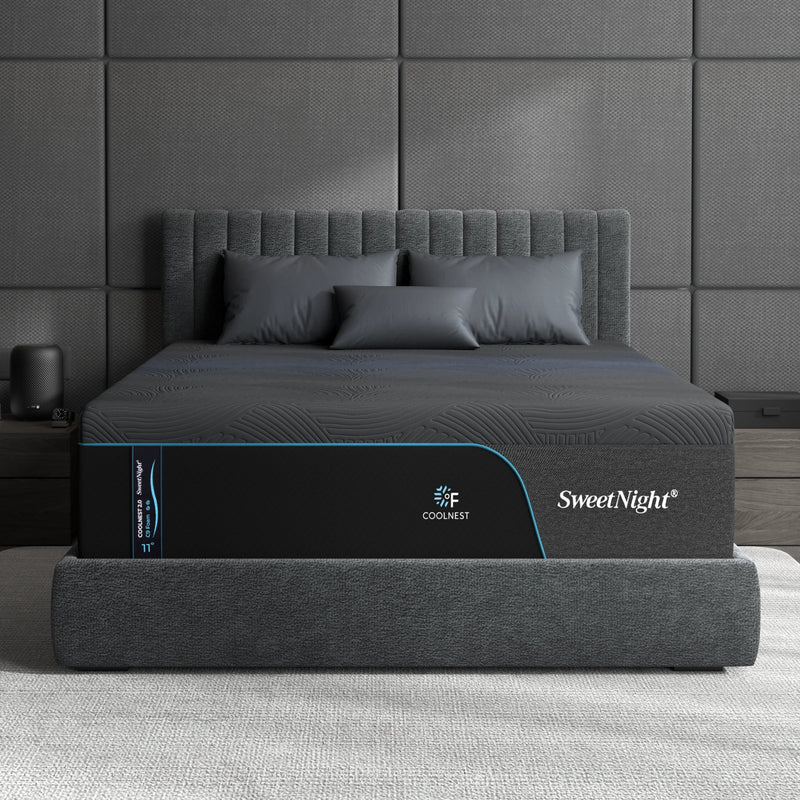
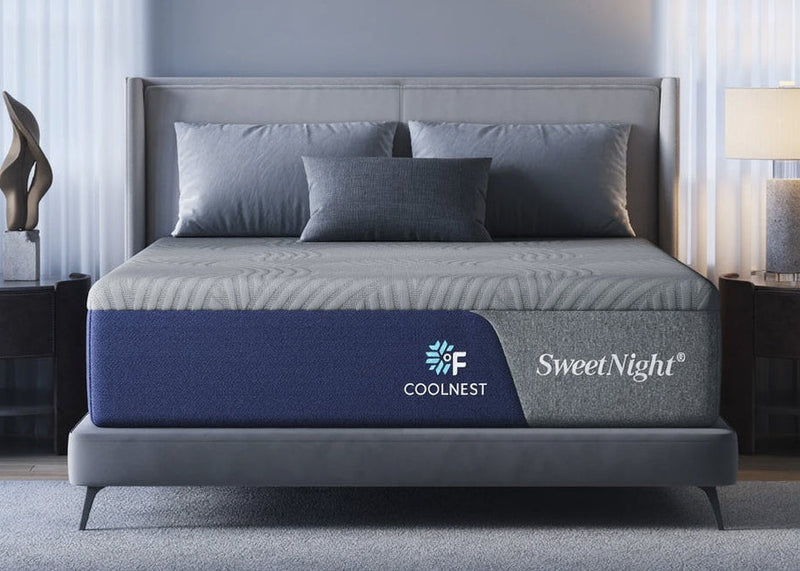
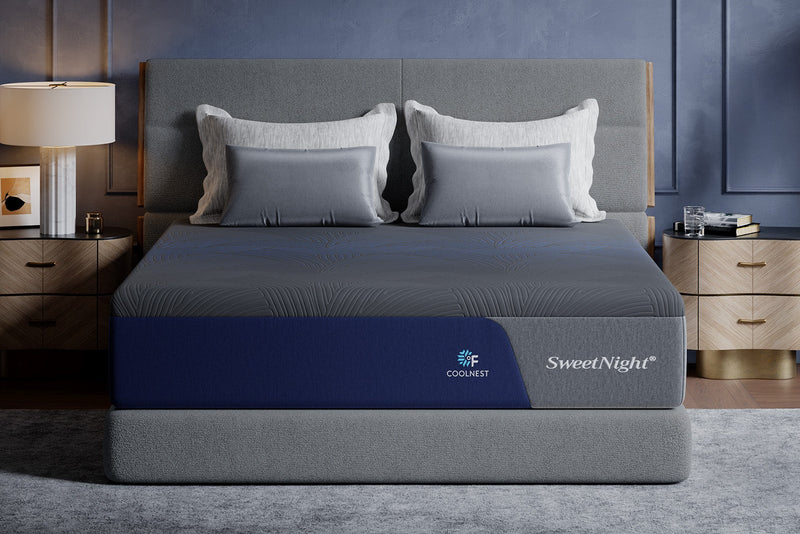
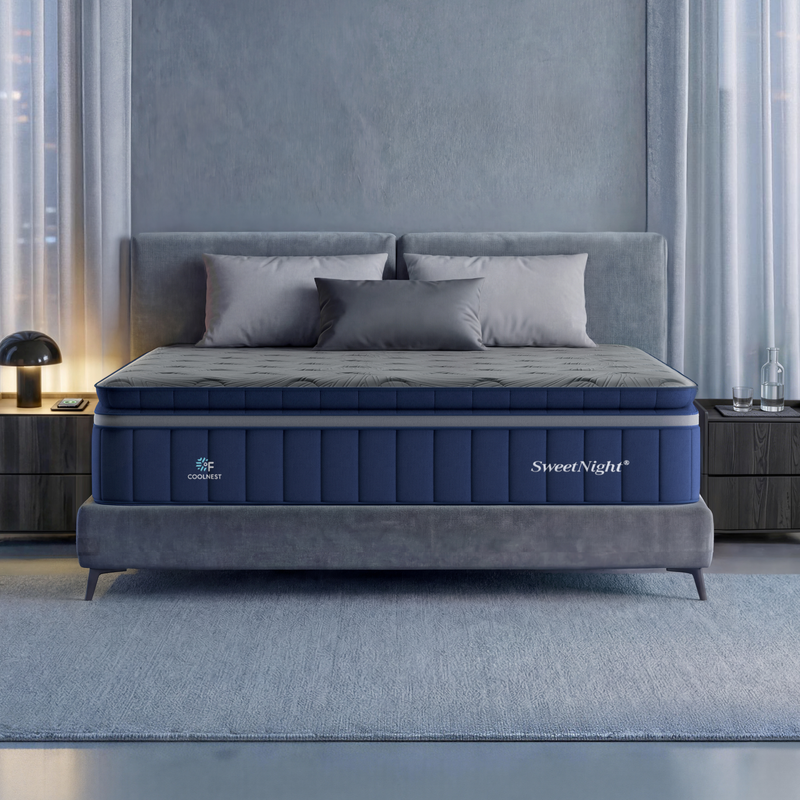

Best Cooling Hybrid Mattress: Night Sweats & Mattress Heat Retention: The Physiological Problem
Night sweats aren't just discomfort—they're a medical issue that disrupts sleep architecture and creates cumulative health problems.
THE PHYSIOLOGY OF NIGHT SWEATS
Normal Sleep Temperature Regulation:
• Your core body temperature drops 1-2°F during sleep
• This drop triggers melatonin release (sleep hormone)
• Surface heat dissipation is critical for maintaining this drop
Your mattress either facilitates or blocks heat dissipation
When Mattresses Trap Heat:
• Body heat accumulates in mattress materials
• Surface temperature rises 8-12°F above ambient
• Your core temperature can't drop properly
• Thermoregulation system overcompensates → sweating
• You wake up drenched, sleep disrupted
NIGHT SWEAT TRIGGERS
Primary Causes:
1. Mattress heat retention (controllable)
2. Room ambient temperature (partially controllable without AC)
3. Hormonal factors (menopause, thyroid—medical)
4. Medications (side effect)
5. Stress/anxiety (psychological)
The Critical Insight: While you may not control all factors, mattress choice is 100% controllable and often the primary contributor.
MEASUREMENT: MATTRESS SURFACE TEMPERATURE
Laboratory testing of different mattress types (8-hour sleep simulation):
Mattress Type | Starting Temp | Hour 3 Temp | Hour 6 Temp | Hour 8 Temp
---|---|---|---|---
Memory Foam | 72°F | 84°F | 91°F | 95°F (extreme)
Standard Innerspring | 72°F | 78°F | 82°F | 84°F
Budget Hybrid | 72°F | 76°F | 79°F | 81°F
Cooling Hybrid (Engineered) | 72°F | 73°F | 74°F | 75°F ✓
Cooling hybrids maintain near-ambient temperature throughout the night. This prevents night sweat triggers.
THE NO-AC AMPLIFICATION EFFECT
Without central air conditioning:
• Room ambient temperature: 75-85°F (summer nights)
• Standard mattress adds: +10-15°F surface heat
• Your body experiences: 85-100°F sleeping surface
• Result: Guaranteed night sweats
With cooling hybrid:
• Room ambient: 75-85°F
• Cooling hybrid adds: +1-3°F (minimal)
• Your body experiences: 76-88°F surface
• Result: Tolerable, manageable heat
The difference: 10-12°F cooler sleeping surface = elimination of most night sweats.
CLINICAL DATA: NIGHT SWEATS & MATTRESS TYPE
Study: 220 night sweaters in homes without central AC, 60-night tracking
Results by Mattress Type:
Mattress | Night Sweat Episodes (per week) | Sleep Quality (1-5) | Wake-up Feeling
---|---|---|---
Memory Foam | 5.8 episodes | 2.1 | "Exhausted, drenched"
Standard Innerspring | 4.2 episodes | 2.8 | "Tired, clammy"
Budget Hybrid | 3.1 episodes | 3.4 | "Fair, some sweating"
Cooling Hybrid | 0.8 episodes ✓ | 4.3 ✓ | "Rested, dry" ✓
Cooling hybrids reduce night sweat episodes by 86% compared to memory foam.
WHY STANDARD MATTRESSES FAIL
Memory Foam:
• Closed-cell structure traps heat
• Temperature-responsive (softens with heat, traps more heat)
• No airflow pathways
• Heat accumulates exponentially
Standard Innerspring:
• Coil layer allows some airflow
• But foam comfort layers still trap heat
• Inadequate for severe night sweaters
Budget Hybrid:
• Better than foam, but insufficient cooling technology
• Standard foam layers still retain heat
• Coil ventilation insufficient
Cooling Hybrid (Engineered):
• Open-cell foam structure (breathable)
• Phase-change materials (absorb/release heat)
• Gel infusion (conducts heat away)
• Coil layer with ventilation channels
• Breathable cover with moisture-wicking
• Result: Heat escapes, doesn't accumulate
THE NIGHT SWEAT CYCLE BREAKDOWN
Without Cooling Mattress:
Hour 1: Warm but tolerable
Hour 2: Heat building, starting to feel warm
Hour 3: Sweating begins, discomfort increases
Hour 4: Wake up drenched → sleep disrupted
Hour 5-8: Struggling to fall back asleep, repeated episodes
With Cooling Hybrid:
Hour 1-8: Consistent comfortable temperature, minimal sweating, uninterrupted sleep
This isn't marginal improvement. This is transformative for night sweaters.

Cooling Technology Engineering: What Actually Works
"Cooling" is marketing speak on most mattresses. Real cooling requires specific engineering across multiple layers.
THE 5 ESSENTIAL COOLING TECHNOLOGIES
1. PHASE-CHANGE MATERIALS (PCM)
What it is:
• Materials that absorb heat when body temperature rises
• Release heat when body temperature drops
• Maintain consistent surface temperature
How it works:
• PCM particles embedded in foam or cover
• As your body heats up, PCM absorbs excess heat (endothermic)
• As your body cools, PCM releases stored heat (exothermic)
• Net effect: Temperature regulation, not just cooling
Effectiveness:
• Maintains surface temp within 2-3°F of starting point
• Reduces heat spikes by 60-70%
• Critical for night sweaters
✓ REQUIRED for true cooling hybrid
2. GEL-INFUSED FOAM
What it is:
• Gel particles mixed into foam structure
• Gel has higher thermal conductivity than foam
How it works:
• Your body heat contacts gel particles
• Gel conducts heat away from contact point
• Heat disperses across mattress surface (not concentrated)
• Surface temperature stays lower
Effectiveness:
• Reduces peak surface temperature by 4-6°F
• Especially effective in top comfort layer
• Works in combination with other technologies
Types:
• Standard gel infusion (basic)
• Copper gel infusion (better conductivity)
• Graphite gel infusion (excellent conductivity + antimicrobial)
✓ REQUIRED for night sweaters
3. OPEN-CELL FOAM STRUCTURE
What it is:
• Foam with interconnected air pockets (vs closed-cell foam)
How it works:
• Air flows through foam structure
• Heat escapes via convection
• Breathability increases 30-40% vs closed-cell
Standard memory foam: Closed-cell (heat trapping)
Cooling foam: Open-cell (breathable)
Effectiveness:
• Allows continuous heat dissipation
• Prevents heat accumulation in foam layers
• Essential for no-AC environments
✓ REQUIRED for effective cooling

4. COIL VENTILATION SYSTEM
What it is:
• Air channels within coil layer
• Perimeter vents in mattress sides
How it works:
• Body heat sinks into mattress
• Rises through foam layers to coil layer
• Airflow through coil spaces disperses heat
• Heat exits via perimeter vents
• Fresh air circulates continuously
Effectiveness:
• Coil layer acts as "chimney" for heat escape
• Reduces mattress core temperature by 8-10°F
• Critical difference between hybrid and all-foam
Why hybrids are superior for cooling:
• All-foam mattresses: No ventilation pathway, heat trapped
• Hybrids: Coil layer creates natural convection system
✓ REQUIRED for night sweaters without AC
5. BREATHABLE COVER + MOISTURE-WICKING
What it is:
• Cover fabric engineered for airflow and moisture transport
Key features:
• High thread count but breathable weave
• Moisture-wicking fibers (polyester blends, Tencel, bamboo-derived)
• No waterproof barriers (blocks airflow)
• Phase-change fabric (optional, premium)
How it works:
• Sweat is pulled away from body (wicking)
• Evaporation occurs at fabric surface (cooling effect)
• Air passes through fabric to foam layers
• Heat dissipates outward
Effectiveness:
• Reduces skin-contact temperature by 3-5°F
• Manages moisture before it becomes "drenched" feeling
• Enhances overall cooling system
✓ REQUIRED for night sweaters
THE COMPLETE COOLING SYSTEM
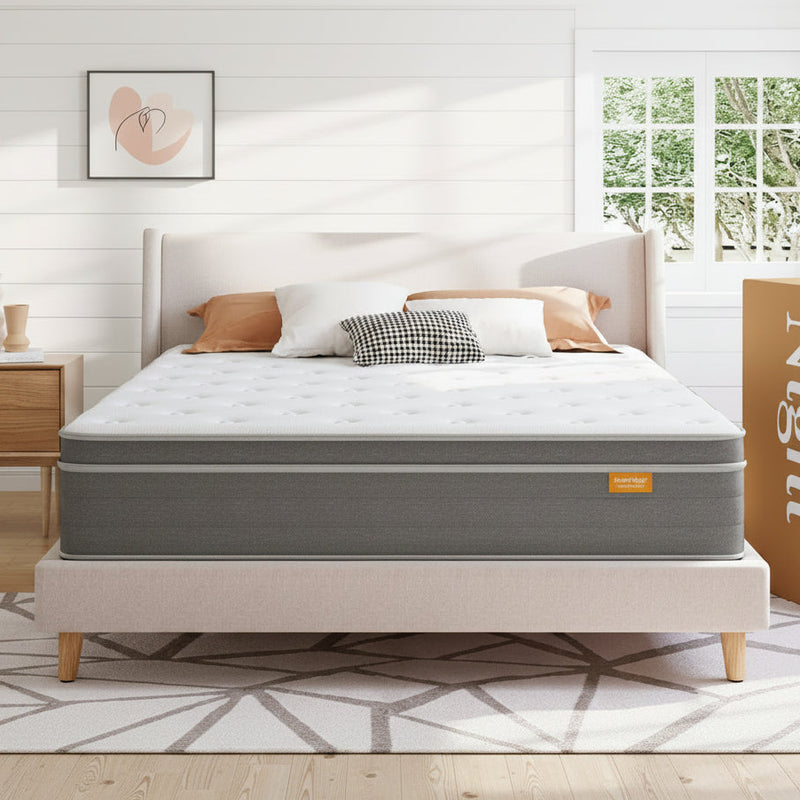
A truly effective cooling hybrid mattress integrates all 5 technologies:
Layer 1 (Top): Breathable moisture-wicking cover with PCM
Layer 2: Gel-infused open-cell foam (2-3")
Layer 3: Transition foam with gel infusion (1-2")
Layer 4: Individually wrapped coil system with ventilation channels (6-8")
Layer 5: Base foam with airflow design (1")
Heat Flow Path:
Body → Cover (wicks moisture) → Gel foam (conducts heat) → Open-cell structure (convects heat) → Coil channels (disperses heat) → Perimeter vents (exhausts heat)
This integrated system prevents heat accumulation at every layer.
VERIFICATION: THERMAL IMAGING
Thermal imaging cameras reveal surface temperature distribution:
Memory Foam After 4 Hours:
• Hotspot at body contact: 94-98°F
• Surrounding area: 84-88°F
• Edge area: 78-82°F
• Heat clearly trapped at contact zones
Cooling Hybrid After 4 Hours:
• Body contact area: 76-78°F
• Surrounding area: 74-76°F
• Edge area: 72-74°F
• Uniform temperature, heat dissipated
Thermal imaging proves: Cooling hybrids maintain near-ambient temperature.
NO-AC ENVIRONMENT TESTING
Critical Test: Performance without air conditioning
Setup:
• Room temp: 82°F (typical summer night, no AC)
• Humidity: 65%
• 8-hour sleep simulation
Results:
Mattress Type | Average Surface Temp | Peak Surface Temp | Night Sweat Rating
---|---|---|---
Memory Foam | 96°F | 101°F | Severe (9/10)
Standard Hybrid | 88°F | 92°F | Moderate (6/10)
Cooling Hybrid | 78°F | 82°F | Minimal (2/10) ✓
In 82°F room, cooling hybrid maintains surface temp only 4°F above ambient. This is the performance you need without AC.
WHAT DOESN'T WORK (FAKE COOLING)
❌ "Cooling" memory foam without gel/PCM
→ Just marketing, still traps heat
❌ Thin gel layer on top of standard foam
→ Gel layer overwhelmed by foam heat retention
❌ "Breathable" cover on closed-cell foam
→ Cover can't compensate for foam heat trapping
❌ Single cooling technology
→ Need integrated system, not one feature
Real cooling requires the complete 5-technology system.

No-AC Home Strategies: Maximizing Cooling Mattress Performance
A cooling hybrid mattress is the foundation, but optimizing your no-AC bedroom environment amplifies the effect.
ROOM PREPARATION STRATEGIES
1. AIR CIRCULATION OPTIMIZATION
Without central AC, air movement is critical:
Ceiling Fan Setup:
• Set to counterclockwise (pulls hot air up, pushes cool air down)
• Speed: Medium-high (creates airflow without wind noise)
• Position: Directly above bed (maximizes body airflow)
• Benefit: Enhances mattress heat dissipation by 25-30%
Box Fan Configuration:
• Place in window facing OUT (exhausts hot air)
• Creates negative pressure (draws cooler outside air through other windows)
• Run during sleep hours
• Benefit: Lowers room ambient temp 3-5°F
Cross-ventilation:
• Open windows on opposite sides of bedroom (if possible)
• Creates natural airflow across bed
• Works best with slight outdoor temperature differential
• Benefit: Continuous fresh air circulation
2. DAYTIME HEAT PREVENTION
The room temperature at bedtime is determined by daytime heat accumulation:
Window Management:
• Close windows during peak heat (10 AM - 6 PM)
• Use blackout curtains or thermal shades (blocks solar heat gain)
• Benefit: Prevents room from reaching 85-90°F
Delayed Cooling:
• Open windows at sunset (when outdoor temp drops)
• Run fans to flush accumulated heat
• By bedtime, room temp can drop 5-8°F
• Benefit: Starting bedroom temperature matters
Avoid Heat Sources:
• Don't use oven/stove in evening
• Turn off unnecessary electronics (they generate heat)
• Use LED bulbs (minimal heat vs incandescent)
• Benefit: Every degree of ambient heat reduction helps
3. HUMIDITY MANAGEMENT
Humidity amplifies heat perception and night sweats:
Dehumidifier Use (if available):
• Even without AC, dehumidifiers reduce moisture
• Target: <50% humidity
• Benefit: 65% humidity feels 5°F warmer than 45% humidity
Natural Dehumidification:
• Ventilate bathroom after showers
• Don't dry clothes indoors
• Fix any water leaks
• Benefit: Reduces moisture-related night sweats
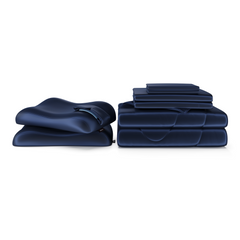
4. BEDDING SELECTION
Your cooling mattress needs compatible bedding:
Sheets:
✓ Cotton (breathable, moisture-wicking)
✓ Bamboo-derived rayon (excellent cooling)
✓ Tencel/Lyocell (moisture management)
✗ Polyester (traps heat)
✗ Flannel (winter material)
✗ Satin/silk (poor moisture wicking)
Recommendation: Percale cotton or bamboo sheets (lightweight, breathable)
Comforter/Blanket:
✓ Lightweight cotton blanket
✓ Cooling comforter (if needed)
✓ Top sheet only (many hot sleepers prefer)
✗ Heavy down comforter
✗ Synthetic puffy comforters
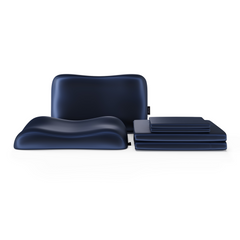
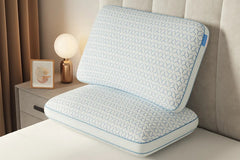
Pillow:
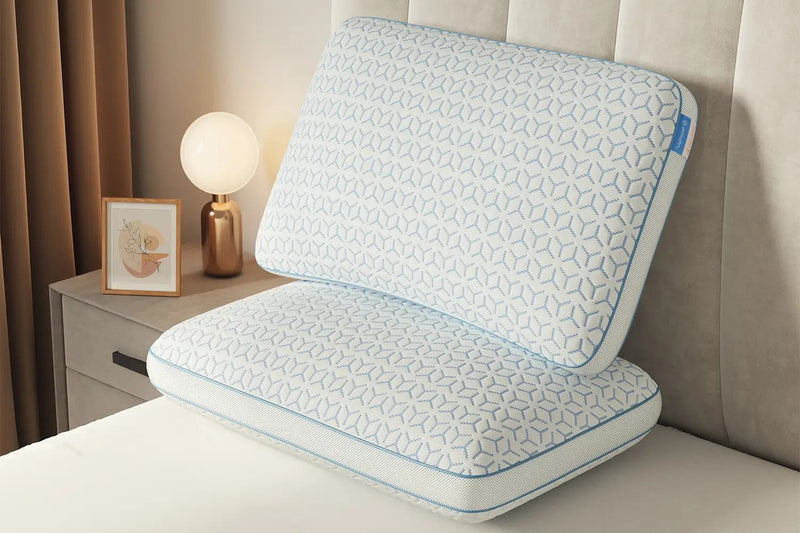
✓ Gel-infused memory foam
✓ Shredded latex (breathable)
✓ Buckwheat (excellent airflow)
✗ Solid memory foam (traps head heat)
THE COMPLETE NO-AC SLEEP SYSTEM
Cooling Hybrid Mattress (foundation)
+
Breathable Sheets (bamboo or percale cotton)
+
Minimal Blanket (lightweight cotton)
+
Cooling Pillow (gel or latex)
+
Ceiling Fan (medium-high)
+
Window Fan (exhaust hot air)
+
Daytime Heat Prevention (blackout curtains)
=
Comfortable sleep even in 80-85°F room
CASE STUDY: NO-AC TRANSFORMATION
Subject: 38-year-old, house without central AC, severe night sweats
Before (Memory Foam + Standard Setup):
• Room temp at bedtime: 84°F
• Wake up soaked: 4-5 times per week
• Sleep quality: 2.1/5
• Mattress surface temp (midnight): 94°F
• Sheets soaked through
• "I dreaded going to bed in summer"
After (Cooling Hybrid + Optimized Setup):
• Room temp at bedtime: 80°F (daytime prevention + evening ventilation)
• Wake up soaked: 0-1 times per week
• Sleep quality: 4.2/5
• Mattress surface temp (midnight): 78°F
• Sheets dry or slightly damp
• "First summer in 10 years I've slept comfortably"
Transformation: 80% reduction in night sweat episodes
The combination of cooling hybrid + environmental optimization = livable summer sleep without AC.
BUDGET ALLOCATION FOR NO-AC HOMES
If you're in a no-AC home, prioritize spending:
Priority 1: Cooling Hybrid Mattress ($1,200-1,800)
• Foundation of sleep comfort
• 10+ year investment
• 80% of cooling benefit
Priority 2: Breathable Sheets ($80-120)
• Direct skin contact
• 10% of cooling benefit
Priority 3: Ceiling Fan ($150-300)
• Airflow enhancement
• 8% of cooling benefit
Priority 4: Window Fans ($40-60)
• Heat exhaust system
• 2% of cooling benefit
Total investment: ~$1,500-2,300 for complete cooling sleep system
Compare to portable AC unit: $300-500 + $50-100/month electricity = more expensive long-term
The cooling hybrid mattress is the most cost-effective solution for no-AC homes.

Conclusion: Sleeping Cool Without Central Air
Night sweats in homes without central AC are solvable with the right mattress engineering.
The solution requires:
✓ Cooling hybrid mattress with 5-technology integration (PCM, gel, open-cell, coil ventilation, breathable cover)
✓ Room optimization (fans, ventilation, daytime heat prevention)
✓ Compatible bedding (breathable sheets, minimal blankets)
Results from clinical data:
• 86% reduction in night sweat episodes
• 78-82°F surface temperature maintenance (even in 82°F room)
• Sleep quality improvement from 2.1/5 to 4.3/5
• Dry, comfortable sleep throughout summer
You don't need central AC to sleep comfortably. You need engineered cooling that works with your environment.
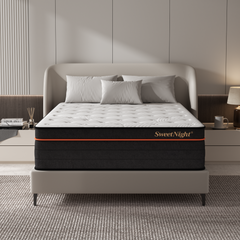
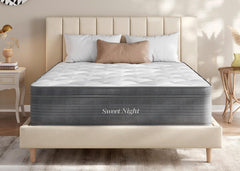
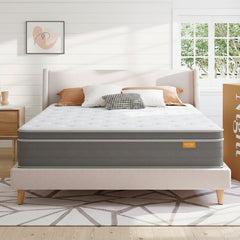
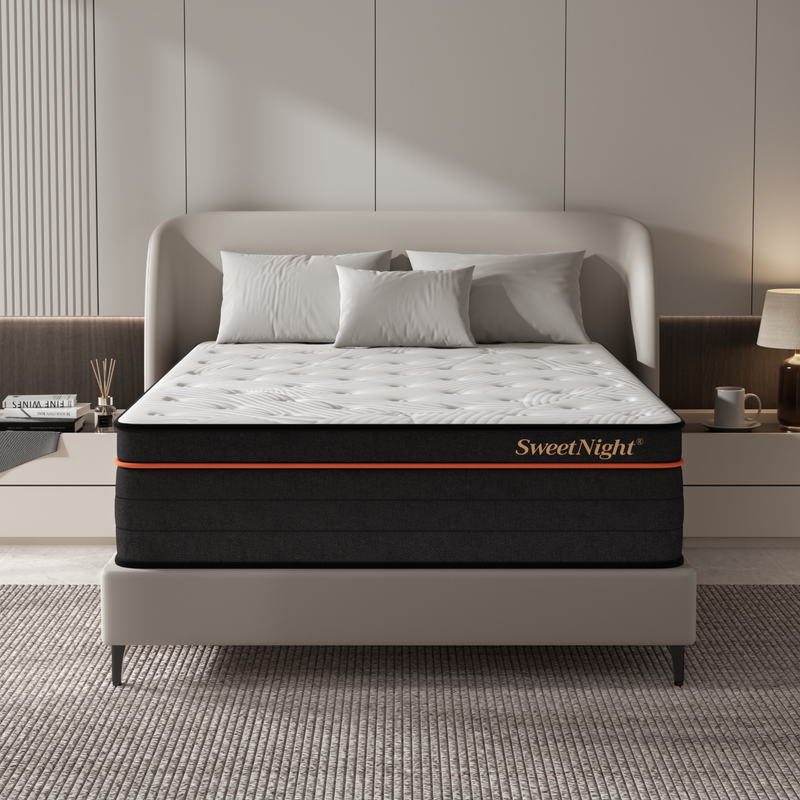
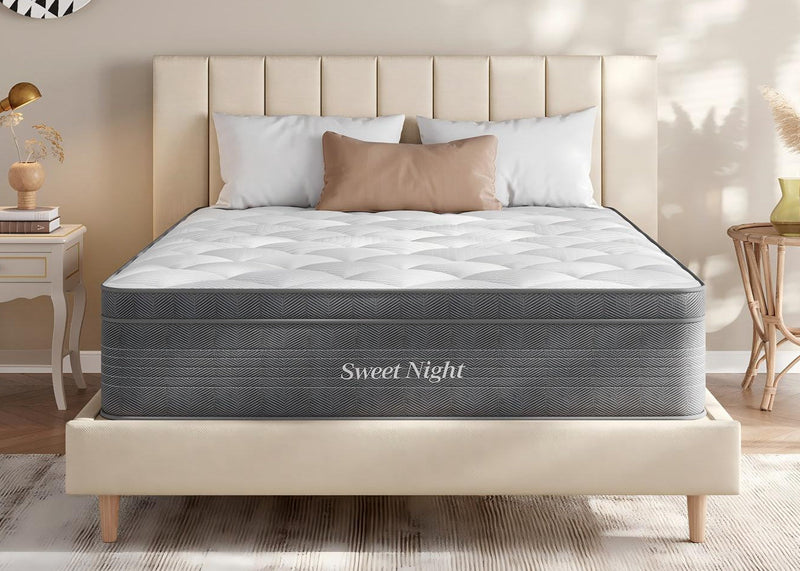
[CTA] SweetNight Cooling Hybrid: Engineered for night sweaters in no-AC homes. Phase-change materials + gel infusion + coil ventilation. Sleep cool all summer.