


















Updated: August 11, 2026 · Reviewed by the SweetNight Sleep Comfort Team · 10 min read
A mattress topper is either the best $150 you will ever spend on sleep or a complete waste of money, and which one it turns out to be is decided before you buy — by whether your problem is on the surface or in the structure.
That single distinction explains why topper reviews are so polarised. The people saying it transformed their sleep had a firm-but-sound mattress. The people saying it did nothing had a sagging one. Both are reporting accurately; they just had different problems.
So work out which one you have first. It takes a piece of string and about five minutes.
Do Mattress Toppers Work? Surface vs Structure
A mattress does two separate jobs.
Support comes from the core — the springs or the high-density base foam. Its job is to hold your spine in line, keeping your hips from sinking below your shoulders and knees. This is structural.
Comfort comes from the top few inches. Its job is to let your shoulder and hip settle in far enough that pressure spreads instead of concentrating. This is the surface.
A topper adds to the second and cannot touch the first. It sits on top of whatever shape the core has taken. If the core is flat and firm, the topper adds the contouring that was missing — a real fix. If the core has developed a dip, the topper drapes into that dip, and now you are lying in the same misaligned position on a softer surface. Sometimes it feels worse, because the extra softness lets you sink deeper into the same hole.
| Problem | Type | Will a topper fix it? |
|---|---|---|
| Mattress too firm | Surface | Yes — this is the ideal case |
| Hip or shoulder pressure when side sleeping | Surface | Yes |
| Sleeps hot | Surface | Yes, with the right material |
| Guest bed or new mattress you slightly dislike | Surface | Yes |
| Sagging over 1.5 in | Structural | No |
| Mattress too soft, hips dropping | Structural | Mostly no — a firm latex topper helps marginally |
| Broken or noisy springs | Structural | No |
| Rolling toward the middle | Structural | No |
Mattress Topper vs New Mattress: The 3-Question Test
Answer these in order and stop at the first "no."
Question 1: Is the mattress structurally sound?
Strip the bed completely, stretch a taut string across the bare mattress, and measure the largest gap underneath it. Under 1 inch means the structure is intact. Over 1.5 inches means it is not, and you should be reading when to replace a mattress instead of this page. Between the two, a topper buys you time but not a solution.
Question 2: Is the mattress too firm, rather than too soft?
Toppers only add softness. Adding a soft layer to an already-too-soft mattress makes the alignment problem worse, not better. A firm latex topper can add a little surface resistance, but it cannot compensate for a core that has gone.
Question 3: Is the mattress under about seven years old?
Not a hard limit, but a sanity check. Putting a $200 topper on a nine-year-old bed you will replace next year is worse value than putting that $200 toward the replacement. Below seven years and structurally sound, the topper is genuinely the economical choice.
Three yeses: buy the topper. It is the right tool and it will cost you a fraction of a mattress.
Any no: a topper is a delay, not a fix.
Mattress Topper Materials Compared
| Material | Feel | Temperature | Lifespan | Best for |
|---|---|---|---|---|
| Memory foam | Deep contouring, slow response, hugs | Warmest — unless gel-infused or convoluted | 3–5 years | Pressure relief on a firm mattress; side sleepers |
| Latex | Buoyant and responsive, contours without sinking | Coolest of the supportive materials | 5–8 years | Hot sleepers; people who dislike the memory foam "stuck" feel |
| Wool | Light cushioning, not much contouring | Excellent — regulates in both directions | 5+ years | Temperature problems rather than pressure problems |
| Feather / down | Plush, no support, needs fluffing | Warm | 2–3 years | Adding plushness to a firm bed for back sleepers |
| Polyester fibre | Soft at first, flattens fast | Warm, traps moisture | 1–2 years | Guest rooms; short-term use |
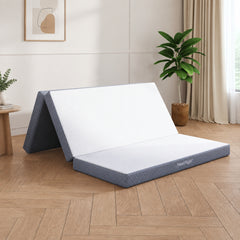
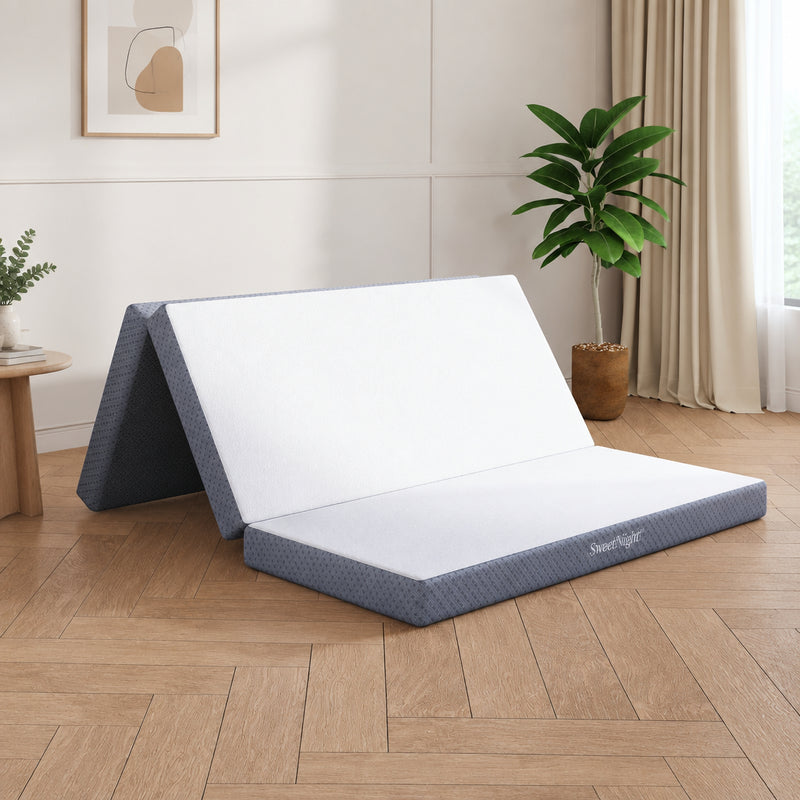
| Folding foam | Firm and supportive; portable | Varies by foam type | 3–5 years | Guest sleeping, floor use, dorms — our 4-inch tri-folding mattress topper doubles as a spare bed |
For memory foam, density is the number that predicts whether it will still work in three years. Anything under about 3 lb/ft³ will develop a permanent impression quickly. Manufacturers who publish the figure are generally the ones whose figure is worth publishing.
What Thickness Mattress Topper Do You Need?
More is not better, and this is where most people over-buy.
- 2 inches — a nudge. Takes the edge off a slightly-too-firm mattress. Enough for lighter sleepers and back sleepers.
- 3 inches — the sweet spot for most people. Real pressure relief at hip and shoulder on a firm mattress, without losing the support underneath.
- 4 inches — for heavier sleepers, or a genuinely hard mattress. Below about 200 lb you will likely find it excessive.
- Over 4 inches — you are no longer adjusting the mattress, you are sleeping on a thin mattress laid on top of one. Support becomes unpredictable, fitted sheets stop reaching, and the bed height changes enough to matter for getting in and out.
Two practical consequences people forget. A 3-inch topper raises the sleeping surface by roughly 3 inches, which affects how a fitted sheet fits — measure your sheet pocket depth against mattress height plus topper before ordering. And the added height reduces the effective edge of the bed, which is worth thinking about if a child or an older adult sleeps there.
A thicker topper also changes which pillow you need, because your shoulder now sinks further and the gap between your ear and the surface shrinks. If you add 3 inches of soft foam and start waking with a stiff neck, your pillow is now too tall — the loft maths is in what is the best pillow.
Can a Mattress Topper Help With Back Pain?
It depends entirely on which direction the misalignment runs, and this is where a topper most often gets blamed unfairly.
When it helps: your mattress is too firm. A firm surface will not let your hips and shoulders settle in, so your lumbar spine is held in a slight arch with a gap under your waist all night. The muscles hold that position for hours and you wake stiff. A 3-inch topper lets the pressure points sink to where they should be, the gap closes, and the pain usually resolves within two or three weeks.
When it makes things worse: your mattress is sagging. Your hips are already dropping below your shoulders and knees. Adding a soft layer lets them drop further. People in this situation often report that the topper felt wonderful for the first week and then their back got worse — that is the sink deepening as the new foam settles.
The distinction you need is between "hard" and "sagging," and they are easy to confuse because both can hurt. Run the string test. Firm and flat means a topper is the answer. Soft and dipped means it is not. The positional side of the problem is covered in why sleep position causes lower back pain, and if the hip is the specific complaint, mattresses for hip pain in side sleepers goes deeper.
Why Toppers Make Some Beds Sleep Hotter
This is the most common unpleasant surprise, and it is predictable.
You are adding an insulating layer between your body and whatever breathability the mattress had. Worse, a soft topper lets you sink deeper, which increases the proportion of your body enclosed by foam rather than exposed to air. Both effects push the same direction: heat that used to escape now has nowhere to go. The underlying mechanism is the same one described in why memory foam feels hot during sleep.
If you already sleep warm, choose accordingly:
- Latex — open cell structure and usually pinholed; the best supportive option for heat.
- Convoluted ("egg crate") foam — the profile creates air channels; cheap and effective.
- Wool — genuinely regulating, and it handles moisture well.
- Gel-infused memory foam — helps at the start of the night, then equalises. Better than plain foam, not a solution on its own.
- Avoid solid untreated memory foam if heat is already your complaint. It is the worst combination available.
And if the reason you are shopping for a topper is heat rather than firmness, be honest about whether you are treating the symptom. A topper can improve a hot bed at the margin; a mattress built to vent solves it. That comparison is in the best cooling mattress for hot sleepers, and current offers are on the SweetNight deals page.
How to Stop a Mattress Topper From Sliding
A topper that migrates every night is the most common complaint after heat, and it is fixable.
- Use a deep-pocket fitted sheet over both. The single most effective fix — it binds the topper and mattress into one unit. Measure total height first.
- Choose a topper with anchor straps at the corners if you are still buying.
- Add a non-slip rug pad underneath. Cheap, invisible, and it works on smooth quilted mattress surfaces where friction is the actual problem.
- Put a mattress protector under the topper, not over it. Protectors are often slippery; putting one on top also defeats the topper's feel. Under is both grippier and more sensible.
How Long Do Mattress Toppers Last?
Less long than people expect, because a topper takes your full body weight directly with nothing above it to spread the load.
- Latex: 5–8 years
- High-density memory foam: 3–5 years
- Low-density memory foam: 1–3 years
- Wool: 5+ years with occasional airing
- Feather: 2–3 years
- Polyester fibre: 1–2 years, often less
The test is the same as for a pillow: fold it and let go. If it springs back it still has structure; if it stays folded it has stopped supporting you. A topper with its own permanent body impression is now contributing to the misalignment it was bought to fix.
Rotating it head-to-foot every few months roughly doubles useful life, for the same reason it does on a mattress — you stop concentrating every night's load on the same patch.
Frequently Asked Questions
Can a mattress topper make a mattress firmer?
Only slightly, and only with firm latex or a high-density firm foam. Toppers are fundamentally an additive softening layer. If your mattress is too soft, you are looking at a replacement or, as a stopgap, checking whether the bed base is the real culprit — slats spaced too far apart create sag that feels like a soft mattress.
Do I still need a mattress protector with a topper?
Yes, and put it under the topper if you want the topper's feel, or over the topper if spills are your main concern. Toppers are harder to clean than mattresses and are usually the more expensive item to replace.
Will a topper void my mattress warranty?
Not normally — toppers sit on top and are not a modification. What does void warranties is an inadequate bed base and staining, so a protector actually helps protect the claim.
Why does my new topper smell?
Off-gassing from foam that has been compressed for shipping. Unroll it in a ventilated room and give it 24 to 72 hours before putting bedding on it. The smell dissipating is normal; a smell persisting past a week is not, and is worth raising with the retailer.
Can I put a topper on a sofa bed or futon?
Yes, and it is one of the highest-value uses there is, because sofa beds are thin, firm, and often have a bar you can feel. Two to three inches of foam transforms them. A folding topper works especially well here since it stores away.
Is a topper worth it on a brand-new mattress?
If the new mattress is slightly too firm, yes — but wait out the sleep trial first. New mattresses soften over the first month, and plenty of people buy a topper in week one for a problem that would have resolved by week four. If it is still too firm at day 30, the trial period exists for exactly that.
The Bottom Line
A mattress topper changes the surface of your bed. It never changes the structure.
Measure the sag before you buy. Under an inch and too firm, a 3-inch topper is genuinely one of the best-value upgrades in bedding. Over 1.5 inches of dip, you are buying a softer way to sleep in the same hole.
Pick latex or a ventilated foam if you sleep hot, match the thickness to your weight rather than to the idea that more is better, and re-check your pillow afterwards — because once you sink 3 inches further into the bed, the pillow that used to fit no longer does.