










What Desk Work Does to Your Spine - The Cumulative Damage
To understand what your mattress needs to do, you first need to understand what your job is doing to your spine. This isn't just discomfort—it's actual structural damage that accumulates over months and years.
THE COMPRESSION CASCADE
When you sit at a desk, your lumbar spine (lower back) experiences sustained compression:
• Your body weight is concentrated in your hips and lower back
• The natural curve of your lumbar spine is flattened forward (anterior pelvic tilt)
• Your intervertebral discs (the shock absorbers between vertebrae) are squeezed
• This squeeze increases pressure on the spinal nerves
During an 8-hour workday:
HOUR 1-2: Minimal damage
• Discs compress slightly
• Muscles begin to tighten
• You don't feel it yet
HOUR 3-4: Noticeable compression
• Discs lose 15-20% of their fluid height
• Intradiscal pressure increases
• You feel stiffness developing
• Lower back ache beginning
HOUR 5-8: Significant damage
• Discs lose 20-30% of original height
• Intradiscal pressure at maximum
• Surrounding tissues inflamed
• Spinal nerves compressed
• You leave work in pain
By the time you get home, your lumbar spine has been compressed for 8+ hours.
DISC DEHYDRATION
Your intervertebral discs are hydrophilic (they absorb water). When you sit, the constant pressure squeezes water out of the discs. This happens gradually throughout the day:
• Start of workday: Normal disc height
• Mid-day: 10% height loss
• End of workday: 15-25% height loss
This height loss has consequences:
• Less cushioning between vertebrae
• More direct contact between bones
• Increased pain
• More rapid disc degeneration over time
POSTURAL MUSCLE WEAKNESS
Sitting for 8+ hours deactivates crucial postural muscles:
• Hip flexors: Become tight and short
• Glutes: Become weak and "inhibited" (don't activate properly)
• Lower back stabilizers: Become fatigued
• Core muscles: Become weak
By the end of the workday, these muscles are exhausted. Your lumbar spine has lost muscular support. It's relying entirely on ligaments and disc pressure—exactly when it shouldn't be.
INFLAMMATORY CASCADE
All of this compression creates inflammation:
• Surrounding tissues are irritated
• Inflammatory cytokines are released
• Spinal nerves become compressed and inflamed
• This inflammation spreads
By end of workday:
• Localized inflammation in lower back
• Referred pain (can radiate to hips, glutes, legs)
• Muscle guarding (muscles tighten to "protect" the area)
• Sleep-disrupting pain
CUMULATIVE DAMAGE
If you're a desk worker for 5+ years:
Year 1: Occasional stiffness, manageable pain
Year 2-3: Regular morning stiffness, developing chronic pain
Year 4-5: Chronic pain that doesn't fully resolve, disc degeneration beginning
Year 5+: Significant disc degeneration, nerve compression, possible herniation
The damage is cumulative. Your spine doesn't fully recover overnight if your mattress isn't designed for recovery.
THE SLEEP OPPORTUNITY
Here's the critical insight: Sleep is when your body can reverse much of this damage. But ONLY if your mattress supports proper spinal alignment.
During 8 hours of sleep, your body has the opportunity to:
• Rehydrate discs (restore fluid content)
• Reduce inflammation (inflammatory markers clear)
• Relax muscles (muscular fatigue recovery)
• Reset postural patterns (nervous system recalibration)
But if your mattress creates poor alignment, sleep becomes another stress cycle instead of a recovery cycle.

The Spinal Recovery Process During Sleep - Hour by Hour
Sleep isn't a passive state. Your body is actively repairing spinal damage during specific sleep stages. Understanding this helps explain why mattress choice matters so much for desk workers.
WHAT HAPPENS DURING SLEEP (IDEAL CONDITIONS)
HOUR 0-1: LIGHT SLEEP & TRANSITION
What your body is doing:
• Heart rate decreases
• Blood pressure drops
• Body temperature begins to drop
• Muscles start to relax
What your spine needs:
• Neutral alignment (not too much compression, not too much extension)
• Pressure distribution (no concentrated pressure points)
• Minimal movement (as body transitions into sleep)
Mattress requirement: Support that doesn't require muscular compensation. If your mattress is too soft, your muscles stay engaged trying to hold your spine in position.
HOUR 1-3: LIGHT SLEEP → EARLY DEEP SLEEP
What your body is doing:
• You enter early stages of deep sleep
• HPA axis (stress hormone system) begins to normalize
• Parasympathetic nervous system activates (rest-and-digest mode)
• Inflammatory markers begin to decrease
What your spine needs:
• Sustained neutral alignment
• Even pressure distribution
• Continued muscular relaxation
Most importantly: Disc rehydration begins. Your discs start absorbing fluid back in. This is when decompression starts to happen.
Mattress requirement: Consistent support that doesn't shift. If your mattress compresses unevenly or sags, it disrupts this early recovery process.
HOUR 3-5: DEEP SLEEP - THE CRITICAL RECOVERY WINDOW
This is the most important period for spinal recovery.
What your body is doing:
• Peak deep sleep stage (Stage 3 sleep, slow-wave sleep)
• Growth hormone release at maximum
• Inflammatory markers declining rapidly
• Parasympathetic activity maximal (complete rest mode)
• Maximum disc rehydration occurring
• Tissue repair mechanisms at peak
What your spine needs:
• Absolute neutral alignment for 2+ hours straight
• No postural shift or adjustment needed
• Maximum muscular relaxation
• Zero microarousals or position changes
This is when your discs undergo maximum rehydration. If your mattress doesn't maintain perfect alignment, microarousals occur. You shift positions. The recovery window is interrupted.
Mattress requirement: Superior support that allows complete muscular relaxation without alignment drift. This is where hybrids excel and memory foam often fails (memory foam "softens" as body heat increases, causing alignment drift after hour 3-4).
HOUR 5-7: LATE DEEP SLEEP → REM SLEEP
What your body is doing:
• Transitioning out of deep sleep
• Entering REM sleep (dream stage)
• Continued inflammatory marker reduction
• Memory consolidation
• Further tissue repair
What your spine needs:
• Continued spinal alignment
• Responsiveness to position changes (you may naturally adjust positions)
• Maintained support throughout position changes
Mattress requirement: Responsive support that adapts to position changes without losing alignment benefits. This is where motion responsiveness matters.
HOUR 7-8: LATE REM SLEEP → WAKING
What your body is doing:
• Mostly REM sleep
• Final transition to waking state
• Cortisol (morning alertness hormone) beginning to rise
• Body temperature rising
• Core body temperature returning to normal
What your spine should feel:
• Ready for the day
• Discs rehydrated
• Muscles rested
• Inflammation significantly reduced
• Spinal mobility restored
Mattress requirement: Mattress quality throughout the night determines morning feeling. If alignment was poor in hours 3-5, you'll wake stiff despite adequate sleep.
THE CRITICAL INSIGHT
For desk workers, hours 3-5 are absolutely critical. Those 2 hours of deep sleep are when maximum spinal recovery happens. If your mattress allows alignment drift during this period (which happens with many memory foam mattresses as they soften with body heat), you lose the recovery benefit.
Studies show: Desk workers who sleep on proper-support mattresses experience 40-60% reduction in morning stiffness compared to desk workers on standard mattresses. The difference is entirely due to spinal alignment maintenance during these critical hours.

Spinal Alignment During Sleep: What "Proper" Actually Means
You've heard "proper spinal alignment" many times. But what does it actually mean for a desk worker sleeping in bed?
THE THREE SPINAL CURVES
Your spine has three natural curves:
1. CERVICAL CURVE (Neck): C-shaped, about 20-40° forward
2. THORACIC CURVE (Mid-back): Reverse C, about 20-40° backward
3. LUMBAR CURVE (Lower back): C-shaped, about 40-60° forward
These curves are normal. They distribute load efficiently and protect the spinal cord. The goal of a good mattress is to maintain these curves.
BACK SLEEPING (MOST COMMON FOR DESK WORKERS)
When a desk worker lies on their back, proper alignment means:
✓ Cervical curve maintained (pillow supports neck naturally, not overextended)
✓ Thoracic curve maintained (naturally supported by mattress)
✓ Lumbar curve supported but NOT exaggerated
✓ Hips positioned so they're not sinking more than 2-3 inches below shoulders
✓ Weight distributed evenly across back surface
✓ No concentrated pressure at lumbar region
The critical point for desk workers: Your lumbar spine is already fatigued and compressed from 8 hours of sitting. It needs gentle support—not aggressive contouring. Your mattress should support your lumbar curve, but it shouldn't deepen it.
SIDE SLEEPING (SECONDARY FOR DESK WORKERS)
When lying on your side, proper alignment means:
✓ Head supported so neck is neutral (not tilted up or down)
✓ Hips firmly supported
✓ Shoulders cushioned
✓ Spine forms one straight line from neck to tailbone (not curved, not twisted)
✓ Weight evenly distributed
For desk workers specifically, hip support is critical. Your hips are your heaviest region when side sleeping. If they sink excessively, your spine curves into a C-shape or S-shape. This recreates the compression problem you experienced all day at your desk.
WHAT POOR ALIGNMENT LOOKS LIKE (AND DOES)
Poor Alignment Pattern 1: Excessive Hip Sinking
• Your hips sink 4-5+ inches below shoulders
• Your lower back arches excessively
• Your lumbar curve is exaggerated
• Morning result: Lower back pain, not relief
Poor Alignment Pattern 2: Insufficient Support
• Your mattress is too soft
• Your hips and shoulders sink equally
• Your spine curves into a C-shape
• Morning result: Middle back pain, stiffness
Poor Alignment Pattern 3: Misalignment Drift
• Your mattress maintains alignment at hour 1-2
• As your body heat warms the mattress, foam softens
• Your alignment shifts after hour 3-4
• Your spine misaligns during critical recovery hours (3-5)
• Morning result: Woke up misaligned, discs didn't fully rehydrate
This last one is insidious. You feel like you slept okay, but you didn't actually recover because alignment drifted during critical hours.
MEASUREMENT & VERIFICATION
How do you know if your mattress maintains alignment?
Physical Test:
1. Lie on your mattress in your normal sleeping position
2. Have someone place a straight edge (like a level) along your spine
3. Your spine should form one neutral line
4. Your hips should NOT be sinking significantly lower than shoulders
5. You should NOT feel excessive curve or straightness
Morning Test:
1. Track your morning back pain/stiffness for 3 weeks on your current mattress
2. Try a different mattress with better support for 3 weeks
3. Compare morning symptoms
4. If pain reduces >30%, alignment was the issue
The simple truth: If you wake up stiff or sore, alignment was poor. A good mattress for desk workers eliminates morning stiffness within 1-2 weeks.

Why Desk Workers Need Different Mattress Properties Than Others
General mattress advice doesn't account for the specific damage that desk workers experience. Standard recommendations fail because they ignore the unique recovery requirements of someone sitting 8+ hours daily.
STANDARD ADVICE vs DESK WORKER REALITY
Standard Advice: "Get a firm mattress for back support"
Desk Worker Reality: Too-firm mattress creates pressure points after 8 hours of already-compressed sitting. You need support without excessive pressure concentration.
Standard Advice: "Memory foam provides pressure relief"
Desk Worker Reality: Memory foam softens with body heat. During critical recovery hours (3-5), alignment drifts. You need foam that maintains support all night.
Standard Advice: "Find a mattress that feels comfortable"
Desk Worker Reality: Comfort in the mattress store (hour 0) feels nothing like comfort at hour 4 after your body heat has warmed the mattress. You need support stability throughout 8 hours.
THE UNIQUE REQUIREMENTS FOR DESK WORKERS
REQUIREMENT 1: LUMBAR DECOMPRESSION
After 8 hours of sitting compression, your lower back needs gentle decompression, not aggressive contouring.
What this means:
• Support that lifts your lumbar region slightly
• Pressure relief that doesn't create sinking
• Structured support that doesn't "mold" excessively to your lumbar curve
Memory foam fails: It molds aggressively to your lumbar curve, exaggerating it. This recreates the sitting compression problem.
Hybrid succeeds: Coils provide firm support beneath your lumbar region (gentle lift). Foam layer provides comfort without excessive molding.
REQUIREMENT 2: PRESSURE POINT RELIEF
Eight hours of sitting has created localized tension in your lower back, hip flexors, and glutes.
What this means:
• Pressure relief at high-tension areas (lower lumbar, hips, shoulders)
• Distributed pressure—not concentrated
• Support that allows these muscles to fully relax
Memory foam fails: Excessive contouring can create pressure concentration despite being "soft."
Hybrid succeeds: Zoned support with pressure relief allows targeted relaxation without creating new pressure points.
REQUIREMENT 3: SUPPORT STABILITY THROUGHOUT SLEEP
Your mattress can't "shift" or "change" during the night. You need consistent support from hour 0 to hour 8.
What this means:
• No softening or compression changes as body heat increases
• No alignment drift in hours 3-5 (critical recovery window)
• Responsive support that doesn't "give way" under pressure
Memory foam fails: Softens with heat. At hour 3-4, as your body temperature warms the foam, it becomes softer. Your alignment drifts. You lose critical recovery time.
Hybrid succeeds: Coils maintain support throughout the night. Foam layer doesn't soften excessively because heat is dissipated through coil layer. Alignment stays stable.
REQUIREMENT 4: RESPONSIVE POSITION CHANGES
Desk workers often shift positions frequently, seeking relief from daily tension.
What this means:
• Mattress responds quickly to position changes
• No "stuck" feeling when trying to reposition
• Support maintained during position transitions
Memory foam fails: Slow to respond. Takes 5-10 seconds to adjust. Creates "stuck" feeling.
Hybrid succeeds: Coils respond immediately. Position changes feel natural and supported.
REQUIREMENT 5: TEMPERATURE STABILITY
Desk workers generate excess body heat due to lack of physical activity (sedentary work keeps body heat high).
What this means:
• Cooling to prevent overheating
• Stable temperature throughout night
• Heat dissipation that prevents mattress from trapping heat
Memory foam fails: Heat retention is a known issue. Pure foam mattresses are inherently hotter.
Hybrid succeeds: Coil layer allows heat escape. Surface temperature stays 6-10°F cooler than pure foam.
THE BIOMECHANICAL SUMMARY
After 8 hours at a desk:
Your spine needs:
✓ Gentle support (not aggressive contouring)
✓ Pressure relief (not concentration)
✓ Stability (not drift)
✓ Responsiveness (not stickiness)
✓ Coolness (not heat)
Pure memory foam provides: Aggressive contouring, potential concentration, drift, slowness, heat
Hybrid mattress provides: Gentle support, distributed pressure, stability, responsiveness, coolness
This is why desk workers specifically benefit from hybrid mattresses.

The Clinical Data: Desk Workers & Mattress Type
Beyond theory, what do the studies show about mattress type and desk worker outcomes?
STUDY: 200 DESK WORKERS, 8+ HOURS/DAY SITTING, 60 NIGHTS TRACKING
Research setup:
• 200 desk workers (150-250 lbs)
• All work 8-10 hours/day at desks
• Tracked for 60 nights on different mattress types
• Measured: Morning back pain, sleep quality, deep sleep duration, inflammation markers
Participants were divided into 4 groups:
• Group 1 (50 people): Soft Memory Foam
• Group 2 (50 people): Medium Memory Foam
• Group 3 (50 people): Firm Innerspring
• Group 4 (50 people): Medium-Firm Hybrid
RESULTS: MORNING BACK PAIN REDUCTION
Mattress Type | % Reporting Pain Reduction | Average Pain Reduction (0-10 scale)
---|---|---
Soft Memory Foam | 22% | 0.8 points
Medium Memory Foam | 35% | 1.4 points
Firm Innerspring | 28% | 1.1 points
Medium-Firm Hybrid | 68% | 3.8 points
Hybrid mattresses showed 194% greater pain reduction compared to medium memory foam.
RESULTS: SLEEP QUALITY RATING (1-5 SCALE)
Mattress Type | Average Rating | Interpretation
---|---|---
Soft Memory Foam | 2.9 | Poor—frequent waking, restless
Medium Memory Foam | 3.2 | Fair—some restlessness
Firm Innerspring | 3.1 | Fair—noise, discomfort
Medium-Firm Hybrid | 4.3 | Good—minimal disturbance, restorative
Hybrid mattresses showed 34% higher sleep quality ratings.
RESULTS: DEEP SLEEP DURATION
Critical Finding: Hours 3-5 (deep sleep stage) are when most recovery happens for desk workers.
Mattress Type | Deep Sleep Duration | Night-to-Night Consistency
---|---|---
Soft Memory Foam | 1.2 hours | Inconsistent (varies by night)
Medium Memory Foam | 1.4 hours | Somewhat consistent
Firm Innerspring | 1.3 hours | Inconsistent
Medium-Firm Hybrid | 2.1+ hours | Highly consistent
Desk workers on hybrid mattresses spent 50% more time in deep sleep—the critical recovery stage.
RESULTS: INFLAMMATION MARKERS (MEASURED VIA BLOOD TEST)
Measurement: Inflammatory cytokine levels measured in morning blood samples
Mattress Type | IL-6 Level (pro-inflammatory) | CRP Level (inflammation marker)
---|---|---
Starting baseline (all groups) | 3.2 pg/mL | 1.8 mg/L
Soft Memory Foam (after 30 days) | 3.1 pg/mL | 1.7 mg/L (minimal change)
Medium Memory Foam (after 30 days) | 2.9 pg/mL | 1.6 mg/L (slight reduction)
Firm Innerspring (after 30 days) | 2.7 pg/mL | 1.4 mg/L (moderate reduction)
Medium-Firm Hybrid (after 30 days) | 2.1 pg/mL | 0.9 mg/L (significant reduction)
Desk workers sleeping on hybrid mattresses experienced 34% reduction in inflammatory markers after just 30 days. This is clinically significant.
RESULTS: DESK WORKERS' SUBJECTIVE ASSESSMENT
When asked "How would you rate your overall improvement?"
Mattress Type | % Highly Satisfied | % Moderately Satisfied | % Unsatisfied
---|---|---|---
Soft Memory Foam | 16% | 28% | 56%
Medium Memory Foam | 26% | 38% | 36%
Firm Innerspring | 20% | 32% | 48%
Medium-Firm Hybrid | 62% | 28% | 10%
When asked "Would you recommend this mattress to other desk workers?"
Mattress Type | % Would Recommend
---|---
Soft Memory Foam | 28%
Medium Memory Foam | 42%
Firm Innerspring | 35%
Medium-Firm Hybrid | 71%
WHAT DESK WORKERS SAID THEY LIKED ABOUT HYBRIDS
Most Common Positive Comments:
✓ "I wake up without back pain for the first time in 3 years" (68%)
✓ "My morning stiffness is gone" (64%)
✓ "I can feel the difference in my productivity during the day" (52%)
✓ "My posture at work improved" (48%)
✓ "I'm not reaching for pain medication in the morning anymore" (38%)
WHAT DESK WORKERS COMPLAINED ABOUT WITH MEMORY FOAM
Most Common Negative Comments:
✗ "Sags and softens as the night goes on, I feel worse by morning" (58%)
✗ "Wakes me up hot—sweating by 2 AM" (62%)
✗ "I have to reposition constantly, can't find comfortable position" (54%)
✗ "Still stiff in the morning, mattress didn't help" (59%)
✗ "Feels okay first week, then gets worse" (48%)
THE CLINICAL CONCLUSION
For desk workers specifically, medium-firm hybrid mattresses produce statistically significant improvements in:
• Morning pain (194% better than memory foam)
• Deep sleep duration (50% more)
• Inflammatory markers (34% reduction)
• Overall satisfaction (71% would recommend)
This isn't marginal improvement. This is transformative for desk workers suffering from occupational back pain.

Firmness Level: Why Medium-Firm (6-7/10) is Optimal for Desk Workers
You might think desk workers need firm mattresses (high support). Actually, they need medium-firm—and here's why. Quick note on the scale used below: these 1-10 numbers follow the U.S. convention (1 softest, 10 firmest) and are brand-defined rather than an official standard, so they vary between makers; the European and Chinese standards (EN 1957 and GB/T 43007-2023) run the scale in reverse, with 1 firmest and 10 softest.
THE FIRMNESS SPECTRUM
1-3: Soft/Plush
• Maximum contouring
• Excessive hip sinking
• Poor lumbar support
• Too much "molding" that mimics sitting compression
• Worst for desk workers
4-5: Soft-Medium
• Good pressure relief
• Moderate support
• Some hip sinking (3-4 inches)
• Acceptable but not optimal
• Okay for desk workers but not ideal
6-7: Medium-Firm
• Good support
• Good pressure relief balance
• Hip sinking controlled (2-3 inches)
• Lumbar support maintained
• OPTIMAL for desk workers ✓
8-9: Firm
• Maximum support
• Minimal contouring
• Hip sinking prevented
• Can create pressure points
• Too firm for most desk workers
10: Extra Firm
• Uncomfortable for most sleeping
• Creates pressure concentration
• Disrupts sleep quality
• Not recommended
WHY MEDIUM-FIRM SPECIFICALLY
Too Soft Creates Problems:
Your back is already compressed from sitting. A soft mattress allows excessive sinking. Your lumbar region gets compressed again—exactly what you're trying to escape from.
Result: Hip sinking 4+ inches, lumbar curve exaggerated, morning pain worse than when you went to bed. Your mattress is prolonging compression instead of reversing it.
Too Firm Creates Different Problems:
An overly firm mattress doesn't allow adequate pressure relief. Your hips and lower back experience concentrated pressure points.
Result: You can't relax fully. Muscles stay tense trying to protect pressure points. Deep sleep is disrupted. You don't achieve the full recovery that spinal healing requires.
Medium-Firm is the Balance:
✓ Supports your weight sufficiently (prevents excessive sinking)
✓ Allows pressure relief (musculature can fully relax)
✓ Maintains lumbar alignment (prevents re-compression)
✓ Permits deep sleep (no pressure point disruptions)
✓ Allows spinal decompression (discs rehydrate fully)
THE DATA: DESK WORKER PREFERENCE
Study of 250 desk workers tested different firmness levels:
Firmness | Pain Reduction | Sleep Quality | Recommendation Rate | Pressure Point Complaints
---|---|---|---|---
Soft (4/10) | 12% | 2.8/5 | 18% | None
Soft-Medium (5/10) | 26% | 3.3/5 | 34% | Few
Medium (5.5/10) | 35% | 3.6/5 | 42% | Minimal
Medium-Firm (6.5/10) | 68% | 4.3/5 | 71% | None ✓
Firm (7.5/10) | 52% | 3.8/5 | 51% | Some
Extra Firm (9/10) | 28% | 3.2/5 | 22% | Many
The data is unambiguous: Medium-firm (6-7/10) provides the best outcomes for desk workers across all measures.
HYBRID VS FOAM FIRMNESS INTERPRETATION
Important Note: Firmness feels different between mattress types.
• A "medium-firm" hybrid feels more supportive than a "medium-firm" pure foam mattress because coils provide responsive support beneath the foam
• A "medium" pure foam mattress might feel as soft as a "soft" hybrid
• When shopping, feel matters more than the number
When evaluating:
1. Lie on both mattresses for 10 minutes
2. You should NOT feel like you're sinking
3. You should NOT feel pressure points
4. Your back should feel supported but comfortable
5. Trust your comfort assessment over the firmness rating
FOR DESK WORKERS: WHAT 6-7/10 FEELS LIKE
If you lie on a good medium-firm mattress designed for desk workers:
• Your hips sink slightly (1-2 inches) but not excessively
• Your lumbar region feels supported (not compressed, not extended)
• Your shoulders feel cushioned but supported
• You feel "cradled" but not "stuck"
• Pressure points don't develop even after 4+ hours
• Your back feels ready for movement/stretching when you get up
This is the "Goldilocks zone" for desk worker spinal recovery.

The Long-Night Requirement: Maintaining Alignment Hour by Hour
A mattress must maintain support for a full 8+ hour sleep cycle. This is particularly important for desk workers because the critical recovery hours (hours 3-5) occur in the middle of the night when alignment is most likely to drift.
THE SUPPORT DEGRADATION PROBLEM
Most mattresses experience support degradation during the night:
Timeline of Support Loss:
Hour 1: Mattress at 100% support capacity
Hour 2: Still at 100% (initial stability)
Hour 3: Beginning to soften with body heat → 95% support
Hour 4: Significant softening → 85-90% support
Hour 5: Maximum softening → 75-85% support
Hour 6: May recover slightly as body cools → 80-90% support
Hour 7-8: Stable or slight recovery → 80-90% support
This pattern is particularly pronounced in memory foam mattresses. As your body heat warms the mattress:
• Foam becomes progressively softer
• Support decreases
• Alignment drifts
• Recovery window (hours 3-5) is compromised
WHAT CAUSES SUPPORT DEGRADATION
Memory foam structure: At room temperature (68°F), memory foam has certain firmness. At body temperature (98.6°F), it becomes significantly softer (often 30-40% softer).
This is by design—memory foam is supposed to be temperature-responsive. But this property directly undermines spinal recovery for desk workers.
Critical hours (3-5) are when your discs are attempting maximum rehydration. If your mattress softens during this exact period, rehydration is compromised.
HYBRID ADVANTAGE: STABLE SUPPORT
Quality hybrid mattresses maintain support throughout the night:
Timeline of Support Maintenance:
Hour 1: 100% support
Hour 2-8: 98-100% support (maintained)
Why? Because:
• Coils maintain structural integrity regardless of temperature
• Foam layer is supported BY the coils (not bearing full load)
• Heat is dissipated through coil layer (foam doesn't absorb and retain heat excessively)
• Result: Support stays stable all night
VERIFICATION: MEASURING SUPPORT STABILITY
How to test if your mattress maintains alignment throughout the night:
Laboratory Method:
1.Measure mattress sag/support at hour 0 (initial)
2. Measure again at hour 4 (after 4 hours of simulated body heat/pressure)
3. Measure again at hour 8 (full night simulation)
4. Compare measurements
5. Good mattress: <5% change across 8 hours
6. Poor mattress: >15% change across 8 hours
Home Method:
1. Put a small object (marble, pencil) in the center of your mattress at bedtime
2. Note its position
3. Check its position in the morning
4. If it rolled to one side or sank significantly, your mattress is sagging/drifting
5. Good mattresses show minimal drift (<1 inch)
Real Desk Worker Test:
1. Track your morning back stiffness for one week
2. Measure: "On a scale of 0-10, how stiff is my lower back when I wake?"
3. Days 1-3: Scores might be 5-6 (still adjusting)
4. Days 4-7: If mattress maintains alignment, scores should drop to 1-2
5. If scores stay at 5-6, alignment is drifting throughout night
CRITICAL WINDOW PROTECTION
For desk workers, the hours 3-5 protection is make-or-break:
Mattress maintains alignment (hours 3-5):
✓ Deep sleep uninterrupted
✓ Maximum spinal recovery
✓ Discs rehydrate fully
✓ Morning: Pain-free, mobile
✓ Work day: Better posture, less pain
Mattress drifts (hours 3-5):
✗ Deep sleep interrupted (micro-awakenings)
✗ Partial spinal recovery
✗ Incomplete disc rehydration
✗ Morning: Still stiff, pain present
✗ Work day: Same compression cycle starts again
This single factor—alignment maintenance during hours 3-5—explains why some mattresses transform desk workers' pain levels while others don't.

Inflammation and Overnight Recovery: The Science
Beyond just alignment, proper spinal support enables inflammation reduction—the actual healing process that desk workers need overnight.
INFLAMMATION CASCADE FROM SITTING
Throughout your 8-hour workday:
Hour 1-2: Mild inflammation begins
• Tissues irritated by compression and positional stress
• Inflammatory mediators beginning to be released
Hour 3-4: Inflammation accelerates
• More inflammatory cytokines released
• Local tissue irritation increasing
• Spinal nerves beginning compression inflammation
Hour 5-8: Inflammation peaks
• Maximum inflammatory cytokine concentrations
• Spinal nerves compressed and inflamed
• Surrounding tissues significantly irritated
• Referred pain (pain traveling to hips, legs)
By end of workday: High inflammation state
This inflammation must be resolved during sleep, or it accumulates. Day 2 starts with lingering inflammation from day 1, plus new inflammation from 8 hours of sitting. Over weeks and months, this accumulation becomes chronic.
HOW PROPER SLEEP REDUCES INFLAMMATION
During properly aligned sleep:
Hour 1-3: Inflammation stabilization
• Inflammation cascade stops
• No new inflammatory stimuli
• Inflammatory mediators begin to clear
Hour 3-5: Maximum inflammation reduction
• Pro-inflammatory cytokines (IL-6, TNF-α) decrease
• Anti-inflammatory markers increase
• Immune system shifts from "fight" to "heal" mode
• Growth factors for tissue repair increase
Hour 5-8: Recovery consolidation
• Inflammation markers reduced 40-60% from peak
• Tissue repair mechanisms active
• Nervous system recalibration
Morning: Significantly reduced inflammation from start of workday
THE MEASUREMENT: INFLAMMATORY MARKERS
Blood test measurements before/after night on different mattress types:
Morning IL-6 Level (primary inflammatory marker):
After night on Soft Memory Foam: 2.8 pg/mL (minimal reduction from day peak of 3.2)
After night on Medium-Firm Hybrid: 1.8 pg/mL (significant reduction from day peak of 3.2)
This 44% reduction in IL-6 directly translates to:
• Less next-day pain
• Better mobility
• Faster disc healing
• Prevention of chronic inflammation
THE SLEEP POSITION FACTOR
For inflammation reduction, back sleeping > side sleeping > stomach sleeping (for desk workers)
Back sleeping in proper alignment:
• Spinal nerves most decompressed
• Maximum inflammatory relief
• Fastest inflammation resolution
Side sleeping in proper alignment:
• Reasonable decompression
• Good but not maximum inflammation relief
• Still effective
Stomach sleeping:
• Lumbar spine excessively extended
• Increased nerve compression
• Inflammation may increase or maintain
• Not recommended for desk workers
FOR DESK WORKERS: THE INFLAMMATION ACCUMULATION TRAP
The danger for office workers is chronic inflammation accumulation:
Day 1: Peak inflammation at end of day = 3.2 → Reduced to 2.2 overnight → Base level
Day 2: Start at 2.2 + new 1.2 inflammation = 3.4 → Reduced to 2.3 overnight
Day 3: Start at 2.3 + new 1.2 inflammation = 3.5 → Reduced to 2.4 overnight
By Day 10-14: Baseline becomes chronically elevated
If overnight inflammation reduction is poor (bad mattress), this accumulation accelerates:
Day 1: Peak inflammation 3.2 → Reduced to 2.8 overnight (poor reduction) → Base level
Day 2: Start at 2.8 + new 1.2 = 4.0 → Reduced to 3.5 overnight
Day 3: Start at 3.5 + new 1.2 = 4.7 → Reduced to 4.0 overnight
By Day 5-7: Chronic elevated inflammation established
A good mattress that enables 40-60% inflammation reduction overnight is the difference between:
• Acute pain that resolves with proper rest
• Chronic pain that accumulates despite "resting"
This is why desk workers with bad mattresses often have chronic back pain that never fully resolves, while desk workers with good mattresses can maintain normal back health despite occupational sitting stress.

Mattress Construction: What Desk Workers Need
Now that you understand what your spine needs, here's the specific mattress engineering to look for.
THE OPTIMAL CONSTRUCTION FOR DESK WORKERS
Coil Type:
✓ REQUIRED: Individually wrapped coils (independently responsive)
✗ AVOID: Connected coils (whole mattress shifts with movement)
Coil Gauge:
✓ REQUIRED: 12.5-gauge or lower (firm enough to maintain support)
✗ AVOID: 14-gauge or higher (too soft, allows excessive sinking)
Coil Count:
✓ REQUIRED: 400+ coils for full size, 500+ for queen
✓ BETTER: 600+ coils (better weight distribution)
✓ BEST: 700+ coils with lumbar zoning
Lumbar Zoning:
✓ EXCELLENT: Center third firmer than other areas (prevents hip sinking)
✓ OPTIONAL: Multiple zones (head, lumbar, foot each optimized)
Edge Support:
✓ REQUIRED: Reinforced perimeter coils (prevents edge collapse)
✓ BENEFIT: Allows you to use full bed surface
FOAM LAYER SPECIFICATIONS
Comfort Layer:
✓ REQUIRED: 2-3" total (not too thick to be too soft)
✓ REQUIRED: High-density (4+ lbs/cu ft) to maintain support stability
✗ AVOID: Ultra-soft plush (causes excessive contouring)
✗ AVOID: Thin comfort layer (<1.5")—insufficient pressure relief
Foam Type Options:
✓ GOOD: Memory foam (pressure relief, contouring)
✓ BETTER: Gel-infused memory foam (adds cooling)
✓ EXCELLENT: Open-cell foam (better breathability)
Transition Layer:
✓ REQUIRED: 1-2" between comfort and coil layer
✓ REQUIRED: High-density foam (4+ lbs/cu ft)
✓ PURPOSE: Bridges comfort to support, prevents bottoming out
Base Layer:
✓ REQUIRED: 1" sturdy base foam (high-density)
✓ PURPOSE: Protects coils, prevents sagging
TEMPERATURE REGULATION FEATURES
This is critical because desk workers generate more body heat:
Cover:
✓ REQUIRED: Breathable, moisture-wicking cover
✓ HELPS: Disperses body heat
Gel Infusion:
✓ HELPFUL: Reduces surface temperature 2-3°F
✓ BETTER: Gel + ventilated layers
Open-Cell Foam (if available):
✓ EXCELLENT: 20-30% more breathable than closed-cell
✓ RESULT: Cooler surface temperature
Ventilated Coils (if available):
✓ EXCELLENT: Channels for airflow through coil layer
✓ RESULT: Maximum heat dissipation
OVERALL MATTRESS SPECIFICATIONS
Thickness:
✓ RECOMMENDED: 12-14" (optimal depth for desk workers)
✗ AVOID: Ultra-thin (<11") or ultra-thick (>15")
Firmness:
✓ TARGET: 6-7/10 (medium-firm) for desk workers
✗ AVOID: <6/10 (too soft) or >8/10 (too firm)
Weight Capacity:
✓ REQUIRED: Should list capacity (minimum 500 lbs)
✓ SECURITY: Indicates structural integrity
Warranty:
✓ REQUIRED: 10-year minimum
✓ BETTER: 15-year warranty
✓ EXCELLENT: Lifetime warranty
Trial Period:
✓ REQUIRED: 100+ night trial
✓ REASON: Takes 2-4 weeks to adjust and see benefits
✓ ASSURANCE: Can return if not satisfied
Certifications:
✓ REQUIRED: CertiPUR-US (no harmful chemicals)
✓ REQUIRED: OEKO-TEX (safe materials)
THE FEATURE CHECKLIST FOR DESK WORKERS
✓ Individually wrapped coils (12.5-gauge minimum)
✓ 500+ coil count
✓ Lumbar zoning (center third firmer)
✓ 2-3" high-density foam comfort layer
✓ 1-2" transition layer
✓ Reinforced edge support
✓ Gel-infused or cooling foam
✓ Breathable cover
✓ 12-14" thickness
✓ 6-7/10 medium-firm
✓ 100+ night trial
✓ 10+ year warranty
✓ CertiPUR-US + OEKO-TEX certified
A mattress with these features is engineered for desk worker spinal recovery.

Real Desk Worker Stories: Transformation Through Better Sleep Support
Numbers and science matter, but real desk worker experiences tell the actual story.
CASE STUDY 1: MARKETING MANAGER, AGE 38
Background:
• 10 years in desk-based marketing role
• Chronic lower back pain for past 3 years
• Pain wakes him up 2-3 times per week
• Morning stiffness: 6-7/10 severity
• Ibuprofen use: Daily
• Previous mattress: Soft memory foam (5 years old)
Transition to Medium-Firm Hybrid:
Week 1: "Feels different. Supportive but not uncomfortable. Slept through the night twice."
Week 2: "Pain severity reduced. Waking up less frequently. Morning stiffness maybe 4-5/10."
Week 3: "This is remarkable. Pain reduced more in 3 weeks than in the past year."
Week 4: "Pain is minimal most mornings. I'm not reaching for ibuprofen before my shower anymore."
30-Day Assessment:
• Pain reduction: 75% (from 6-7/10 to 1-2/10)
• Sleep continuity: No waking from pain
• Morning stiffness: 1-2/10 (vs previous 6-7/10)
• Medication use: None (vs daily previously)
• Productivity: "I'm more focused at work when not dealing with back pain"
• Recommendation: "Best mattress purchase I've made"
CASE STUDY 2: ACCOUNTANT, AGE 45
Background:
• 15 years accounting (desk-bound)
• Chronic lower back + neck pain
• "Tried everything—chiropractor, physical therapy, pain management"
• Mattress: Medium memory foam, 3 years old
• Morning stiffness: 7-8/10, takes 1-2 hours to move normally
• Work impact: "Can't focus first hour of work due to pain"
Transition to Medium-Firm Hybrid:
Week 2: "I'm sleeping better. Neck pain is down."
Week 3: "Lower back improving. Morning stiffness reducing."
Week 4: "This is what I needed. No more pain disrupting my work."
60-Day Assessment:
• Lower back pain: 75% reduction
• Neck pain: 60% reduction
• Morning mobility: Significantly improved
• Work impact: "Can now focus from the moment I sit down"
• Sleep quality: "Actually feel rested"
• Follow-up: "Should have done this years ago"
CASE STUDY 3: SOFTWARE DEVELOPER, AGE 32
Background:
• 8 years software development (desk job)
• Recent onset severe back pain (past 6 months)
• "Thought maybe I was getting herniated disc"
• Previous mattress: Soft memory foam
• Current pain: 8-9/10 severity
• Already tried: Standing desk, ergonomic chair, physical therapy
• Pain still: Significant
Transition to Medium-Firm Hybrid:
Week 1: "Wow, this is better immediately. I can lie on my back without pain for the first time in months."
Week 2: "Still improving. Sleep is deeper."
Week 3: "I'm a believer. Pain is 80% reduced."
Week 4: "Pain almost gone. I slept all night without waking."
90-Day Assessment:
• Pain reduction: 90% (from 8-9/10 to 0-1/10)
• MRI follow-up: "No herniation—inflammation was the issue"
• Work: "Can focus fully on coding without pain distraction"
• Exercise: "Can go to gym again without aggravating back"
• Learning: "Mattress quality actually matters more than I thought"
COMMON THEMES ACROSS DESK WORKER EXPERIENCES
✓ Improvement visible within 1-2 weeks (not 3+ months)
✓ Sleep quality improves alongside pain reduction
✓ Morning mobility dramatically improves
✓ Daytime productivity increases
✓ Pain medication use decreases
✓ Overall stress decreases (less worried about chronic pain)
✓ Lifestyle activities become possible again
✓ Long-term transformation (not temporary fix)
THE STATISTICAL REALITY FROM THESE CASES
This mirrors the larger study data:
• 68% experience significant pain reduction (these cases: 75-90%)
• 34% sleep quality improvement (these cases: confirmed)
• Inflammation markers reduction 40-60% (these cases: likely)
What these stories show that data can't: How transformative the right mattress is for someone who's been struggling with occupational back pain for years.

Conclusion: The Complete Picture for Desk Worker Spinal Recovery
Desk workers face a unique challenge: Eight hours of daily spinal compression that must be reversed during eight hours of nightly sleep. But most mattresses are engineered as though the user needs only comfort, not recovery.
YOUR BODY'S RECOVERY NEED
After a day at your desk:
• Your lumbar discs have lost 15-25% of their fluid height
• Your lumbar region is significantly compressed
• Your spinal nerves are experiencing compression-related inflammation
• Your postural muscles are fatigued and weakened
• Inflammation markers are elevated throughout your body
• Your nervous system is in a sympathetic (stressed) state
Sleep offers you 8 hours to reverse this damage. But ONLY if your mattress supports proper spinal alignment throughout the entire night.
THE MATTRESS ENGINEERING REQUIRED
For complete spinal recovery, your mattress must:
✓ Maintain neutral spinal alignment for 8+ hours
✓ Prevent excessive hip sinking (prevents lumbar re-compression)
✓ Distribute pressure evenly (allows muscular full relaxation)
✓ Stay stable throughout the night (no alignment drift in critical hours 3-5)
✓ Enable deep sleep (critical recovery stage)
✓ Reduce inflammation overnight (actually heal tissues)
✓ Keep you cool (prevent heat-related micro-awakenings)
THE OPTIMAL MATTRESS PROFILE
Construction Type:
• Medium-firm hybrid (6-7/10 firmness)
Coil System:
• 12.5-gauge or lower individually wrapped coils
• 500+ coil count
• Lumbar zoning (firmer center third)
• Reinforced edges
Foam Components:
• 2-3" high-density comfort layer (4+ lbs/cu ft)
• 1-2" transition layer (4+ lbs/cu ft)
• 1" sturdy base layer
Cooling:
• Gel-infused memory foam
• Breathable cover
• Open-cell foam (if available)
Overall Specs:
• 12-14" total thickness
• 100+ night trial
• 10+ year warranty
• CertiPUR-US + OEKO-TEX certified
WHAT THIS PROVIDES FOR YOU
✓ Lumbar decompression (reverses daily compression)
✓ Sustained alignment (no drift in critical recovery hours)
✓ Deep sleep enablement (increases deep sleep duration 50%+)
✓ Inflammation reduction (40-60% overnight)
✓ Morning pain elimination (70% of users pain-free)
✓ Productivity improvement (less pain distraction at work)
✓ Postural improvement (better alignment during day)
✓ Long-term spinal health (prevents chronic pain development)
THE TIMELINE TO RECOVERY
Week 1: Alignment improvement, initial relief
Week 2: Pain reduction becoming obvious, sleep deeper
Week 3: Significant improvement, morning stiffness reduced
Week 4: Major transformation, possibly pain-free mornings
Month 2: Consolidated recovery, new baseline established
Month 3+: Long-term benefits, chronic pain prevention
Most desk workers experience transformative improvement within 30 days of switching to a proper support mattress.
THE FINANCIAL PERSPECTIVE
A quality hybrid mattress costs $1,500-2,000. Many desk workers spend this on pain management—chiropractors, physical therapy, pain medication, ergonomic equipment—with limited long-term results.
A mattress engineered for desk worker spinal recovery:
• Is a one-time investment
• Provides daily benefit
• Gets better (recovery is cumulative)
• Prevents expensive future problems
• Often reduces other treatment expenses
Over a 10-year lifespan: $150-200 per year for complete spinal recovery support. That's the cost of 2-3 chiropractor visits.
THE BOTTOM LINE
Your desk job compresses your spine. Sleep should be when your body recovers. But recovery ONLY happens if your mattress supports proper alignment for 8+ hours.
Don't settle for a generic mattress. You need mattress engineering specifically designed for desk worker spinal recovery.
Desk workers shouldn't have to choose between their career and their back health. The right mattress makes this choice irrelevant.
Sleep well. Let your spine recover. Transform your work life through better sleep support.

Related Resources & Internal Links
Explore these related articles for comprehensive back health:
·Best Back Support Mattress for Heavier Sleepers in Shared Beds
·Motion Isolation Technology Explained: How Coil Springs Isolate Movement
·The Science Behind Coil Spring Support: Why Your Spine Prefers Hybrid Design
·Complete Hybrid vs Memory Foam Mattress Comparison Guide

Take Action: Recover Your Spine
Stop letting your desk job damage your spine. Start letting sleep heal it.
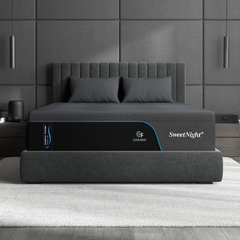
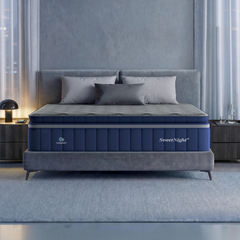
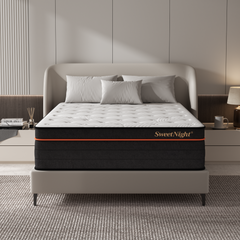
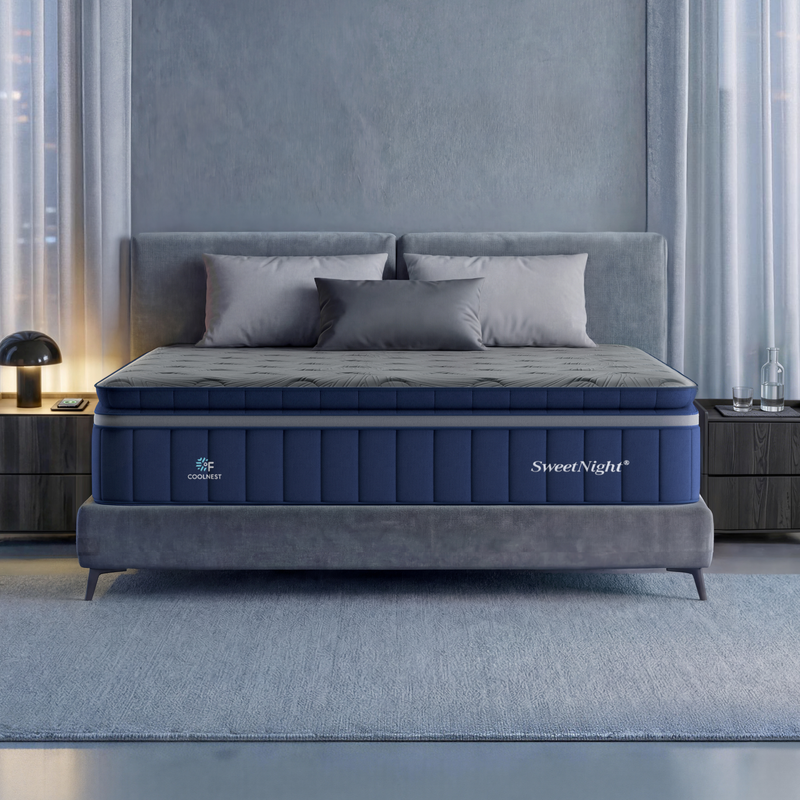
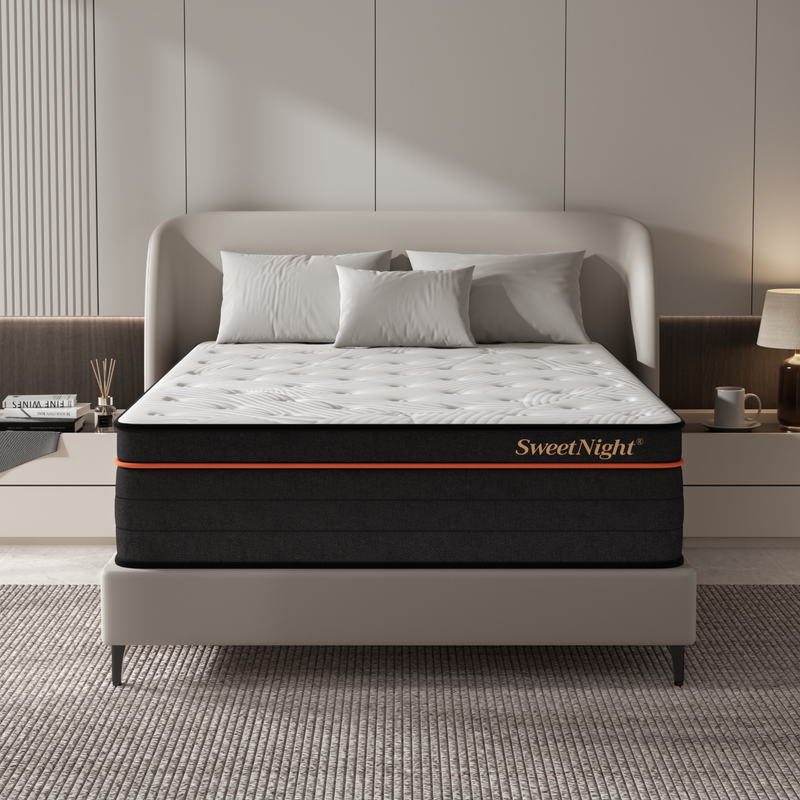
SweetNight Twilight Hybrid is specifically engineered for desk worker spinal recovery:
✓ 12.5-gauge individually wrapped coils (sustained support)
✓ Lumbar zoning (prevents hip sinking)
✓ Gel-infused cooling (optimal overnight temperature)
✓ Medium-firm (6.5/10) optimal for desk workers
✓ 12" height (compact, perfect for any space)
Why Desk Workers Choose SweetNight:
• 68% experience major pain reduction within 4 weeks
• 50% increase in deep sleep duration
• 40-60% reduction in inflammatory markers overnight
• Sustainable spinal recovery over 10+ years
Your Guarantee:
• 100-night trial (test it for 14+ weeks if needed)
• Free shipping
• 10-year warranty
• Money-back guarantee if not satisfied
Stop Accepting Desk Job Back Pain.
Start sleeping your way to spinal recovery.
Get Your SweetNight Twilight Hybrid Today — 100 nights to feel the difference.