








Key Takeaways
- Room temperature usually has the bigger effect on sleep because it controls how easily your whole body can cool down, and that core cooling is what switches sleep on.
- Your mattress still matters a lot, since it governs the microclimate against your skin, and research shows even a 0.4°C shift in skin temperature can deepen sleep.
- The best bedroom temperature for most adults is 60°F to 67°F (15.5°C to 19.5°C), with hot sleepers leaning cooler and older adults slightly warmer.
- A cool room cannot save you from a heat-trapping foam bed, and a cooling mattress cannot save you from a hot, stuffy room, so the wins come from fixing both.
- Humidity, bedding, and sleepwear sit between the air and your skin, and keeping indoor humidity at 30 to 50 percent makes any temperature feel more comfortable.
- The fastest fix is free: cool the room and lighten your bedding first, then upgrade the surface if you still wake up hot.
You wake up at 3 a.m., kick the covers off, flip the pillow to the cool side, and lie there annoyed. Was it the room? Was it the bed? Most people blame the mattress first because it is the thing they paid for. But the honest answer is more interesting, and it changes how you should spend your money and your evenings.
So, does room temperature affect sleep more than your mattress? For most sleepers, yes, the air around you has a larger and faster effect on whether you fall asleep and stay asleep. Your bedroom temperature sets the ceiling for how cool your body can get, and a cool core temperature is the single most important physical trigger for sleep. Your mattress matters too, but it works on a smaller stage: the few inches of microclimate pressed against your skin. The smartest approach is not to pick a winner. It is to get the room right first, then make sure your bed is not quietly undoing that work.
Let me walk you through exactly how this plays out, what the research actually shows, and how to build a sleep setup where the air, the bed, and everything in between are pulling in the same direction.
Does Room Temperature Affect Sleep More Than Your Mattress? The Short Answer
Here is the quick version before we get into the biology.
Room temperature controls the macro climate: the entire pool of air your body is trying to dump heat into all night. Your mattress controls the micro climate: the small, trapped layer of warmth between your back and the surface you are lying on. The air decides how easily your body can offload heat in the first place. The bed decides whether that heat gets trapped right where you need to release it.
When the room is too warm, no mattress on earth fully rescues you, because there is nowhere for your body heat to go. When the room is comfortable but your bed sleeps hot, you get that familiar pattern of waking up sweaty on an otherwise cool night. Both can wreck your sleep. One simply has more reach.
| Factor | What it controls | Speed of effect | How much it influences sleep |
|---|---|---|---|
| Room temperature | The whole-body heat exchange and core cooling | Immediate, affects sleep onset | Very high for most people |
| Mattress and surface | The trapped heat layer against your skin | Builds over the night | Moderate to high, especially for hot sleepers |
| Bedding and sleepwear | Insulation between you and the air | Adjustable nightly | Moderate, often underrated |
| Humidity | How efficiently sweat evaporates | Constant background effect | Moderate, larger in humid climates |
If you only fix one thing tonight, fix the air. If you want to actually solve the problem, you fix the whole stack.
Why Temperature Matters So Much: The Science of Sleep Thermoregulation

Sleep is not just something your brain decides to do. It is partly something your body temperature negotiates. Roughly two hours before you feel sleepy, your core temperature starts to fall, and that drop is one of the biological signals that tells your brain it is time to power down.
Here is the mechanism. Your circadian system, run by a small cluster of cells in the brain called the suprachiasmatic nucleus, releases melatonin as the evening gets dark. At the same time, blood vessels near the surface of your hands, feet, and face widen. This is called vasodilation, and it is why your feet often feel warm right before you drift off. Your body is pushing heat from the core out to the skin so it can radiate away into the room. Your core cools by about one to two degrees over the night, bottoms out in the early morning, and rises again as you wake.
That whole process only works if the surrounding air is cool enough to accept the heat. A warm room is like trying to cool a coffee in a sauna. Your body is doing everything right, dilating vessels and sweating, but the heat has nowhere to go. The result, according to a widely cited review in the Journal of Physiological Anthropology, is a predictable pattern: heat or cold exposure increases wakefulness and cuts into both rapid eye movement (REM) sleep and slow-wave sleep, the deep stage that does most of your physical recovery.
This is also why temperature has an outsized grip on sleep compared with, say, a slightly lumpy pillow. Temperature is wired directly into the system that initiates sleep. It is not a comfort preference. It is a switch.
There is a second wrinkle that matters for the mattress question. During REM sleep, your body briefly loses much of its ability to regulate its own temperature. You stop shivering and sweating the way you do when awake. So if anything pushes you out of your comfort zone in the second half of the night, when REM is most concentrated, your body cannot correct it efficiently, and you wake. The air and the surface against your skin both decide whether you stay in that comfort zone.
What Is the Best Room Temperature for Sleep?

The research converges on a narrower window than most people expect. For the average adult, the best bedroom temperature for sleep sits between 60°F and 67°F (about 15.5°C to 19.5°C). That feels cooler than the temperature most of us keep our homes during the day, and that is the point. You want the room slightly cool so your core can finish its descent.
Push the thermostat above 70°F (21°C) and you start collecting more awakenings, lighter sleep, and that groggy, sticky morning feeling. Drop it too far and a different problem shows up. A frigid room forces your body to spend energy defending its temperature, your extremities constrict, and you wake up tense or with a cold nose poking out of the blanket. Cold disrupts sleep too, and some research suggests that in real bedrooms, where we use blankets and clothing, the discomfort from cold can actually be harder to ignore than mild heat.
The right number is not identical for everyone, though. Where you land in the range depends on your age, your hormones, your body composition, and who else is in the bed.
| Sleeper type | Suggested room range | Why |
|---|---|---|
| Most adults | 65–68°F (18–20°C) | Supports the natural core temperature drop |
| Hot sleepers | 60–65°F (15.5–18°C) | More headroom for heat to escape |
| Older adults | 66–70°F (19–21°C) | Slower heat production, less tolerance for cold |
| Menopausal women | 60–66°F (15.5–19°C) | Hot flashes spike body heat at night |
| Infants and toddlers | 68–72°F (20–22°C) | Cannot regulate temperature as well as adults |
| Couples with different needs | Meet in the middle, then layer | Use separate blankets to settle the gap |
A practical starting point if you have never thought about this: set the thermostat to about 68°F, sleep under a blanket, and see how you feel. If you wake up hot, drop it a degree every few nights until your sleep smooths out. You are looking for the temperature where you are neither sweating nor reaching for a second blanket.
How Room Temperature Affects Sleep Quality, and the Data Behind It
It is one thing to say a warm room feels worse. It is another to see it measured across millions of nights. That data now exists.
A 2022 study published in One Earth linked more than seven million nights of sleep-tracker data from over 47,000 people across 68 countries to local weather. The finding was clean and a little alarming. Hotter nights shortened sleep, mostly by delaying when people fell asleep, which raised the odds of not getting enough rest. The effect was not symmetrical either. People did not "catch up" on cool nights the way they lost sleep on warm ones. The researchers also projected that by the end of the century, suboptimal temperatures could cost the average person somewhere around 50 to 58 hours of sleep per year.
A few details from that work are worth holding onto, because they tell you who should care most:
- The heat penalty was larger for older adults, whose bodies regulate temperature less efficiently.
- Women were affected more than men on average.
- People in already-hot regions lost more sleep per degree of warming, which suggests we do not fully adapt to heat at night.
Zoom in from the global scale to the bedroom and the picture matches. Warm conditions reliably increase the number of times you surface during the night, stretch out how long it takes to fall asleep, and shave time off your deepest sleep stages. The temperature in the air is not a background detail. It is one of the strongest environmental levers you have over sleep quality, full stop.
Does Your Mattress Affect Sleep Temperature? How Beds Trap or Release Heat

Now the other side of the bed. Your mattress absolutely affects how hot you sleep, and for some people it is the main culprit. The question is how, and how much.
Your mattress shapes the microclimate, the thin pocket of air and heat trapped between your body and the surface. Lie still and you compress the material, push out the air, and create a little oven exactly where your back, hips, and shoulders make contact. Whether that oven heats up or vents off depends almost entirely on what the bed is made of.
Dense memory foam is the classic heat trap. It conforms beautifully and relieves pressure, but traditional closed-cell foam hugs your body so completely that it limits airflow and holds onto your body heat. That is why someone can be in a perfectly cool 65°F room and still wake up sweating on an older all-foam bed. The room is fine. The surface is the problem.
Other constructions behave very differently.
| Mattress type | How it handles heat | Best for |
|---|---|---|
| Traditional memory foam | Conforms closely, tends to trap heat and limit airflow | Pressure relief seekers who sleep cool already |
| Gel-infused memory foam | Gel particles pull heat away from the surface, sleeps cooler than standard foam | Side sleepers who want contouring without the heat |
| Hybrid (foam over coils) | Open coil layer creates vertical airflow and vents heat downward | Hot sleepers, couples, combination sleepers |
| Latex | Naturally more breathable and resilient than synthetic foam | Eco-minded sleepers who run warm |
| Innerspring | Maximum airflow, minimal contouring | People who want a cooler, firmer feel |
This is where the mattress quietly becomes more important than people assume, and the reason is skin temperature. Researchers at the Netherlands Institute for Neuroscience showed in a study in the journal Brain that nudging skin temperature by just 0.4°C, without changing core temperature at all, was enough to suppress nighttime wakefulness and shift people into deeper sleep. In older adults the effect nearly doubled their proportion of slow-wave sleep. Think about what that means. The surface touching your skin has real, measurable power over how deeply you sleep, because the skin is constantly reporting temperature to the parts of the brain that run sleep.
So your mattress is not just a comfort layer. It is a temperature interface. A bed that traps heat keeps your skin warmer than ideal in the wrong way, in a stuffy, sweaty way rather than a cozy one, and that can pull you out of deep sleep even when the thermostat reads perfect. A breathable cooling mattress is designed specifically to keep that microclimate in the comfortable zone instead of letting it overheat.
Room Temperature vs Mattress: Which Has the Bigger Impact on Sleep?
Time to actually answer the headline. The clean framing is this: room temperature usually has the bigger effect, but your mattress decides whether that effect reaches your skin intact.
Think of it as two filters stacked on top of each other. The room is the first filter, the big one. If it is too warm, your body cannot offload heat no matter what, and you lose sleep at the source, before the mattress ever gets a vote. That is why the air wins for most people most of the time. It governs the whole-body heat exchange and it governs sleep onset, the moment when getting the temperature right matters most.
But once the room is in range, the mattress takes over as the deciding factor. A cool room paired with a heat-trapping foam bed produces a strange, frustrating result: the thermostat says you should be comfortable, yet you are damp and restless. In that scenario, the bed is the bigger problem, and swapping it does more for your sleep than dropping the AC another two degrees would.
Here is how to figure out which one is your bottleneck.
| Your situation | The likely culprit | What to fix first |
|---|---|---|
| Hot all night even in a cool room | The mattress traps heat | Upgrade to a breathable or cooling surface |
| Fine on the bed, but the whole room feels stuffy | Room temperature and airflow | Lower the thermostat, add a fan |
| Wake sweaty only in summer | Both, amplified by humidity | Cool the room and add cooling bedding |
| Cold and tense, can't settle | Room is too cold for you | Raise the thermostat, add a warmer layer |
| Partner runs hot, you run cold | Mismatch, not a single fix | Split bedding, neutral room temp |
Notice that the answer to "which matters more" is really "which one is failing you." For a cold sleeper in a chilly apartment, the room is everything. For a hot sleeper on a five-year-old memory foam bed, the mattress is everything. The science says temperature drives sleep. Your specific setup decides which temperature, the air or the surface, is the one sabotaging you.
If you are not sure where your current bed falls on the heat spectrum, taking the mattress quiz is a quick way to match your sleep style and temperature tendencies to the right construction.
The Role of Humidity, Bedding, and Sleepwear in Your Sleep Climate

Temperature gets all the attention, but it never acts alone. Three quieter factors sit between the air and your skin, and they can make a 67°F room feel either perfect or miserable.
Humidity is the big one. Your body cools partly by sweating, and sweat only cools you when it evaporates. In humid air, evaporation slows to a crawl, so a warm, sticky room feels much worse than a warm, dry one at the same temperature. The U.S. Environmental Protection Agency recommends keeping indoor humidity between 30 and 50 percent, which happens to be a comfortable band for sleep as well. Below that, the air gets dry enough to irritate your throat and sinuses. Above it, your sweat lingers, dust mites thrive, and the room feels swampy. A cheap hygrometer tells you where you stand, and a dehumidifier in summer or a humidifier in winter usually fixes it.
Bedding is the layer most people overthink in one direction and ignore in the other. A cool room buried under a heavy down duvet is not actually a cool sleep environment. The blanket reinsulates everything you just gained from the thermostat. Breathable, natural fibers like cotton, bamboo, or linen move heat and moisture far better than tightly woven synthetics, and they are the easiest seasonal adjustment you can make. Swap to lighter bedding in summer and you change your sleep climate without touching the AC.
Sleepwear rounds it out. Loose, breathable fabrics let your skin vent. Snug synthetic pajamas trap a film of warm air against you. If you run hot, what you wear to bed is a free lever you are probably not using.
The takeaway is that your "sleep temperature" is not one number on a thermostat. It is a stack: air, humidity, bedding, sleepwear, and surface, all interacting. Fixing the thermostat while ignoring the duvet is like rolling down one car window in a heatwave.
Who Is Most Affected by Sleep Temperature? Hot Sleepers, Menopause, Older Adults, and Couples
Temperature does not hit everyone equally. A handful of groups feel it far more than the average, and if you are in one of them, getting your sleep climate right is not a nicety. It is the difference between rest and a nightly battle.
Hot sleepers are the obvious case. Some people simply produce and hold more heat, and they overheat on beds and in rooms that feel fine to everyone else. For them, the mattress surface and airflow often matter as much as the thermostat, which is why breathable construction is worth prioritizing.
Women in perimenopause and menopause deal with hot flashes and night sweats that send body heat spiking in the middle of the night, exactly when the body is least able to regulate. A cooler room, moisture-wicking bedding, and a surface that does not trap heat can blunt the worst of those spikes.
Older adults sit on the other end. Heat production slows with age, the body's thermostat gets less precise, and tolerance for cold drops. The skin-warming research mentioned earlier was actually conducted largely in older adults, and the effect was strongest in them, which suggests gentle, well-managed surface temperature matters more, not less, as we age.
Couples face a different problem entirely: two thermostats, one bed. The fix is rarely a single perfect temperature. It is a neutral room setting plus separate blankets, and a mattress with good motion isolation so one person's tossing does not wake the other.
| Group | Main temperature challenge | Most useful adjustment |
|---|---|---|
| Hot sleepers | Overheating on most surfaces | Breathable mattress, cooler room, lighter bedding |
| Menopausal women | Sudden night-time heat spikes | Cooler room, moisture-wicking layers, cooling surface |
| Older adults | Reduced regulation, cold sensitivity | Slightly warmer room, gentle surface warmth |
| Couples | Two different ideal temperatures | Split bedding, neutral thermostat, motion isolation |
| Athletes and active people | Higher post-exercise body heat | Cooler setup for recovery sleep |
How to Adjust Your Sleep Temperature by Season
The number on your thermostat is not the only thing that changes between July and January. Your body's needs shift too, and so does everything around your bed. Treating summer and winter the same is one of the most common reasons people sleep poorly half the year.
In summer, the enemy is trapped heat and humidity. The room heats up during the day and holds that warmth into the night, and muggy air keeps your sweat from evaporating. This is the season to lighten the whole stack: thinner sheets, a cooling surface or topper, a fan running, and a dehumidifier if you live somewhere sticky. Cooling the room before bed instead of after you are already lying there awake makes a real difference, because a hot room takes a long time to recover.
In winter, the problem flips. Heating systems dry the air out, which can leave your throat raw and your skin itchy, and an overheated bedroom is just as disruptive as a hot summer night. The instinct is to crank the heat and pile on blankets, but you sleep better keeping the room on the cool side and adding warmth at the surface instead, with a heavier blanket or warmer sleepwear. A humidifier earns its place in winter, nudging that dry air back into the 30 to 50 percent comfort band.
The principle holds in both seasons: keep the air cool and adjust your warmth at the bedding and surface level, not by overheating the entire room. A breathable mattress and a flexible set of bedding layers let you ride the seasons without buying anything new twice a year. If your current bed only works for part of the year, that is a sign the surface is not regulating temperature well on its own.
How to Optimize Your Bedroom Temperature for Better Sleep
Start with the air, because it is the lever with the longest reach. None of this requires a renovation. Most of it is free or close to it.
- Set the thermostat between 65°F and 68°F before bed. Program it to dip an hour before you turn in so the room is already cool when you lie down, not warming up to meet you.
- Move air, do not just chill it. A fan does two jobs at once. It nudges the temperature down and it speeds evaporation off your skin, which is most of what makes you feel cool. White noise is a bonus.
- Block the daytime heat. Close blinds or curtains during the hottest part of the day, especially on sun-facing windows. A room that never bakes is far easier to cool at night.
- Vent the heat you can. Crack a window in the evening if the outside air is cooler and the air quality is good. Cross-ventilation clears the warm air that pooled during the day.
- Manage humidity. Aim for 30 to 50 percent. Run a dehumidifier in muggy months and a humidifier in dry winter months. Comfort improves more than the small effort suggests.
- Mind the heat sources. Electronics, a partner, a pet, and even a warm shower right before bed all add heat to the room. A slightly cooler setting offsets them.
- Use a pre-sleep warm shower strategically. It sounds backward, but a warm shower an hour before bed widens your blood vessels and helps your core temperature drop faster once you cool off afterward.
Get these right and you have handled the macro climate. Now make sure the bed is not fighting you.
How to Make Your Mattress and Bed Sleep Cooler
If you have dialed in the room and you are still waking up hot, the heat is coming from the surface, not the air. This is the micro climate, and you have more control over it than you think.
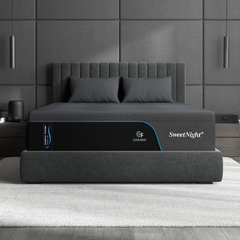
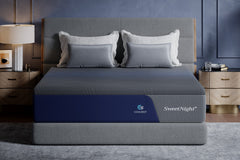
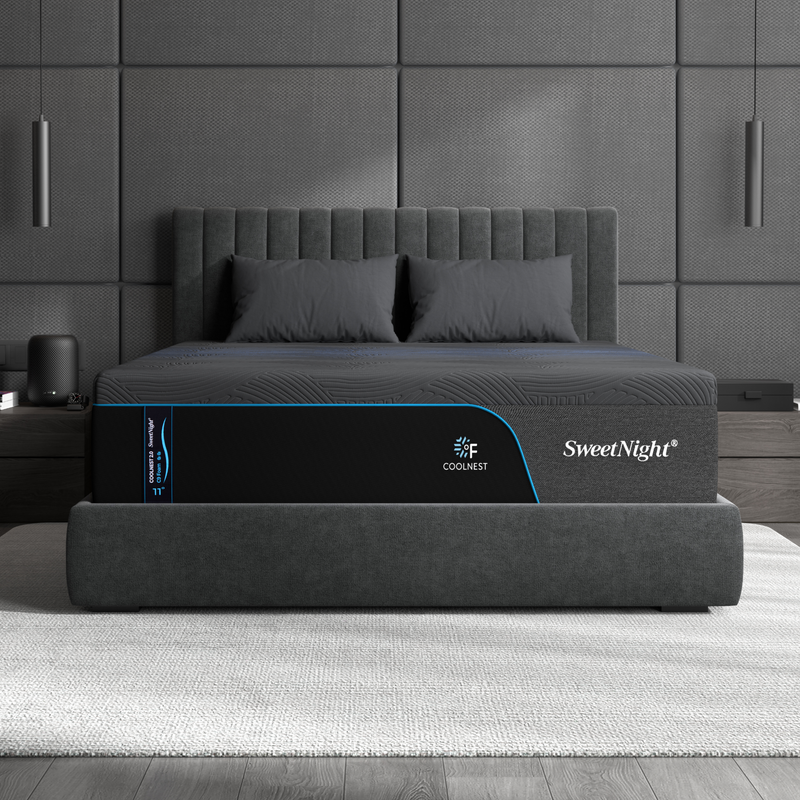
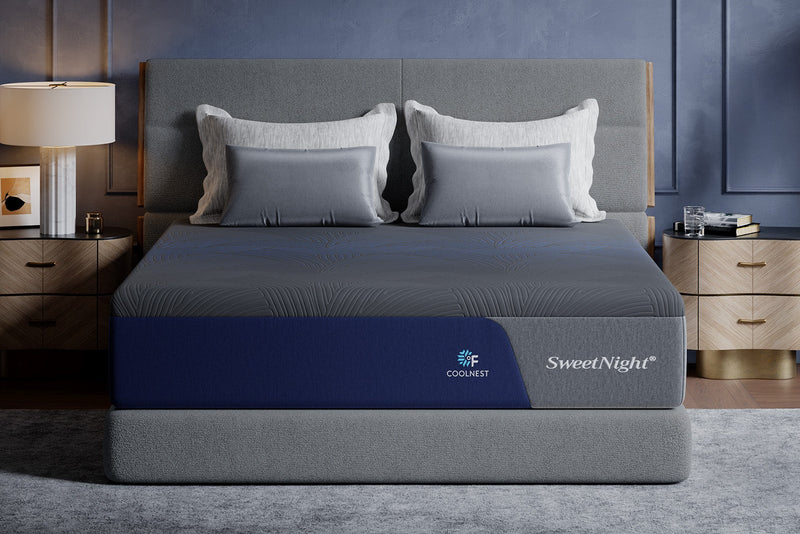
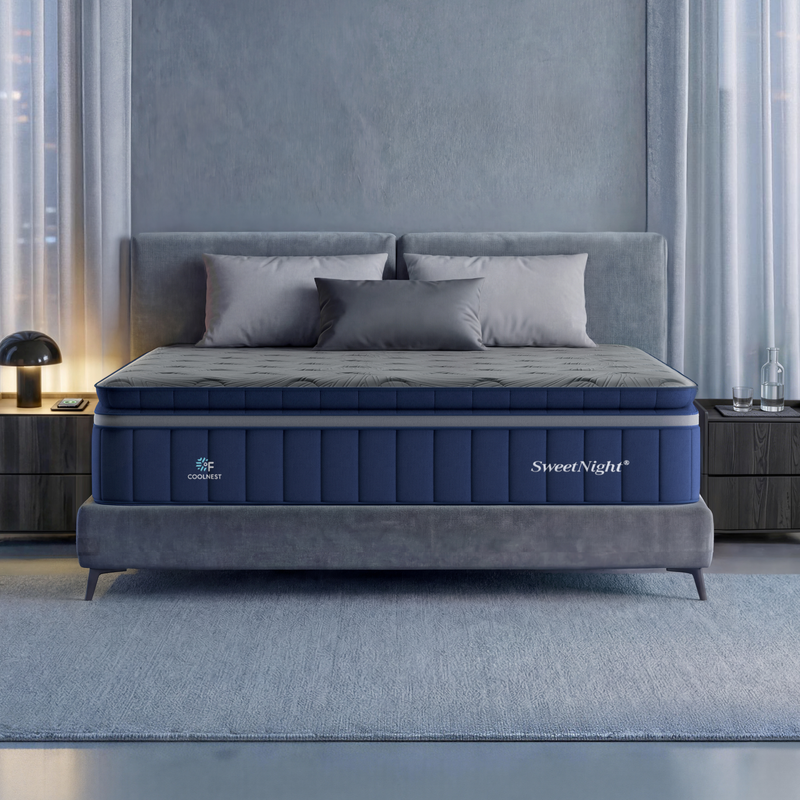
- Choose a surface built to vent heat. A heat-trapping bed undoes a cool room every night. A gel-infused memory foam mattress pulls warmth away from the surface instead of holding it, and the gel keeps the contouring you want without the sweat. SweetNight's CoolNest design is engineered to feel up to 8 degrees cooler than standard memory foam.
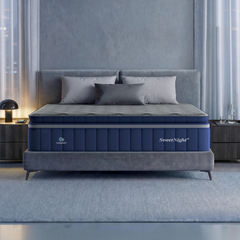
- Pick coils if you run hot. A hybrid mattress with a coil core creates real vertical airflow under your body, so heat vents downward instead of building up against your back. Hybrids are usually the best structural choice for hot sleepers and couples who want both cooling and support.
- Add a cooling layer without replacing the whole bed. If your mattress is otherwise fine, a breathable mattress topper is the cheapest way to change the surface temperature. It sits between you and the heat-trapping foam and resets the microclimate.
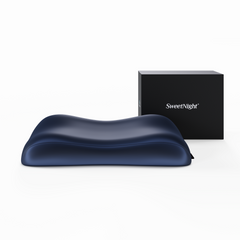
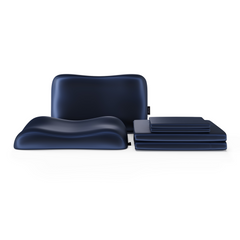
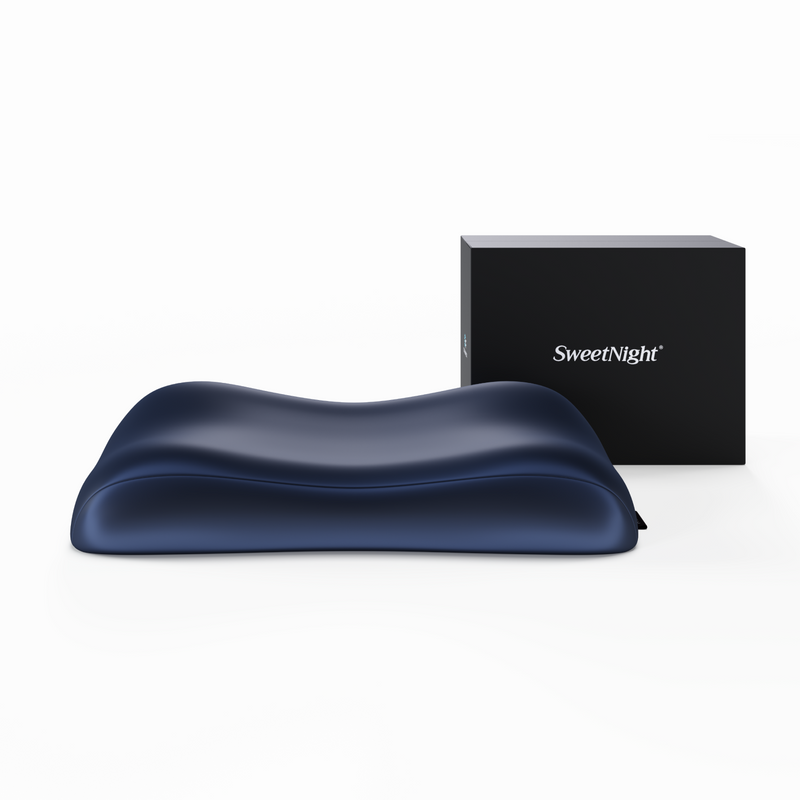
- Fix the pillow, because your head runs hot. Your head and neck dump a surprising amount of heat, and a dense, warm pillow concentrates it right under you. A cooling pillow with gel-infused or shredded foam and a breathable cover keeps that contact point from turning into a hot spot. It is a small change with an outsized payoff for people who flip the pillow all night.
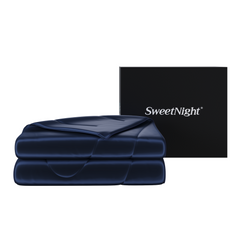
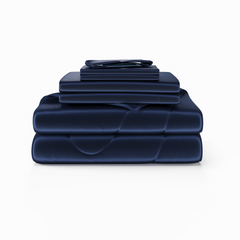
- Switch to breathable sheets. Cotton, bamboo, and linen wick moisture and move heat. Microfiber and high-thread-count synthetics trap it. This is the single cheapest upgrade on the list.
- Lighten your blanket in summer. A heavy duvet reinsulates a cool room. Match the weight of your bedding to the season instead of using the same comforter year-round.
- Give a new mattress and bedding a real trial. Your body takes a week or two to adjust to a new surface and temperature. SweetNight's 100-night trial exists precisely so you can test whether the cooling actually solves your problem in your room, not a showroom.
If you want to see how the different models stack up on cooling and support, the full cooling mattress collection lays out the options side by side, and the broader mattress lineup covers everything from foam to hybrid.
Putting It All Together: Building Your Ideal Sleep Temperature System
Stop thinking about the room and the bed as rivals. They are two layers of the same system, and the people who sleep best treat them that way.
Picture it as a stack you tune from the outside in. The room sets the overall climate and decides how easily your body can cool down at all. Humidity decides whether the air actually feels as cool as the thermostat claims. Your bedding and sleepwear decide how much of that cool air reaches you. And your mattress decides whether the spot you actually lie on stays comfortable or turns into a trapped pocket of heat.
A weak link anywhere breaks the chain. A perfect 65°F room cannot save you from a foam bed that bakes your back. A premium cooling mattress cannot save you from an 75°F room with the windows shut. The wins come from alignment, getting every layer pointed the same direction so your body can do what it is already trying to do, which is cool down and stay down.
So the real answer to whether room temperature beats your mattress is this: the air has the bigger reach, but you do not get to skip the bed. Tune the room first because it is free and it works fast. Then make sure the surface against your skin is helping, not quietly sabotaging you. Do both, and you stop waking up at 3 a.m. wondering what went wrong.
Frequently Asked Questions About Room Temperature and Sleep
Does room temperature really affect sleep more than the mattress? For most people, the air has the larger overall effect because it governs your body's ability to cool down and fall asleep in the first place. But if your bedroom is already in the right range and you still overheat, the mattress becomes the deciding factor. The honest answer is that whichever one is failing you is the one that matters most, so it pays to figure out your specific bottleneck.
What is the ideal room temperature for sleep? Research points to a range of about 60°F to 67°F (15.5°C to 19.5°C) for most adults, with 65°F to 68°F being a reliable starting point. Hot sleepers do better toward the lower end, while older adults often prefer the warmer side. The right number is the one where you are neither sweating nor reaching for another blanket.
Why do I wake up hot even when my room is cool? This is the classic sign that your mattress, not your room, is the problem. Dense memory foam and other heat-trapping surfaces hold your body heat against your skin even in a cool room. A breathable hybrid, a gel-infused surface, a cooling topper, or better sheets usually fixes it.
Can a cooling mattress fix overheating on its own? It helps a lot, but it works best alongside a cool room. A cooling mattress keeps the surface against your skin from overheating, which solves the microclimate. If the whole room is too warm, you still need to address the air, because no surface can offload heat into hot, stuffy air.
Does humidity affect sleep as much as temperature? Not quite as much, but it amplifies everything temperature does. High humidity stops sweat from evaporating, so a warm room feels far worse than it should. Keeping indoor humidity between 30 and 50 percent, as the EPA recommends, makes a given temperature feel noticeably more comfortable.
Is it bad to sleep in a cold room? Yes, cold disrupts sleep too. A room that is too cold forces your body to work to stay warm, constricts your extremities, and can wake you up tense. The goal is cool, not cold. If you are sleeping with your nose tucked under the blanket, the room is too cold for you.
How do couples handle different temperature preferences? Set the room to a neutral, slightly cool temperature, then personalize with separate blankets of different weights. A mattress with strong motion isolation also helps, since it keeps one partner's movement from disturbing the other regardless of the temperature gap.
Should I spend money on a cooling mattress or just lower the AC? Try the air first, since it is free. If a cooler room and lighter bedding solve the problem, you are done. If you have a cool room and still wake up hot, that is the signal that your money is better spent on the surface, because the heat is coming from the bed, not the air. For chronic hot sleepers, a breathable mattress often does more than another two degrees on the thermostat, and it works every night without raising your energy bill.
The Bottom Line
So, does room temperature affect sleep more than your mattress? Most of the time, the air wins on reach. It controls the core cooling that switches sleep on, and the data on millions of nights backs that up. But your mattress is not a sideshow. It governs the temperature right where your body actually touches the bed, and the science shows that even tiny changes at the skin can deepen or break your sleep.
The people who sleep coolest are not the ones who obsessed over the thermostat or the ones who bought an expensive bed and ignored the room. They are the ones who treated it as one connected system: a cool room, balanced humidity, breathable bedding, and a surface that vents heat instead of trapping it. Get the air right tonight, then give your bed the same attention. That is how you stop fighting your sleep and start working with it.